Meaningful gifts
How do you run a family meeting with kids?
How to run a family meeting with kids: a weekly time, a simple agenda, rotating roles, solving problems together, planning fun, and keeping it short enough for

The short answer
Pick a regular weekly time of 15 to 20 minutes, start with appreciations, review the week’s calendar, solve one problem together by brainstorming and voting, plan something fun, and end with a treat or game. Rotate roles such as leader and note-taker so every child gets a voice.
A family meeting is a short, regular get-together where everyone, including young children, shares news, plans the week, and solves problems. Keep it to 15 to 20 minutes, hold it at the same time each week, follow a simple agenda, and rotate jobs like leader and note-taker. Starting with appreciations and ending with something fun keeps children wanting to come back.
Key takeaways
- Consistency matters more than length; weekly works for most families.
- One problem per meeting is plenty.
- Every idea gets written down before anyone judges it.
- Children follow agreements they helped make.
Why hold family meetings
Regular meetings give children practice listening, speaking up, negotiating and compromising. Problems get handled at a calm time rather than in the middle of an argument. Parents hear what children are worried about, and everyone knows what's coming that week.
Choosing a time
Sunday evening, after dinner, or a weekend breakfast work for many families. Avoid times when people are tired, hungry or rushing. Put it on the calendar.
A simple agenda
- Appreciations. Each person says something they liked about someone else this week.
- Calendar. Appointments, practices, visitors, trips.
- Old business. How did last week's plan work?
- One problem. Brainstorm, then agree on a solution to try.
- Fun planning. Choose a family outing, a meal or a movie.
- Close. A game, a snack or a song.
Roles to rotate
- Leader keeps the agenda moving.
- Note-taker writes or draws decisions.
- Timekeeper watches the clock.
- Snack chooser.
Preschoolers can be the timekeeper with a sand timer or the snack chooser.
Solving a problem together
- State the problem without blaming: "Mornings are rushed and we're late."
- Everyone suggests ideas, even silly ones. Write them all down.
- Cross off ideas someone can't live with.
- Choose one to try for a week.
- Check at the next meeting.
Ground rules
- One person talks at a time; use a talking stick.
- No put-downs.
- Everyone's idea is heard.
- Parents keep final say on safety and money.
Keeping it engaging
- Hold it somewhere comfortable, like the floor with pillows.
- Use a notebook or whiteboard everyone can see.
- Keep it short; end before attention runs out.
- Include a treat.
When conflict comes up
If a topic gets heated, pause and come back to it later. Some issues, like discipline for one child, are better handled privately.
Family meeting topics
- Chore charts.
- Screen time rules.
- Planning a birthday or holiday.
- Pet care.
- Allowance.
- Welcoming a new baby or a grandparent moving in.
Starting with young children
For toddlers and preschoolers, keep meetings to 10 minutes: appreciations, one fun plan and a snack. Add more as they grow.
Recording decisions
Keep a family meeting notebook. Children enjoy looking back at decisions and appreciations over the years.
Common questions
What if a child won't participate? Let them listen. Most join in over time.
Should parents vote? Yes, but explain when a decision isn't up for a vote.
Sample meeting script
- Open (2 minutes): each person shares one good thing from the week.
- Calendar (3 minutes): look at practices, birthdays and appointments.
- One topic (5 to 10 minutes): a chore swap, a weekend plan or a recurring squabble.
- Decide (2 minutes): agree on a plan and who does what.
- Close (2 minutes): a treat, a game or picking the next family movie.
Keep it under 20 minutes for young kids. End on time, even if a topic isn't finished.
Adapting for different families
- Single parents: a short check-in over Sunday breakfast works as well as a formal meeting.
- Shared custody: hold the meeting in each home, or video-call so both households hear the plan.
- Teens: let them run the agenda once a month. Responsibility increases buy-in.
- Grandparents at home: invite them to share stories or family history as part of the opening.
Signs it's working
Fewer repeated arguments, kids reminding each other of agreements, and children bringing their own topics are all signs the habit is taking root. If meetings feel like lectures, shorten the adult talk and give kids more turns.
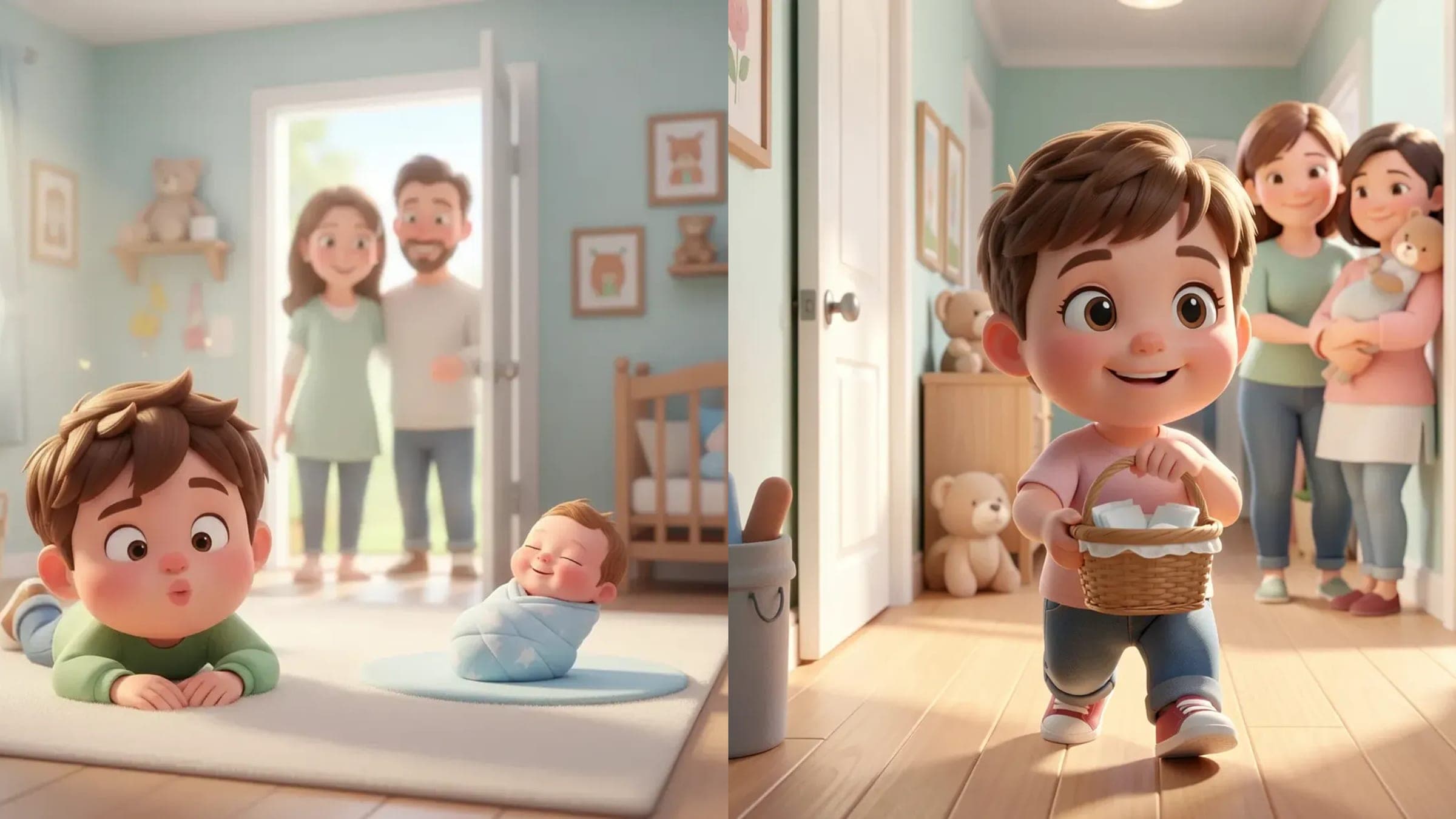
If a new baby is on the way, the siblings book turns photos of your children into an illustrated story you preview before ordering.
For the older sibling: a gift for the older one
Look through a sample siblings book, then start from a photo.
Sources
- Sibling Rivalry, KidsHealth (Nemours), accessed November 4, 2026
- Family Dynamics, HealthyChildren.org (American Academy of Pediatrics), accessed November 4, 2026