Meaningful gifts
Does birth order affect personality?
Birth order and personality: what large studies found about firstborns, middle and youngest children, the small IQ gap, and what matters more for kids.
The short answer
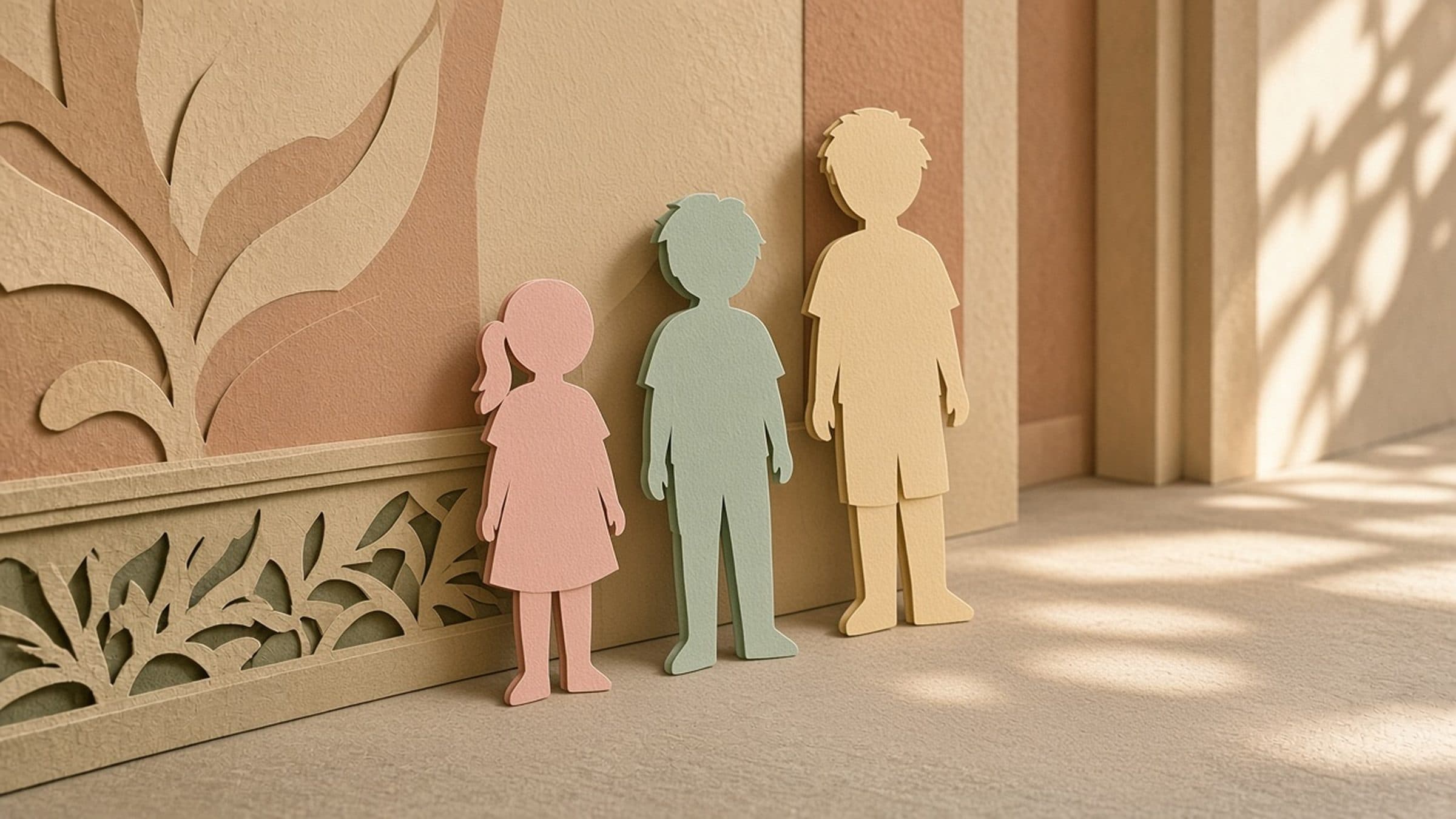
Large studies find birth order has little to no meaningful effect on personality traits like extraversion, agreeableness or conscientiousness. Firstborns score slightly higher on intelligence tests on average, about 1.5 IQ points per birth position, but the difference is too small to notice in an individual child.
Birth order has little to no meaningful effect on personality, according to the largest studies done so far. A 2015 analysis of more than 20,000 people in the U.S., U.K. and Germany found no birth-order effect on extraversion, emotional stability, agreeableness, conscientiousness or imagination, and only a small edge for firstborns on intelligence tests.
Key takeaways
- The "bossy firstborn, peacemaking middle, wild youngest" story mostly doesn't hold up in big data.
- Firstborns averaged about 1.5 IQ points higher per birth position, too small to see in one family.
- A study of roughly 377,000 U.S. high school students found effects close to zero.
- Labels based on birth order can shape how parents treat kids, which matters more.
Where the idea came from
Psychologist Alfred Adler proposed in the early 1900s that a child's position in the family shapes personality. The idea spread through popular books: firstborns as responsible achievers, middle children as overlooked diplomats, youngest children as charming rule-breakers, only children as mature but spoiled. These stories feel true because most families can name an example.
What large studies found
Older research often compared siblings by asking parents or siblings to rate one another, which mixes age with birth order. A 12-year-old will seem more responsible than an 8-year-old simply because they are older.
Newer studies used much bigger samples and better methods:
- Rohrer, Egloff and Schmukle (PNAS, 2015) analyzed three national datasets with over 20,000 participants, comparing siblings within the same family and across families. They found no effect of birth order on the Big Five personality traits. Firstborns scored slightly higher on intelligence and described themselves as slightly more intellectual.
- Damian and Roberts (Journal of Research in Personality, 2015) studied about 377,000 U.S. high school students and found birth-order correlations with personality and intelligence averaging around .02, which the authors described as essentially zero.
The small intelligence difference
The intelligence gap appears in several datasets, but it is small: on average about 1.5 IQ points between one birth position and the next. Individual differences within any family are far larger. A younger child can easily outscore an older one. Proposed explanations include firstborns having parents' undivided attention for a time and older children teaching younger ones, but no single explanation is settled.
Why the myths persist
- Age, not order. Older siblings are more mature right now.
- Confirmation bias. We remember the examples that fit and forget the rest.
- Roles parents assign. If an older child is always put in charge, they practice leadership. That is a parenting pattern, not destiny.
- Family circumstances. Income, divorce, moves and parents' ages change over time, so siblings grow up in slightly different families.
What matters more than order
- Temperament, which shows up early and differs between siblings.
- How parents respond to each child's needs.
- Fairness in rules and attention.
- Labels. Calling one child "the responsible one" and another "the wild one" can become self-fulfilling.
- Each child's own experiences: friends, school, interests.
Practical takeaways for parents
- Avoid assigning roles by birth order; give jobs based on age and interest.
- Let younger children lead sometimes, and let older children be little sometimes.
- Notice each child's traits without comparing.
- Spend one-on-one time with each child.
- If a child is struggling, look at their individual situation, not their place in line.
Only children
Research on only children also finds few meaningful differences in personality compared with children who have siblings. The old stereotype of the lonely, spoiled only child isn't supported by large studies.
How to read birth-order claims you see online
Quizzes and articles still promise to explain careers, marriages or parenting styles by birth order. Before trusting one, ask:
- How many people were studied? Effects that show up in a few hundred people often vanish in tens of thousands.
- Were siblings compared within the same family? Comparing across families mixes in income, family size and parents' education.
- Was age separated from order? Rating a 14-year-old against a 9-year-old measures maturity, not position.
- How big is the effect? "Statistically significant" can still mean too small to matter in daily life.
Most viral claims fail at least one of these checks.
A note for later
If a younger one is on the way, the siblings book tells a story with the older child at the center, for before or after the birth, with brother, sister or neutral wording and optional photos of real places; you approve a proof before it prints in softcover or hardcover with a PDF. Look through a sample siblings book, see the gift guide and check pricing.
Frequently asked questions
Are firstborns smarter? Slightly on average, but too little to matter for any one child.
Is middle child syndrome real? Large studies don't support a distinct middle-child personality.
Do youngest children take more risks? Some small studies suggest it; the large personality studies found no reliable effect.
Related reading:
Sources
- Examining the effects of birth order on personality (Rohrer, Egloff & Schmukle, PNAS 2015), Proceedings of the National Academy of Sciences, accessed November 3, 2026
- The associations of birth order with personality and intelligence in a representative sample of U.S. high school students (Damian & Roberts, Journal of Research in Personality 2015), Journal of Research in Personality, accessed November 3, 2026