Story ideas
How do you make a fire escape plan kids can actually follow?
A family fire escape plan with kids: two ways out of each room, a meeting spot, closed doors, and two drills a year so everyone moves without a debate.
The short answer
A usable fire escape plan gives every room two exits, picks one outdoor meeting spot, keeps bedroom doors closed at night, and practices the route twice a year. NFPA and USFA both stress smoke alarms plus a rehearsed plan. Call 911 from outside. Talk with your pediatrician if a child freezes during drills and needs a calmer practice style.
A fire escape plan only helps if kids can follow it half-asleep. Draw it, say it out loud, and walk it twice a year so the meeting spot is muscle memory instead of a debate in smoke.
Draw two ways out of every room
NFPA escape planning asks families to map two exits from each room and to practice the routes (Escape Planning). Windows count when they open wide enough for the people who sleep there. If a window needs a step stool, store the stool where a child can reach it without hunting.
USFA home fire guidance likewise centers on a written plan everyone knows, not only adults (Home Fire Escape Planning).
Walk each route once in daylight. Note doors that stick and windows that fight you. Fix those before you call the plan done.
Pick one outdoor meeting spot
Choose a tree, mailbox, or neighbor's porch far enough from the building that firefighters can work. Teach kids: get out, stay out, meet there, and never go back for toys or pets. Pets are a job for firefighters.
Write the spot on the plan in words a preschooler can recognize, or tape a photo of the spot to the fridge.
Closed doors and working alarms
Closed bedroom doors can slow smoke. Make "doors shut at night" part of the plan if that fits your house. Test smoke alarms monthly and change batteries on a fixed calendar date. NFPA smoke alarm guidance covers placement and maintenance so the plan has something to wake you (Smoke Alarms).
If an alarm chirps, fix it the same day. A silenced alarm is not a plan.
Drill twice a year without scaring kids on purpose
Practice once in daylight and once after dark with a flashlight. Start the drill with a calm "this is practice." Crawl low under pretend smoke for one hallway. Time how long it takes to reach the meeting spot. Celebrate finishing, not speed records that push kids to shove.
If a child freezes, shorten the drill to walk-to-the-door only, then build up. Call your pediatrician if panic during drills is intense or lasting; some kids need a gentler rehearsal path.
Rules kids must hear in plain words
- If you hear the alarm, get out. Do not hide.
- Feel a door with the back of your hand before opening. Hot door means use the window route.
- Meet at the spot. Call 911 from outside or a neighbor's phone.
- Never go back inside.
Role-play the 911 call once: name, address, what you see. Then hang up the pretend call and walk to the meeting spot.
Apartments and multi-story homes
Know whether your building wants you to use stairs only. Never use elevators during a fire drill or a real alarm. If you live above the second story, talk with the fire department about escape ladders before you need them, and practice who helps which child.
Where a short story fits
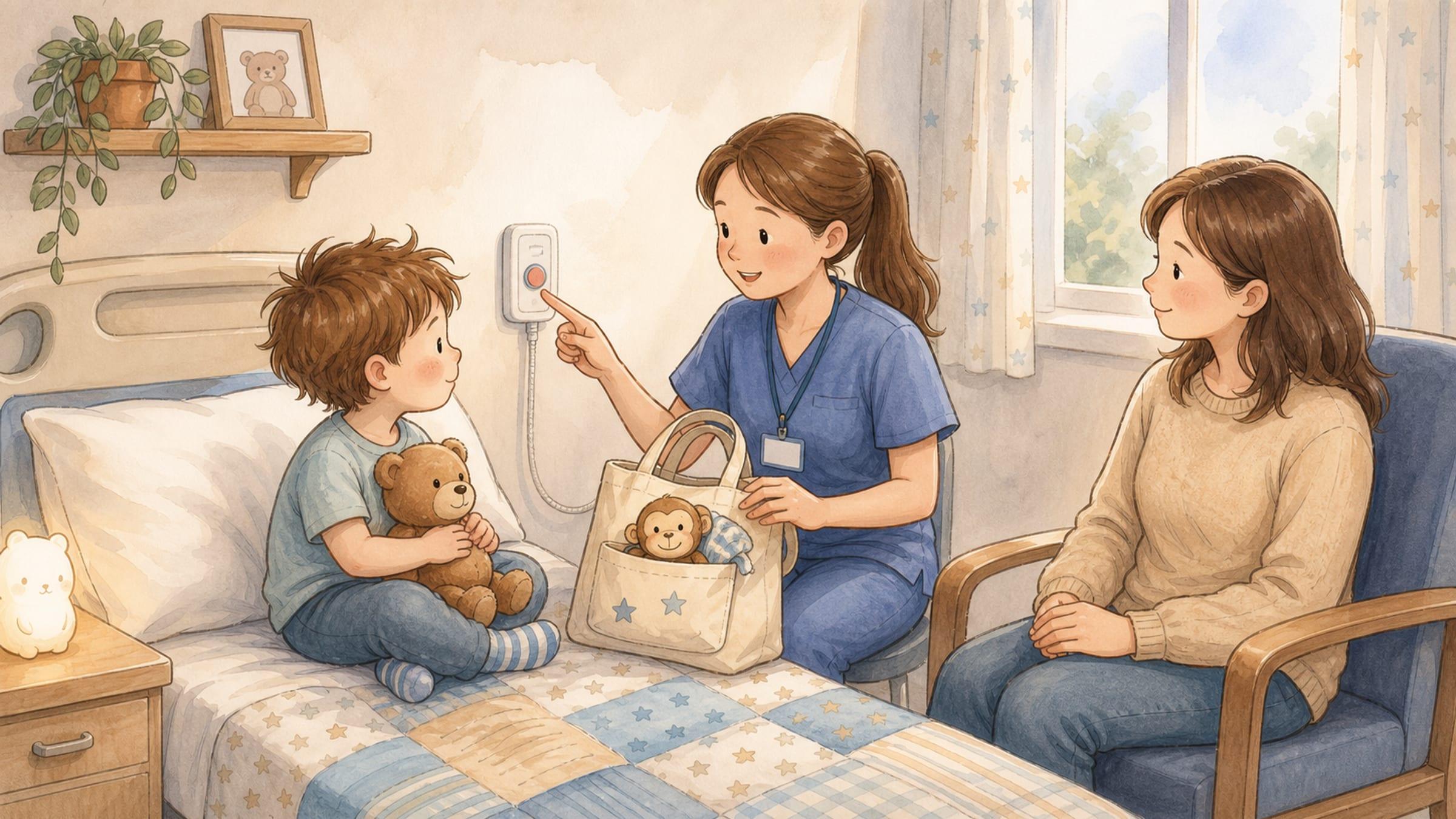
Some kids understand safety steps better when they see the sequence in a book first. A short personalized hospital story is not a fire drill substitute, but a calm preview of "alarm, shoes if they are right there, out the door, meeting spot" can lower freeze responses. Start a hospital story only if you want a preview book on the shelf; the drill still has to happen in the real hallway.
Related reading
FAQ
How young can a child follow a plan?
Toddlers can learn "hold my hand and go to the tree." Preschoolers can name the meeting spot. School-age kids can feel a door and lead a younger sibling on the practiced route.
Should we practice with real smoke?
No. Use imagination and a flashlight. Real smoke belongs to firefighters' training, not family night.
What if we have overnight guests?
Point to the meeting spot when they arrive. Guests should not invent a new exit in the dark.