Story ideas
How do you treat a minor burn on a child?
How to treat a minor burn on a child: cool water for up to 5 minutes, a clean dressing, what never to put on it, and which burns need 911 or the ER right away.
The short answer
Take off clothing near the burn unless it's stuck, then run cool, not cold, water over it until the pain eases, for no more than 5 minutes. Cover it loosely with gauze or a clean cloth and offer acetaminophen or ibuprofen. Don't use butter, grease, powder or ice, and don't pop blisters. Call 911 or go to the ER for burns on the face, hands, feet, genitals or a joint, large or deep burns, and burns from fire, electricity or chemicals.
For a minor burn on a child, cool it with running water right away: room-temperature or cool water, never ice, until the pain eases, and for no longer than 5 minutes. Then cover it loosely with gauze or a clean, soft cloth and offer a pain reliever. Nemours KidsHealth lays out these steps and the signs that turn a burn into an emergency (What to Do About Burns, accessed November 13, 2026).
First, is it minor?
KidsHealth describes a minor burn as skin that's red, slightly swollen or both, perhaps with small blisters, covering just a small area. A quick touch of a hot pan, a splash of hot cocoa on the wrist, or a brush against the oven door usually fits.
Call 911 or go to the emergency room if the burn:
- is on the face, head, hands, feet, genitals or a joint
- covers a large area
- has big blisters
- looks white, waxy, leathery, brown or charred
- goes all the way around an arm, leg, finger or other body part
- came from a fire, an electrical wire or outlet, or a chemical
- happened in a car accident or other serious event
Also get emergency care if your child has trouble breathing or another injury such as a broken bone or a head wound.
Treating a minor burn at home
- Remove clothing and jewelry near the burn, but leave anything stuck to the skin.
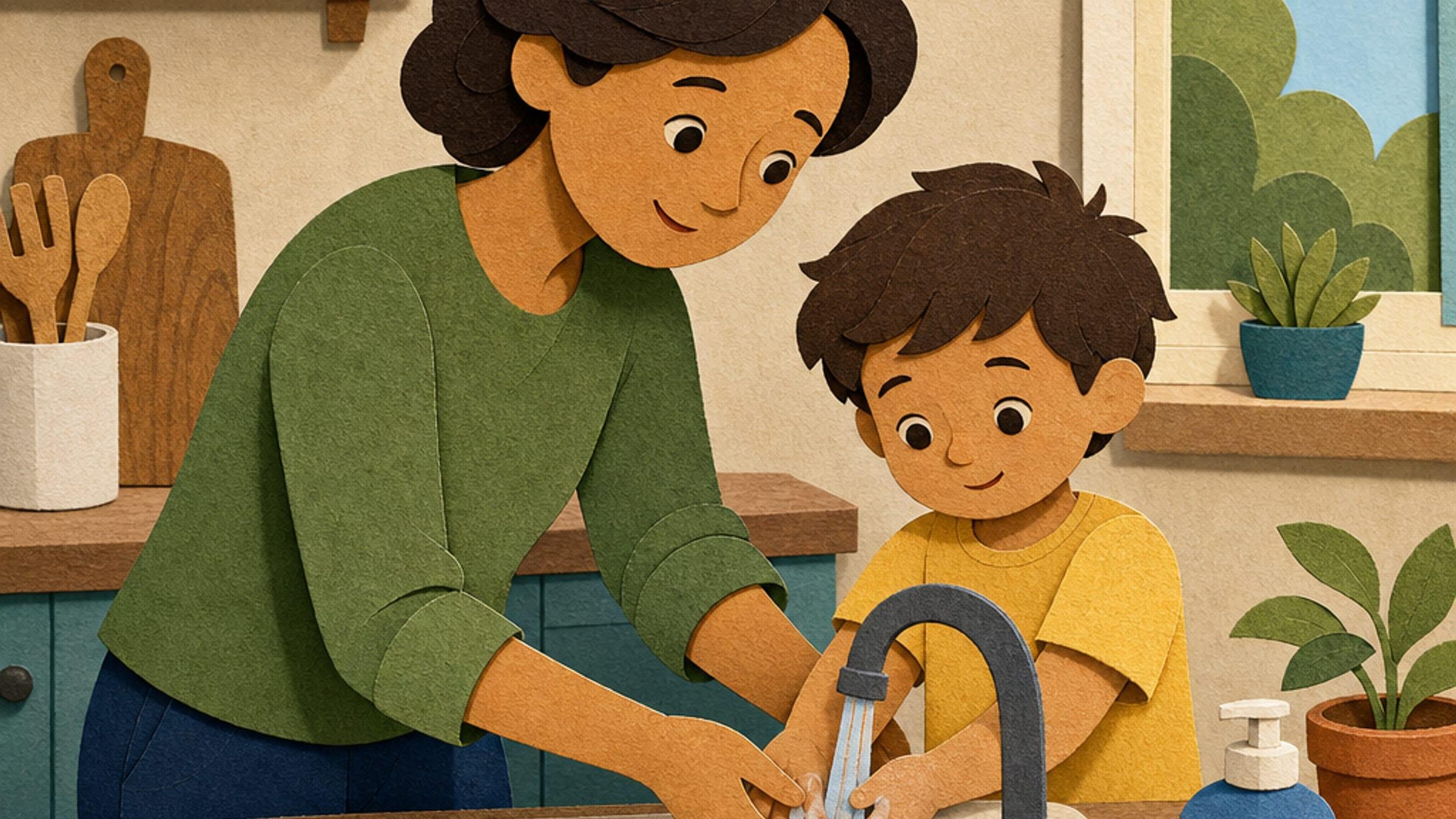
- Cool it. Run cool or room-temperature water over it until the pain eases, up to 5 minutes. Or hold a towel soaked in cool water on it, for no more than 30 minutes.
- Cover loosely with a gauze pad or a clean, soft cloth.
- Offer acetaminophen or ibuprofen if your child is awake and alert, at the label dose for their weight.
- Leave blisters alone. Popping them opens the skin to infection.
- Call the doctor's office to let them know. KidsHealth suggests asking whether to use a moisturizing or antibiotic cream, and whether your child is up to date on the tetanus shot.
Plan a visit within a few days so the doctor can see how it's healing.
Things not to put on a burn
KidsHealth is clear: no butter, grease, powder or other home remedies, because they can make a burn worse. Ice and very cold water aren't recommended either; cool tap water is enough. Toothpaste, egg whites and oils are common family tips that don't belong on a burn.
Signs of infection
Over the next days, call the doctor right away if the skin around the burn:
- becomes more swollen
- has pus
- turns redder
- shows red streaks spreading out
Fever or a child who seems unwell also deserves a call.
Where burns happen to young kids
Most burns in little kids happen at home, and many in the kitchen. Hot drinks, steam from a microwaved bowl, a pot handle pulled from the stove edge, a curling iron left cooling on the counter, or a space heater at toddler height are all common culprits. Bath water that's too hot is another.
Prevention that works
KidsHealth's list, plus a few kitchen habits:
- Keep kids away from candles, space heaters, radiators and curling irons.
- Put hot drinks out of reach, and never hold a hot drink while holding a child.
- Test bath water before your child gets in.
- Keep young children out of the kitchen while someone is cooking; a play spot with a gate works.
- Turn pot handles toward the back of the stove and use the back burners when you can.
- Test smoke alarms monthly and change the batteries once a year.
- Keep a fire extinguisher in the kitchen.
Sunburn is a burn too
Sunburn is the burn many kids get most often, and the same cooling idea applies: a cool bath or damp cloth, fluids, and pain relief if needed. Blistering sunburn over a large area, sunburn with fever or chills, or a baby with any sunburn deserves a call to the doctor. Shade, hats, clothing and sunscreen suited to your child's age prevent most of it.
Holiday season reminders
Winter brings extra heat sources: candles on the table, a menorah in the window, a fireplace, hot cider on the counter, cookie sheets fresh from the oven. Before guests arrive, walk the room at your toddler's eye level. Anything hot within reach of small hands gets moved.
Helping your child through it
Burns hurt, and kids are often frightened as well as sore. Hold them while the water runs, talk them through each step and praise them for staying still. Afterward, a short retelling helps: what happened, what you did, how it's getting better. If a follow-up visit is needed, a personalized story about being brave at the doctor can prepare them. See the hospital book, and our guide to making a family fire escape plan for the bigger safety talk.
Related reading
FAQ
Should I put ice on my child's burn?
No. Use cool or room-temperature running water for up to 5 minutes. Ice can damage the skin further.
Is it okay to pop a burn blister?
No. Leave blisters intact and cover loosely; call the doctor if they're large.
When should a burn be seen by a doctor?
Any burn on the face, hands, feet, genitals or a joint, any large or deep burn, and any that look infected.