Meaningful gifts
How do you handle the first Christmas after a family move?
Rewrite familiar clues for the new address. A move is a real stressor, and children pick up a parent's feelings even when nobody announces them.
The short answer
Keep one ritual the child still recognizes, and rewrite every clue that pointed at the old house. The American Academy of Pediatrics lists a move among events children cope with, and says children sense a parent's feelings even when those feelings are not said aloud. A read-aloud can say the new street inside a hunt the child already knows. Use the rooms you live in now. The sample book is a made-up family beside a tree. Write clues for this address instead.
On the first Christmas in a new home, keep one ritual the child can still do, and change every clue that pointed at the old house. Say the new street out loud when you read.
Key takeaways
- AAP lists a move to a new neighborhood among events children cope with, and says children are sensitive to parents' feelings even when nobody states them.
- Rewrite clues for rooms you have now. Do not hide the gift in a yard you left.
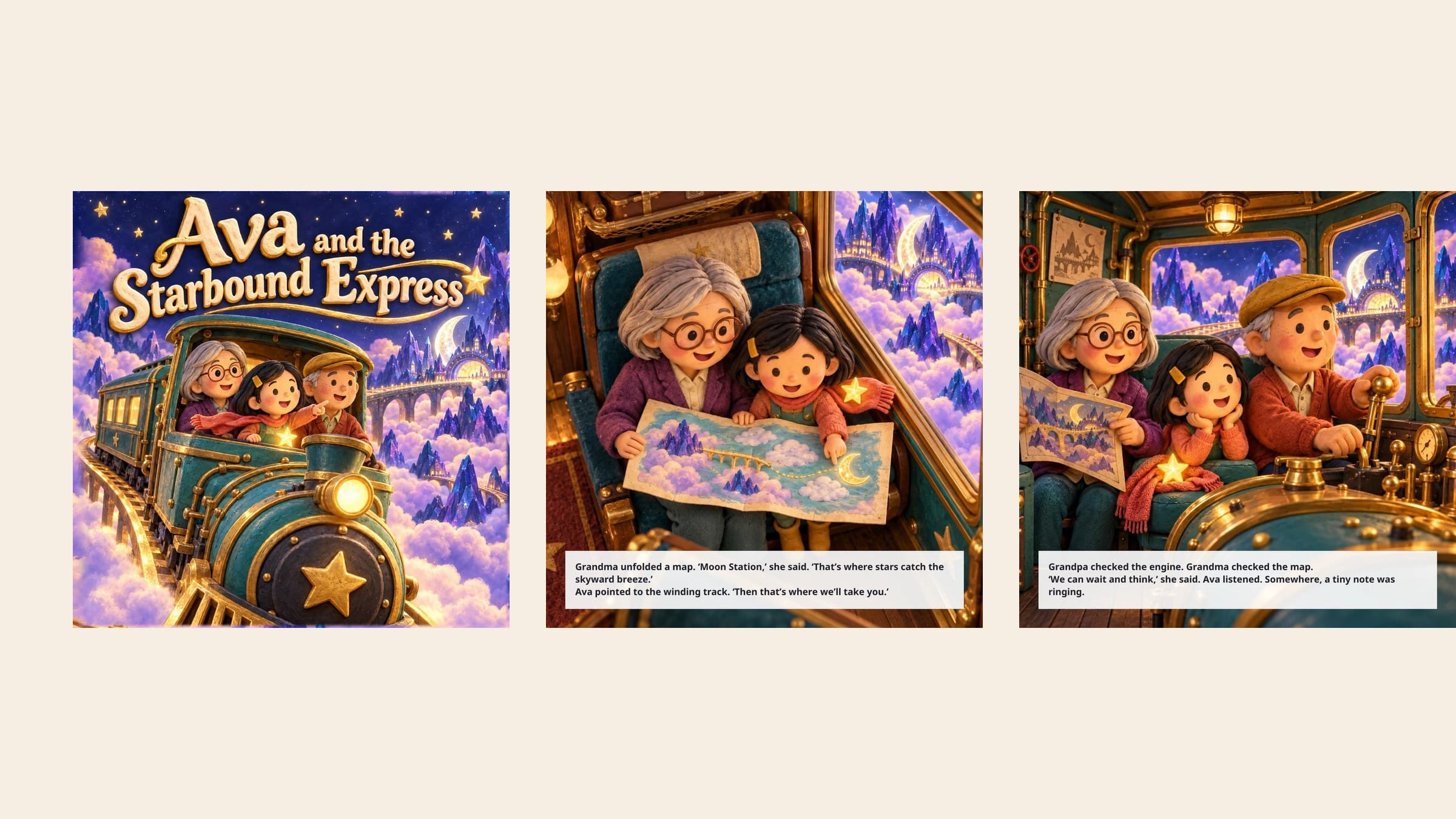
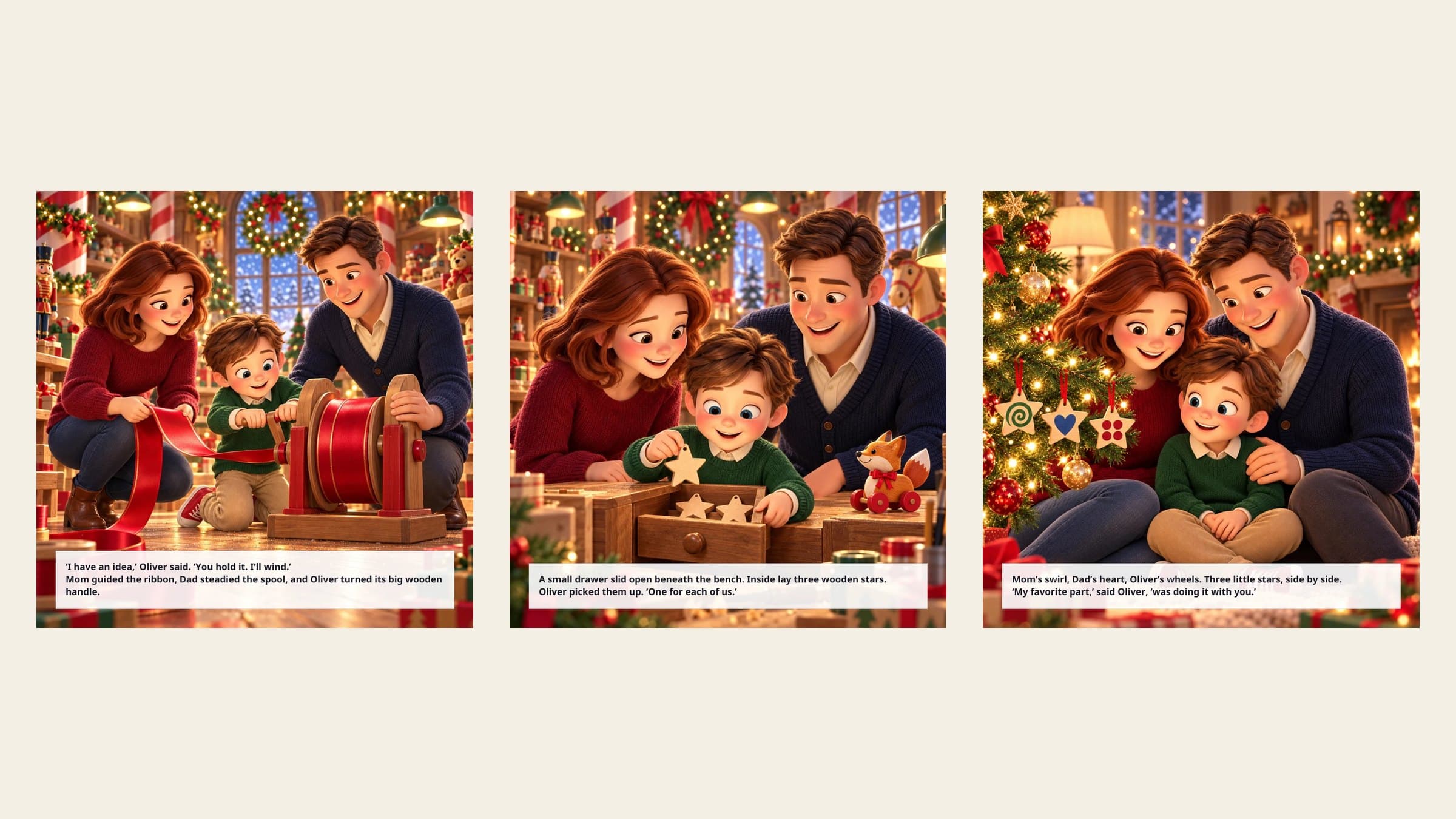
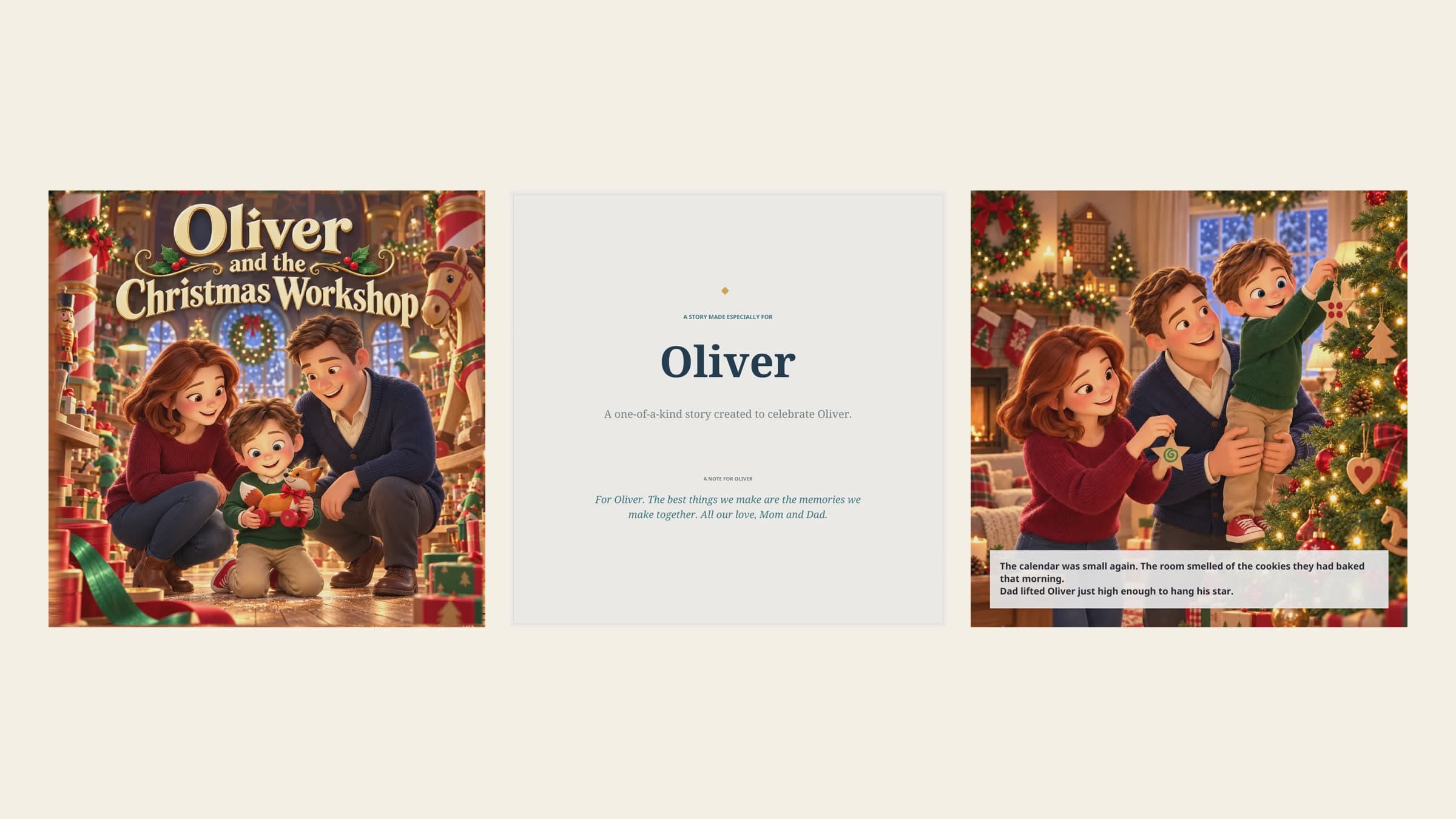
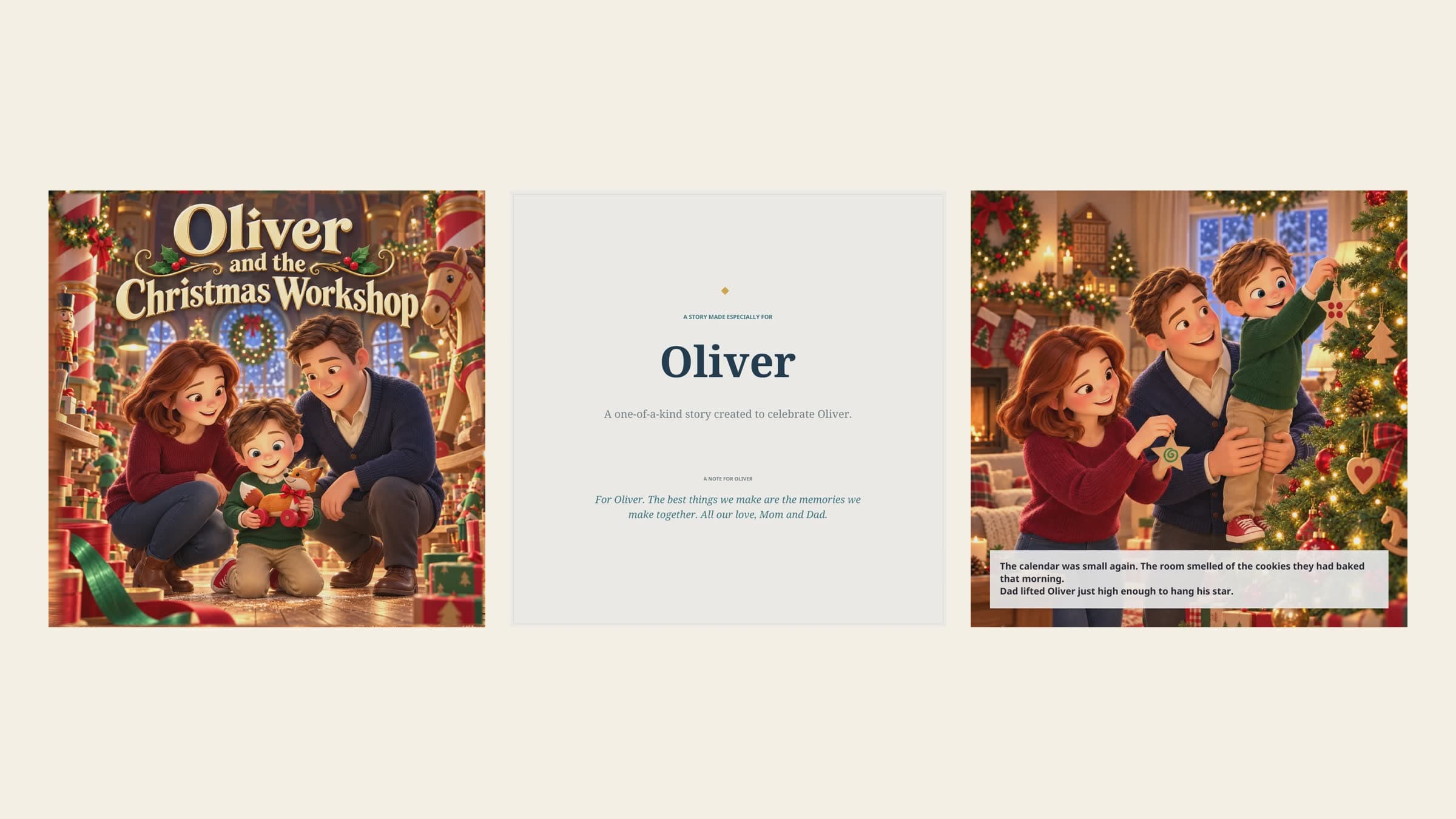
- The sample pictures show a tree in a room that family already knows. Your hunt has to use doors you can open today. Those pictures are not this apartment.
- If you want the book to be about Christmas in this house, describe the rooms you have. If you want the book to be about the move, start from a photo.
What should stay, and what has to change?
The American Academy of Pediatrics lists a move to a new neighborhood alongside other ordinary pressures children may have to handle, and says children are sensitive to the feelings and reactions of their parents even when those feelings are not said in words (Helping Children Handle Stress). If the unpacking is still tense, the child will notice. Say a short true sentence: "The boxes are a lot. Christmas is still happening here."
| Old house | New house | Keep or rewrite |
|---|---|---|
| Stocking on the bedroom door they knew | A door that is still bare | Keep the stocking. Name the new door out loud. |
| Walk to a neighbor's lights | A street you have not walked | Rewrite. Do one short loop you have already done in daylight. |
| Grandma's kitchen | A video call | Keep the call. Do not pretend the kitchen is down the hall. |
| A hunt in the old yard | Rooms you can point at today | Rewrite every clue. See the table below. |
The longer move story is a cross-country move. The job here is only the first December. Specific gift details are on what makes a personalized storybook a meaningful gift. Age and format are on what age a personalized storybook is for. Other moments are on personalized story ideas for everyday family moments.
How do you place Christmas in the new rooms?
Those sample pictures are not a real family, and they are not your apartment. The cover puts a child and two parents at a tree. The next picture is a calendar in a room they already know. A later picture brings them back beside that tree. Use the pictures to see an adult in the scene. Then write clues for the rooms you have.
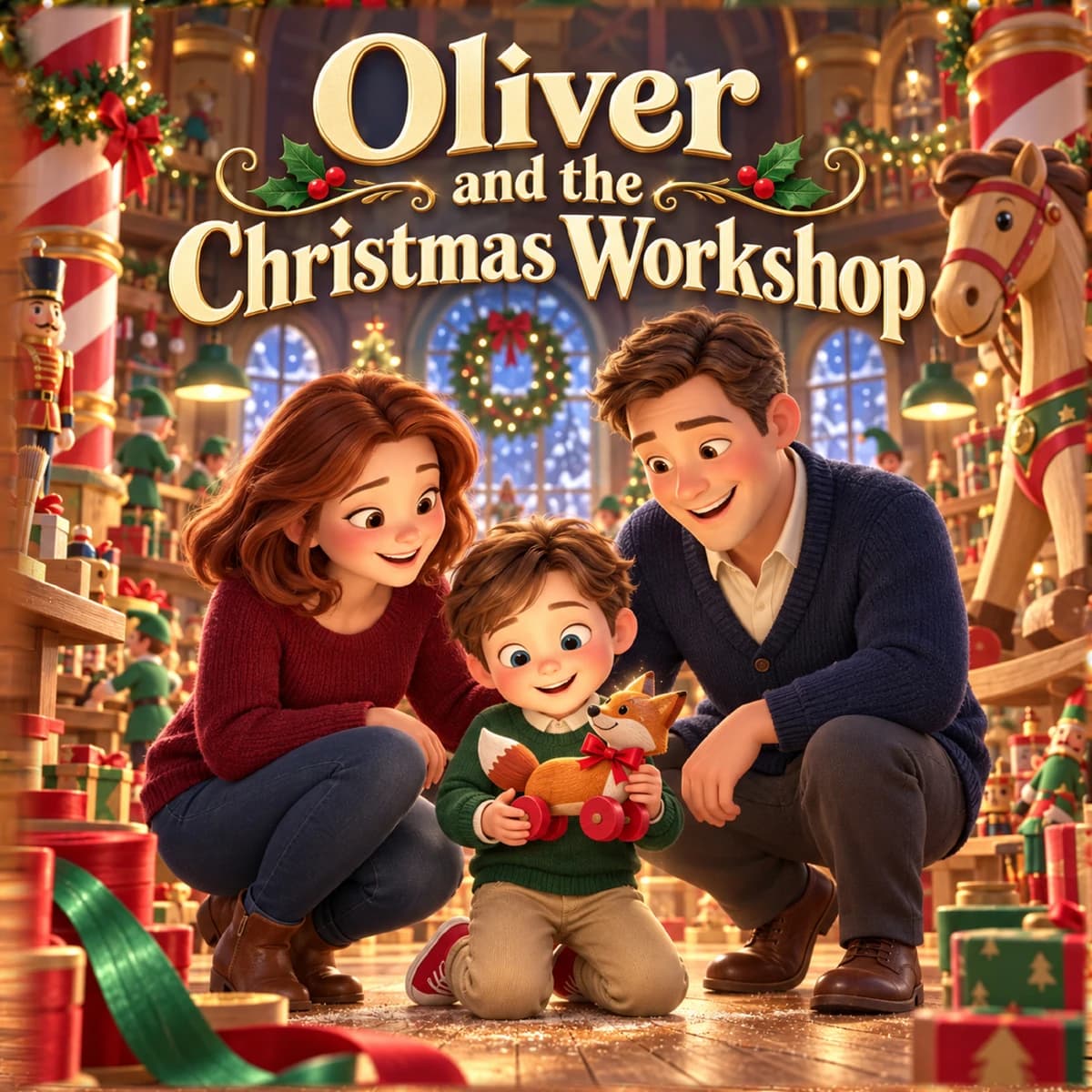
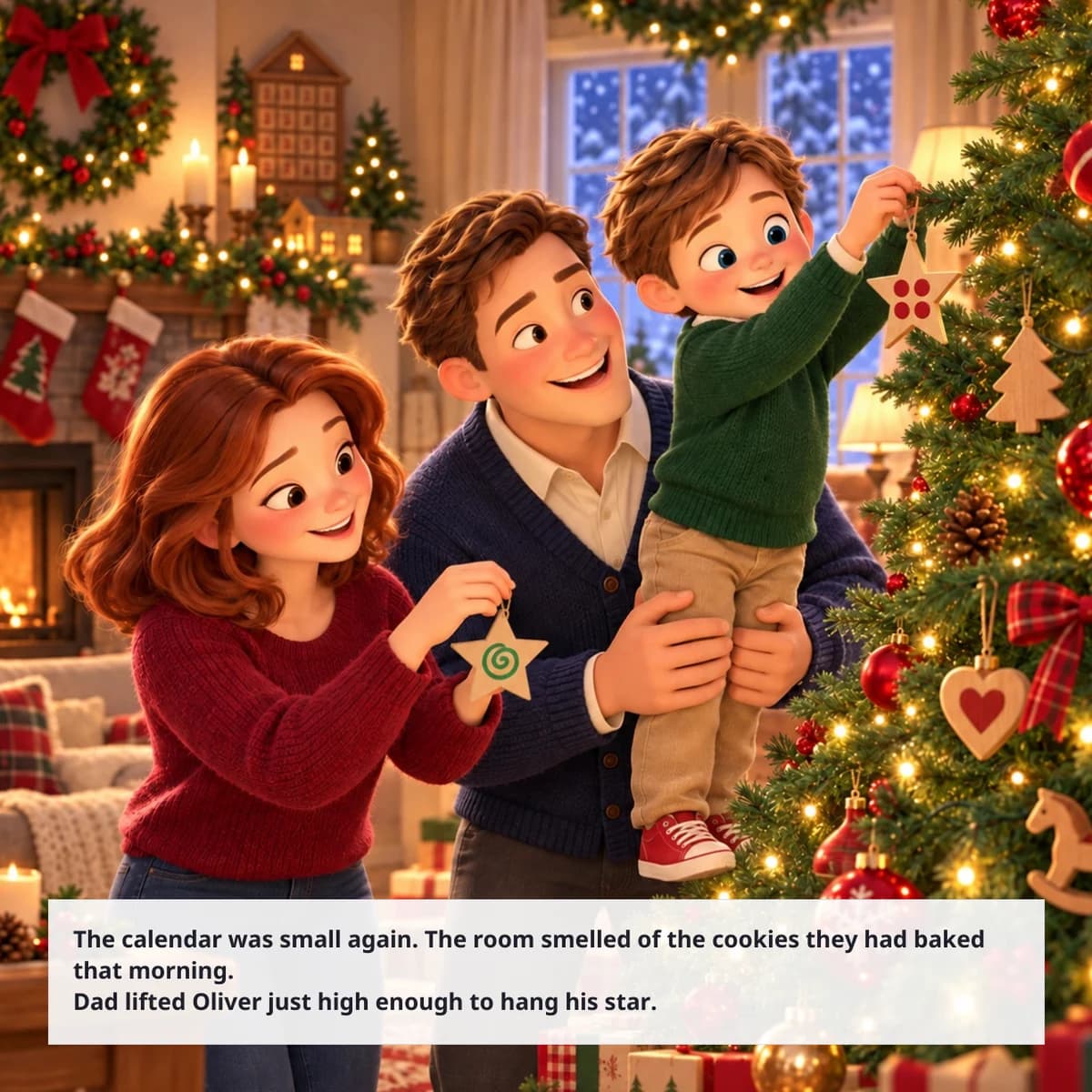
Those pictures were made for a fictional family. Your clues are the rooms you can point at today. The week after that first December in the new rooms, New Year's Eve with kids is the next evening to plan where you actually are.
- Clue one, the door. Yours might be the apartment door with the new number. Say the number.
- Clue two, a plant or a window. If you have no yard, use the window that faces the street you walked yesterday.
- Clue three, an empty spot. Let one clue be a corner that is still empty, and have an adult sit there with the child before the last clue.
- Last clue, one familiar object. Not a pile of new toys. The ornament, the mug, or the book that came in the car.
Do not retell the sample book's evening at this address and hope that counts as the move. If you want a Christmas book, start a Christmas book, choose Christmas, and describe the rooms you have. If everyone who moved should appear, the Christmas book for kids guide explains how many people fit. A dog who made the move can be in a Christmas book about your dog. Wider gift questions are on the holiday gift guide. If you want the book to be about the move, start from a photo. You see an illustrated cover before payment. You name the rooms before you pay, and the art is drawn after payment.
AAP guidance on shared reading prefers print books for young children and says digital books do not foster the same back-and-forth (Beyond Literacy). If the first copy is on a screen because the boxes are still shut, keep it a lap read: point, wait, and talk.
When should you skip a mailed copy?
What you pay, and the last day to approve a mailed copy, is on pricing. If the boxes are still shut, keep the first read on a lap from the screen. A mailed copy can wait until you know which door the stocking hangs on. You describe the rooms before you pay. The art is drawn after payment. Nothing is mailed until you sign off.
Journal articles are drafted by AI, checked against their sources and our live pricing pages, and are not reviewed by a named human reviewer.
More related guidance:
- Gaining Stepsiblings? A Story That Turns a Bigger Family Into a Team
- First Christmas as a Big Sister: What to Give Her
- A Grandparent Is Moving In: A Story About Changing Routines
- Two Moms or Two Dads? Words Your Child Can Use for Their Family
- How to Turn Family Photos Into a Children’s Story
- Personalized Story Ideas Hidden in Everyday Family Moments