Story ideas
What is nursemaid's elbow and what should I do if my toddler has it?
Nursemaid's elbow in toddlers: the signs after a tug on the arm, why young elbows slip, how a doctor fixes it fast, and how to lift kids so it won't recur.
The short answer
Nursemaid's elbow, or pulled elbow, happens when a loose ligament slips and gets caught in a young child's elbow joint, often after a tug or swing by the hand. The child holds the arm still, straight or slightly bent, and won't use it, though the elbow usually isn't swollen or bruised. Call the doctor: a quick, gentle arm move called a reduction usually fixes it, and most children use the arm again within 5 to 15 minutes.
Nursemaid's elbow is a common toddler injury in which a slightly loose ligament slips out of place and gets caught between two bones of the elbow, usually after a sudden pull on the hand or arm. If your child suddenly won't use one arm after a tug, a swing or a fall, call the doctor; KidsHealth says the injury is easy for a doctor to fix and causes no long-term problems (Nursemaid's Elbow, accessed November 12, 2026).
Signs to look for
The injury can be easy to miss, because the elbow usually looks normal. According to KidsHealth:
- The elbow isn't swollen or bruised.
- Your child won't want to use the arm, because moving it hurts.
- They hold the arm straight, or with a slight bend at the elbow, often close to the body.
- They may say it hurts in the wrist, forearm or elbow, not only at the joint.
The Children's Hospital of Philadelphia lists immediate pain, refusing or being unable to move the arm, and anxiety as the most common symptoms (Nursemaid's Elbow, accessed November 12, 2026). A toddler may simply cry once and then stop reaching with that hand, so watch for a child who picks up toys only with the other hand.
Pulled elbow or broken bone?
You can't reliably tell at home. KidsHealth warns that an arm injury with severe pain, bruising or swelling may be a fracture, and that because the two can be hard to tell apart, you should call the doctor for any injured elbow. CHOP advises calling your child's doctor right away or going promptly to the emergency department if you suspect an injury.
While you wait or travel:
- Let your child hold the arm the way that feels best. Don't try to straighten or bend it.
- Don't attempt to pop it back yourself.
- Support the arm with a pillow or a folded towel on their lap in the car seat.
- Offer comfort and a favorite toy for the other hand.
Why toddlers get it
Young children have a ligament in the elbow that is a bit loose. KidsHealth explains that during play, or when a child is lifted by the arm, two bones in the elbow can separate a little for a moment, which lets the ligament slip into the joint and get stuck. As children grow, the ligament tightens. KidsHealth says most children won't get nursemaid's elbow after age 5, though it can happen up to age 6 or 7, and CHOP describes it as common in children younger than 4.
Common ways it happens, per KidsHealth:
- Pulling a child by the hand to stop them from falling or running off.
- Swinging a child around by the hands.
- The child rolling over on the arm during sleep or play.
That first one surprises many parents. Grabbing a hand at the curb is the right instinct, and the injury is nobody's fault.
What the doctor does
KidsHealth says doctors usually diagnose nursemaid's elbow by checking the arm and asking how the injury happened. Special tests aren't usually needed; an X-ray is ordered only if a fracture is possible or the cause isn't clear.
Treatment is a gentle arm move called a reduction:
- Your child sits on your lap.
- The doctor moves the arm in a specific way. It takes a few seconds.
- You might hear or feel a small "pop" as the joint moves back into place.
- It may be briefly uncomfortable, then most kids feel much better quickly.
KidsHealth says most children have full use of the arm in 5 to 15 minutes. Some need more than one try. Sometimes the ligament gets unstuck by itself before you even reach the office.
After the fix
A child may still guard the arm for a little while, simply because they expect it to hurt. KidsHealth notes that if there's some discomfort the doctor may suggest a sling and say it's okay to give acetaminophen or ibuprofen. In some cases a splint or sling is used until a specialist can check the arm after a few days of rest. Follow your doctor's dose instructions for your child's weight.
To help a hesitant child try the arm again:
- Hold a sticker or snack just within reach of that hand.
- Play a slow game of "high five" with the fingers first.
- Praise any small movement.
Can it happen again?
Yes. KidsHealth says children can get nursemaid's elbow more than once, and CHOP notes that once the elbow has had this injury it is more likely to recur. If it happens again, call your child's doctor or return to the emergency department. Some children are simply more prone to it, even when parents are careful.
How to lift and hold hands safely
KidsHealth's prevention advice is plain: never pull, tug or swing a child by the arms or hands, and always pick a child up from under the armpits. In daily life:
- Lifting: hands under the armpits or around the chest, never by the wrists.
- Curbs and puddles: don't lift by both hands in a "one, two, three, wheee" swing.
- Walking together: hold the wrist or hand loosely, and if your child drops to the ground in protest, let go and crouch down rather than pulling them up.
- Getting dressed: guide the arm into a sleeve instead of tugging the hand through.
- Tell other caregivers: grandparents, sitters and daycare staff should know if your child has had it before.
Talking about it afterward
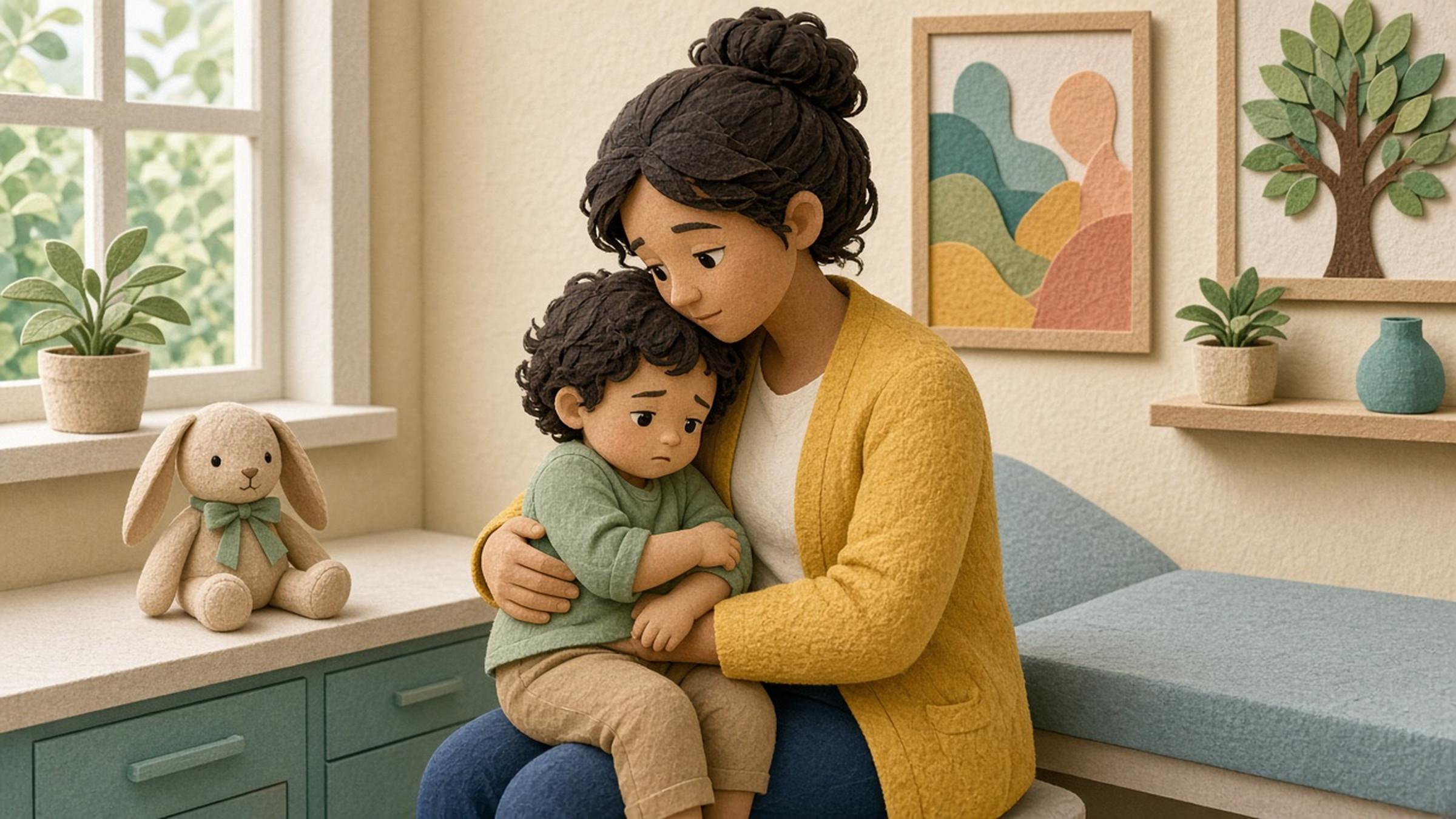
A sudden trip to the doctor can stick with a toddler. Keep the story short and calm: "Your elbow got stuck. The doctor helped it slide back. Now it's better." Kids often replay it with a teddy and a toy doctor kit, which helps them make sense of it. A personalized book about brave moments at the doctor can retell the visit with your child at the center. See the hospital book, a story about staying overnight in the hospital, and a story about getting a cast for a broken arm.
Related reading
FAQ
Does nursemaid's elbow need a cast?
Usually not. A cast or splint is for a fracture or for an arm the doctor wants checked again.
Is it an emergency?
It needs prompt care. It causes no long-term problems once fixed, but it can look like a fracture, so call the doctor right away.
Should I give pain medicine before we go?
Ask the doctor's office when you call; they can advise on what's okay for your child.