Story ideas
When does a child's cut need stitches?
When does a child's cut need stitches? How to stop the bleeding, signs that mean urgent care, what glue and strips are, and how to calm a scared child.

The short answer
A child's cut probably needs stitches if it is deep or gaping, longer than about half an inch, on the face or a joint, won't stop bleeding after 10 minutes of pressure, or was caused by something dirty or an animal bite. Get it checked at urgent care or the ER as soon as possible. Small cuts that close on their own heal at home with cleaning and a bandage.
A child's cut needs stitches, or skin glue or strips, when it is deep enough to see fat or muscle, gapes open, is longer than about half an inch, is on the face, lip or a joint, keeps bleeding after 10 minutes of firm pressure, or came from a dirty object or a bite. KidsHealth says such a wound should be checked at an urgent care clinic or the ER as soon as possible (When Does a Cut Need Stitches?, accessed November 11, 2026).
Stop the bleeding first
- Wash your hands if you can.
- Press firmly on the cut with a clean cloth or gauze.
- Hold steady pressure for 10 minutes without peeking.
- If blood soaks through, add more gauze on top. Don't pull the first layer off.
- Raise the cut above heart level if it's on an arm or leg.
Call 911 if blood is spurting, won't slow with pressure, or your child seems pale, sweaty or faint.
Signs it needs a doctor
- The edges don't come together on their own.
- It's deep, or you can see yellow fat, muscle or bone.
- It's longer than about half an inch, or on the face, eyelid or lip crossing the border.
- It's over a joint and opens when your child moves.
- It was caused by something rusty, dirty, or a human or animal bite.
- There's something stuck in it.
- Your child can't move a finger normally, or has numbness past the cut.
When in doubt, have it looked at. A scar on the face is worth a trip.
Stitches, glue or strips?
Doctors choose based on where the cut is and how much it gapes:
- Skin glue works for small, straight cuts in places that don't stretch much. No needle.
- Adhesive strips (butterfly bandages or steri-strips) hold small cuts closed. KidsHealth notes doctors sometimes put them over stitches for extra strength.
- Stitches close deeper or longer cuts. The area is numbed first, often with a cream or gel before any shot.
- Staples are sometimes used on the scalp, where they're quick and hidden by hair.
Helping a scared child
The drive in is often the hardest part.
- Tell the truth in small doses: "A doctor will look at it and help it close."
- Say what they'll feel: "First a cold cream to make it sleepy. Then it may pinch."
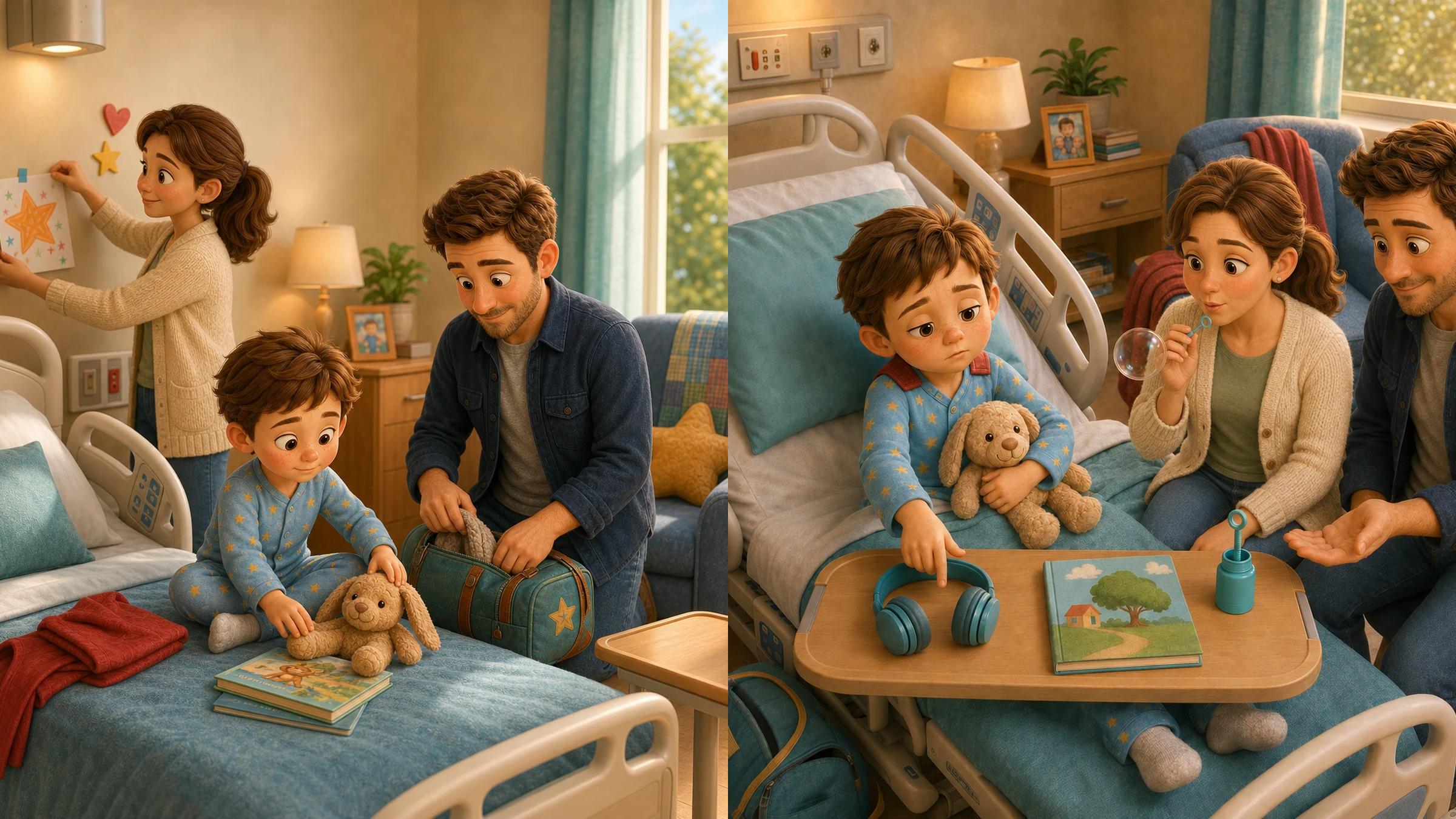
- Bring a comfort object and a phone with a favorite show.
- Ask if a child life specialist is available. Many children's hospitals have them.
- Offer a job: holding your hand, counting, squeezing a ball.
- Stay at the head of the bed, where they can see your face.
KidsHealth's ER guide notes that children's hospital ERs tend to have the most pediatric staff and specialists (Going to the Emergency Room, accessed November 11, 2026).
At home: caring for the closed cut
- Keep it clean and dry for the first 24 hours, or as told.
- After that, gentle washing with soap and water is usually fine. Pat dry.
- Don't soak in a bath or pool until the doctor says so.
- Don't pick at glue; it falls off on its own in 5 to 10 days.
- Ask when stitches come out. It varies by spot, from a few days on the face to longer on a knee.
- Protect healed skin from sun for months to help the scar fade.
KidsHealth says to call the doctor right away for growing redness, warmth or swelling around the wound, red streaks, pus, or a fever. Most cuts, even those fixed by stitches, leave a small scar, and over time most scars fade or get smaller.
Small cuts you can handle at home
For scrapes and shallow cuts that close on their own, rinse with clean running water, wash around the cut with soap, put on a thin layer of petroleum jelly, and cover with a bandage. The KidsHealth fact sheet on cuts and scrapes walks through the steps (Cuts, Scratches, and Abrasions, accessed November 11, 2026). Change the bandage daily.
Tetanus
Ask the doctor whether your child is up to date on tetanus shots, especially after a dirty or deep wound. Bring their vaccine record if it's handy.
After the visit
Many children want to tell the story again and again. Let them. Show the scar to a grandparent on a video call. Praise what they did: "You held so still." If the day included a long ER wait or a procedure, a personalized last-treatment book can turn it into a story with a calm ending.
Related reading
- Hospital stories and books
- Getting a shot at the doctor
- Overnight Hospital Stay? A Story to Preview the Night
- Learning to Ride a Bike: Helmet, Practice Area, No Deadline
What to bring and what to expect at the visit
Grab a few things on the way out: a clean towel to keep pressure on the cut, your child's comfort item, a phone charger, and a snack for after. Write down when it happened and how. Staff will also ask about your child's tetanus shots, so a photo of the vaccine record helps.
At the visit, a nurse usually cleans the wound first, which can sting more than the cut did. Numbing cream or a numbing shot comes before stitches, so the stitching itself is mostly pressure, not pain. Small kids may be gently wrapped or held still. Sit where they can see your face and talk them through it.
Afterward, ask when to keep it dry, when to come back for stitch removal, and which signs mean you should call.
FAQ
Is there a time limit for stitches?
Sooner is better. Many cuts are best closed within several hours. Don't wait until the next day to decide.
Do kids get a shot for stitches?
Often a numbing gel goes on first, so any shot afterward hurts less. Ask what they plan to use.
Will the scar show?
Most fade with time. Sun protection helps.