Story ideas
How do you answer a child's questions about being adopted?
How to answer a child's adoption questions honestly, honor all important relationships, protect privacy, and keep the conversation open over time.
The short answer
Answer what you know in age-appropriate language, say when you do not know, protect private details, and honor birth-family and adoptive-family relationships without ranking them. Keep the topic open instead of forcing one reassuring conclusion, and seek adoption-competent support for difficult questions. A personalized story can collect known facts and questions, but the child should be free to revise or set it aside.
Key takeaways
- Questions about being adopted are a tender, important stage of a child making sense of their story.
- They deserve honest, loving, age-appropriate answers.
- Reassure them adoption is one beautiful way families are made and that they belong completely.
- A gentle story can hold those questions and answer them with warmth.
How do you answer a child's questions about being adopted?
Answer what you know at the child's level, say clearly when you do not know, and welcome every feeling without trying to settle it with a promise. Questions about origins, reasons, and earlier relationships are part of making sense of a personal history. A story can hold known facts and open questions, provided it protects privacy and avoids invented answers.
Adoption questions can feel big for a child to ask and for a parent to answer perfectly in the moment. A story creates a safe, warm space for the conversation.
Why does a story work for adoption questions?
A story creates a safe, warm space for the conversation. When a child sees a hero like them ask questions and receive loving answers, they learn that curiosity about their story is welcome and that their belonging is unshakable. Center the story on your child's name and face and the security becomes theirs.
What does a good adoption-questions story look like?
The names and characters are invented for this example, and every adoption story is unique. In a real personalized book, the hero is your own child, and the story can be shaped with care to honor your family's own story.
1. A hero with questions
Lucia was adopted, and lately she'd been wondering about her story. Where did she come from? Why was she adopted? She had a lot of questions, and she wasn't always sure if it was okay to ask them.
2. A worry she can name
The questions felt big, and Lucia worried that asking them might be sad, or that she shouldn't be curious. So sometimes she kept the questions inside, even though she really wanted to understand her own story.
3. A familiar point of view
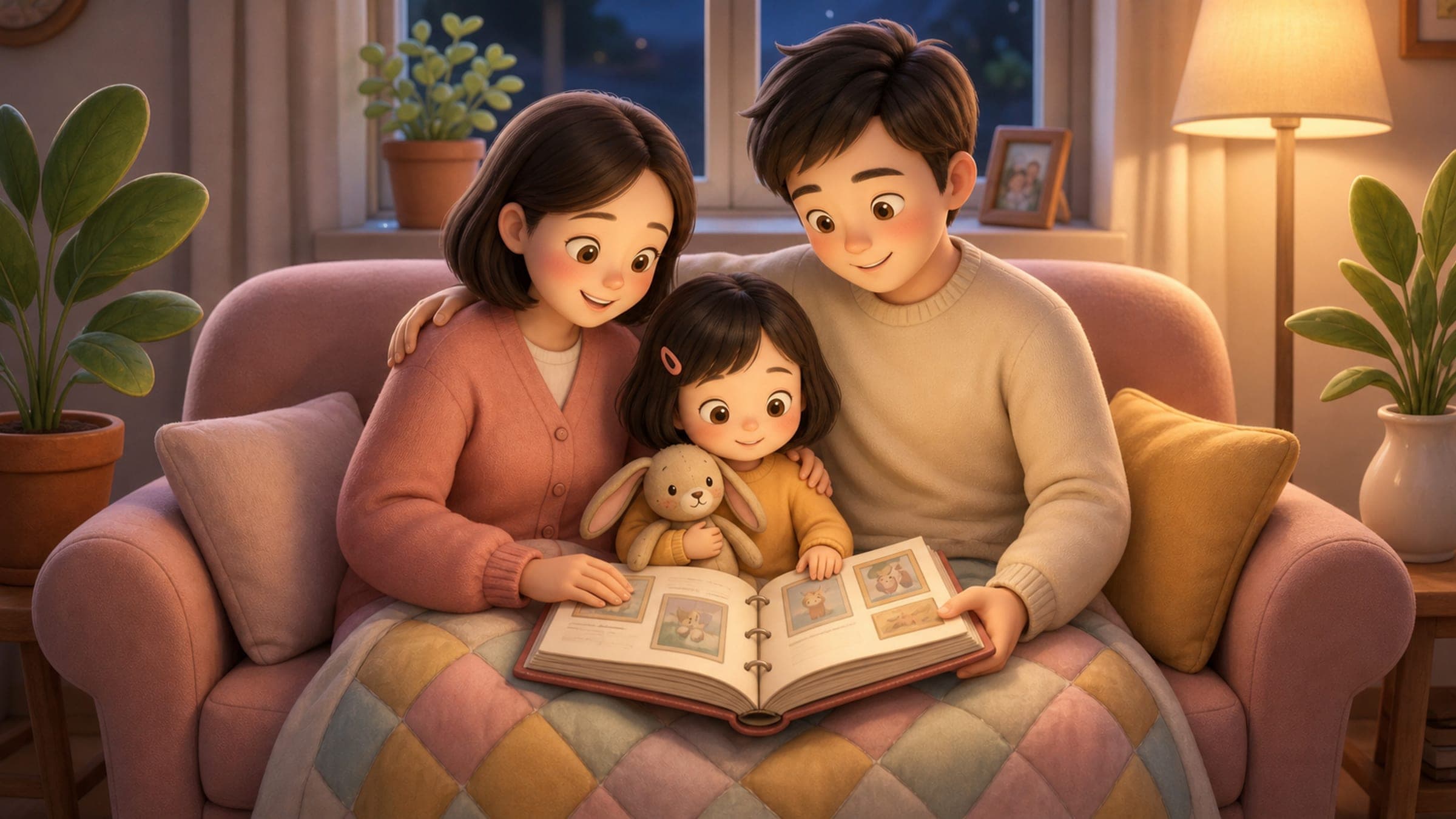
One evening her family read her a new book with a girl on the cover who had Lucia's dark hair, a photo album, and Lucia's own name across the top. In the story, Lucia had questions about being adopted too. Her family answered the facts they knew, said "we don't know yet" when that was true, and wrote down questions for an adoption-competent professional. The book named important people without ranking one family relationship over another.
4. She asks, and feels secure
As she heard the story, Lucia asked what was on her mind. Her family answered honestly, checked whether she wanted more detail, and respected her choice to stop. They did not promise that one conversation would settle how she felt.
5. She comes back to the book
The book remained one optional way for Lucia to collect facts and questions. Her family updated it when they learned something new, respected what she wanted kept private, and sought adoption-competent help when a question needed more support.
How can you use a read-aloud plan for questions about being adopted?
- Welcome your child's adoption questions warmly, whenever they come.
- Answer honestly and age-appropriately, telling their story with love.
- Reassure them often of their permanent, complete belonging.
- Lean on adoption-competent resources or a counselor for the harder questions and feelings.
When will a child start asking about adoption?
Children often begin asking as they develop, sometimes in the preschool years and more deeply as they grow, and keeping the topic open and welcome from early on helps them feel safe to ask. The American Academy of Pediatrics advises that adoption should never be a secret, that you explain it simply, directly, and honestly, and that ongoing, open conversation over the years builds trust and strengthens your relationship as your child's questions naturally evolve (When to Tell Your Child About Adoption).
What does outside guidance add for questions about being adopted?
Child Welfare Information Gateway recommends honest, age-appropriate adoption conversations and gives families language for explaining adoption without secrecy or shame. Let the child set the pace for questions, and do not turn a complicated family history into a tidy rescue narrative (Parenting Your Adopted Preschooler).
Keep reading: adoption questions and adoption day are part of the same loving story — see how this approach helps a family celebrating adoption day.
More related guidance:
- A Cross-Country Move? A Story That Helps a Child Carry Home With Them
- Becoming a Big Sibling: Make Room for Mixed Feelings
- Raised by Grandparents: A Story About Their Real Family
- Can One Photo Include Siblings and Pets?
- Personalized Story Ideas Hidden in Everyday Family Moments