Story ideas
How do you honor and celebrate a child's adoption day?
How to approach adoption-day storytelling with honest language that honors a child's history, relationships, belonging, and mixed feelings.
The short answer
Let the child decide how much celebration feels right. Use honest, age-appropriate language, honor birth-family and pre-adoption relationships, and make room for joy, grief, curiosity, or no strong feeling. A personalized story can document the day and the people who matter without describing the child as chosen over others or prescribing how the child should understand their adoption.
Key takeaways
- Adoption day can hold joy, grief, curiosity, mixed feelings, or no wish to celebrate.
- Children love hearing their own story told with warmth and honesty.
- Celebrate the belonging, welcome all the feelings, and honor the family's own story.
- A story can document the day while honoring the child's full history and relationships.
How do you honor and celebrate a child's adoption day?
Let the child guide whether and how the day is marked, and use honest language that fits what they know about their adoption. Adoption day may hold joy alongside grief, loyalty, curiosity, or discomfort. A keepsake should honor the child's history and important relationships rather than tell the child which emotion or family narrative is correct.
Adoption stories are deeply personal. Some children want to revisit theirs often; others want privacy or distance. A personalized book should follow the child's preferences rather than act as proof of belonging.
Why does a story work to mark this day?
A personalized story can preserve the people, places, and age-appropriate facts the child wants included. Avoid comparisons that rank one child or family relationship over another, rescue language, and promises the family cannot verify. Center the child's voice and allow the story to change as their questions change.
What does a good adoption-day story look like?
The names and characters are invented for this example, and every family's adoption story is unique. In a real personalized book, the hero is your own child, and the details can honor your family's own story.
1. A hero with a big day
It was the day Amara's adoption was finalized. Her family asked whether she wanted balloons and cake and which important people or memories she wanted included.
2. A feeling she can name
Amara felt so happy she could burst, and also, underneath, a few big and tender feelings she didn't have words for. That's okay, her family told her. On a day this big, all the feelings are welcome.
3. A familiar point of view
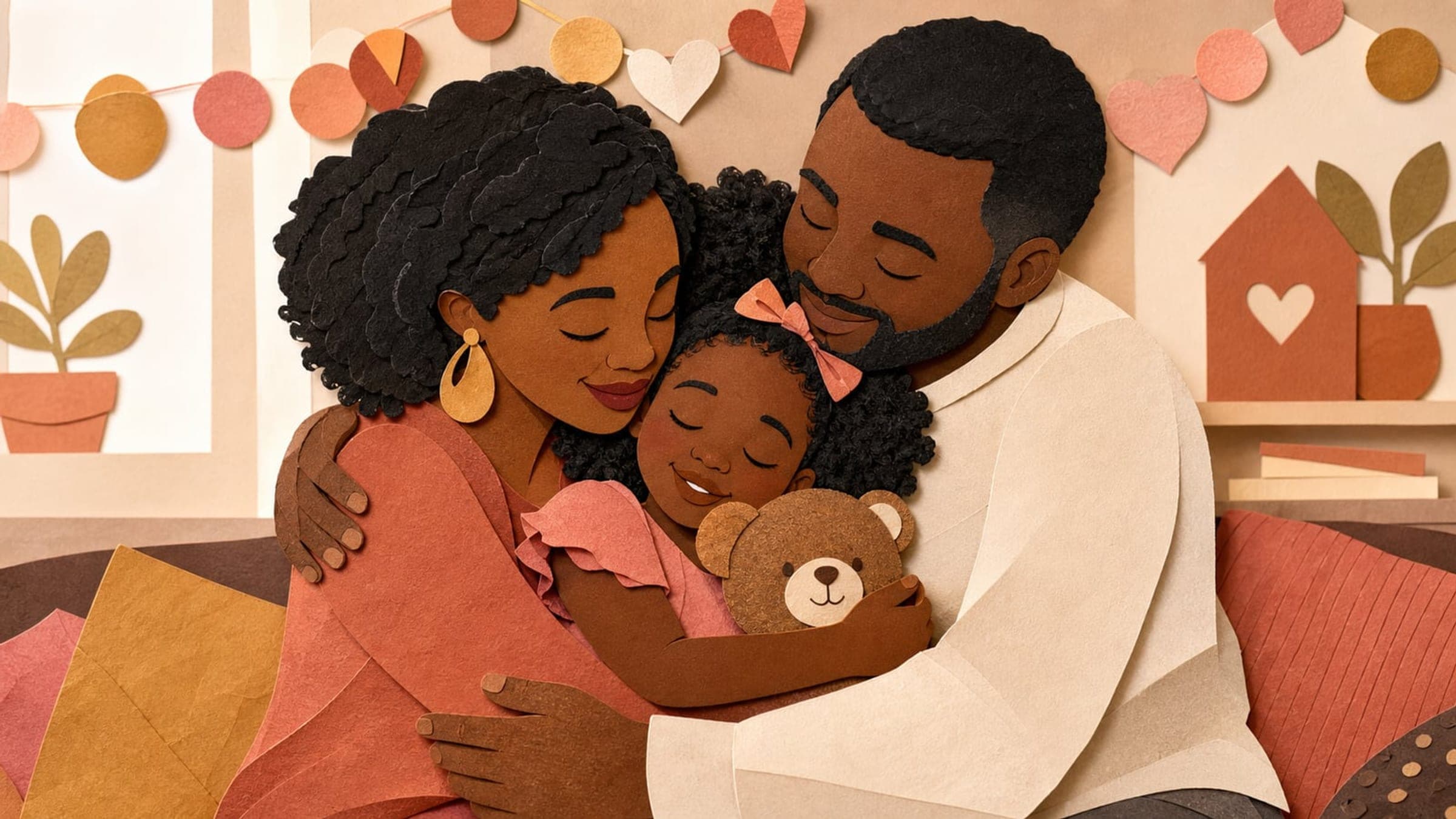
That evening her family read a new book with a girl on the cover who had Amara's dark curls, surrounded by people she had chosen to include, and Amara's own name across the top. The story used the facts her grown-ups could share, named people from before and after the adoption without ranking them, and left a page for questions or feelings Amara wanted to add later.
4. She feels the joy of belonging
As she heard her story, Amara paused on a page about someone important from earlier in her life. Her family listened, answered what they could, and wrote down a question they needed help answering. Amara chose whether to keep reading or take a break.
5. She comes back to the book
The book stayed available without pressure. Amara could revisit it, correct it, add to it, or decide not to use it. Her family treated those choices as part of honoring her story.
How can you use a read-aloud plan for adoption day?
- Celebrate adoption day joyfully while leaving room for whatever feelings arise.
- Tell your child's story in an age-appropriate, honest, and loving way that honors their history.
- Make the book a keepsake to revisit on future adoption-day anniversaries.
- Lean on adoption-competent resources or counselors if bigger questions or feelings come up over time.
Is it normal for a child to have mixed feelings on adoption day?
Yes — adoption can hold joy and more complicated feelings at once, and welcoming all of it matters. The American Academy of Pediatrics advises that adoption should never be a secret and that you tell your child's story simply, directly, and honestly, allowing them to express whatever feelings come up; ongoing, open conversation over the years builds trust and strengthens your relationship (When to Tell Your Child About Adoption).
What does outside guidance add for adoption day?
Child Welfare Information Gateway emphasizes that permanency can bring both excitement and loss. An adoption-day story should make room for mixed feelings and continuity with the child's history instead of requiring uncomplicated celebration (Helping Your Child Transition from Foster Care to Adoption).
Keep reading: belonging and finding a safe home are close cousins — see how this approach helps a child who's joining a foster family.
More related guidance:
- Becoming a Big Sibling: Make Room for Mixed Feelings
- Raised by Grandparents: A Story About Their Real Family
- Can One Photo Include Siblings and Pets?
- Gaining Stepsiblings? A Story That Turns a Bigger Family Into a Team
- Personalized Story Ideas Hidden in Everyday Family Moments