Story ideas
How do you support a child who uses a wheelchair, walker, or prosthetic?
How to follow a child's language and privacy choices, show mobility equipment accurately, and make inclusion an adult and environmental responsibility.
The short answer
Use the child's preferred disability and equipment language, ask whether they want questions answered, and show the device accurately without turning it into inspiration or a superpower. Adults should remove access barriers instead of asking the child to adapt every activity. A personalized story can center ordinary interests and agency, but it should not prescribe pride, disclosure, or performance.
Key takeaways
- A child who uses mobility equipment navigates a world that isn't always built for them.
- They may field curious questions or feel left out of certain activities.
- Follow the child's words, privacy choices, and relationship to their equipment.
- Make access an adult and environmental responsibility, not a test for the child.
How do you support a child who uses a wheelchair, walker, or prosthetic?
Follow the child's preferred language and relationship to their equipment. Ask whether they want to explain it, personalize it, ignore questions, or use another response. Adults should fix access barriers and protect the child's participation without making them demonstrate ability or gratitude.
Representation matters, but one story cannot fix structural exclusion or determine how a child feels about disability.
Why does a story work?
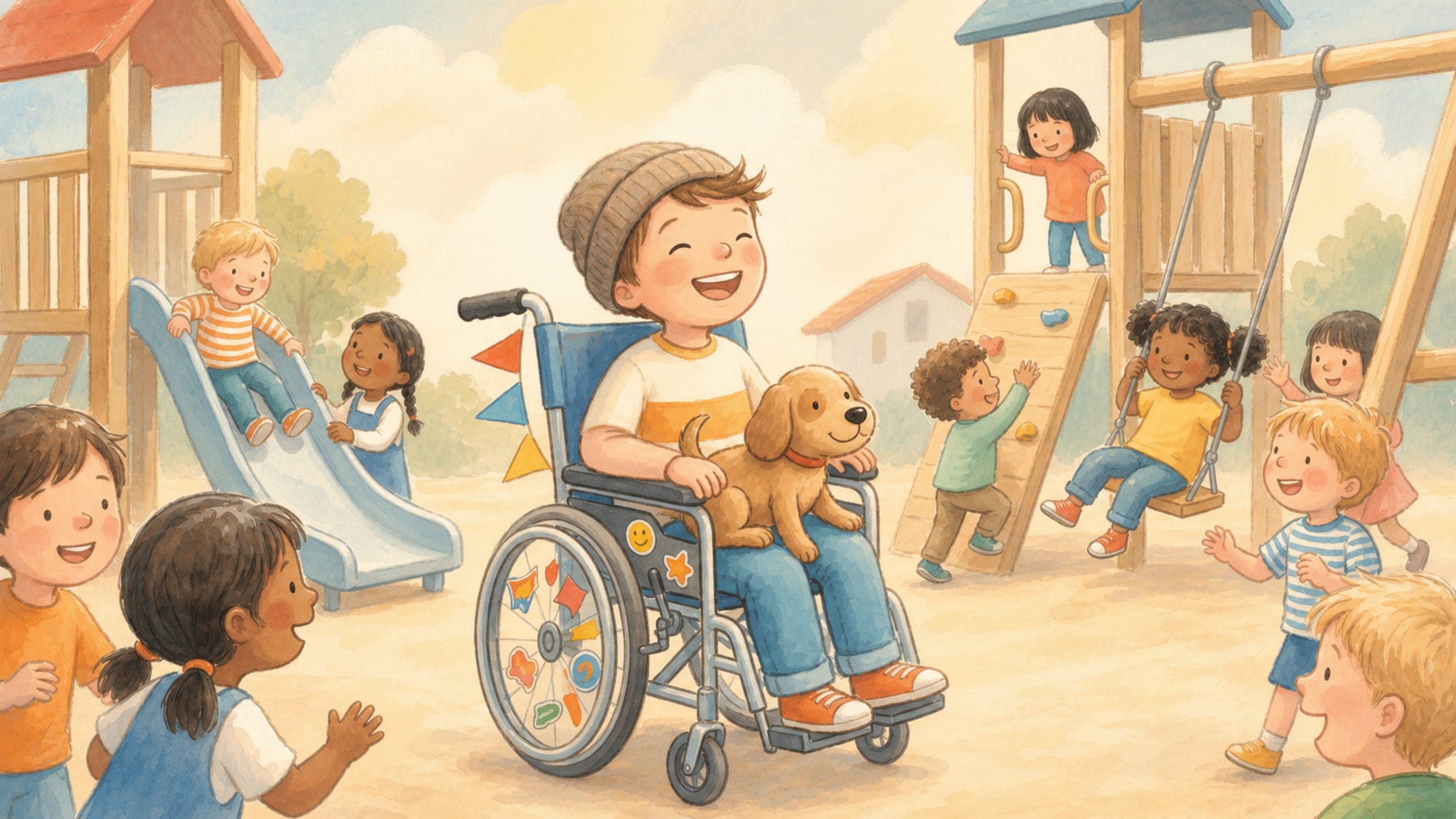
A story can show a child pursuing ordinary interests while adults provide access. Depict the actual equipment accurately and avoid inspiration, rescue, cure, or "overcoming" framing. Let the child choose whether the device is central, incidental, decorated, or discussed.
What does a good story look like?
The names and characters are invented for this example, and the story can be adapted for a walker, prosthetic, or other equipment. In a real personalized book, the hero is your own child.
1. A hero with his own way of getting around
Jae used a wheelchair to get around, and he was fast and capable in it. But sometimes kids asked lots of questions, or certain activities weren't set up for him to join, and Jae could feel left out or unsure how to respond.
2. What he wants
Jae wished he always felt like part of the group, and he wasn't sure what to say when kids were curious about his chair. He wanted to feel proud, not singled out.
3. A familiar point of view
One evening his dad read him a new book with a boy on the cover who had Jae's smile and used a wheelchair like Jae's. The story gave Jae several choices when someone asked a question: explain, use a short prepared sentence, change the subject, or ask an adult to step in. When a game was inaccessible, the adults changed the setup instead of asking Jae to solve the barrier.
4. He plays, belongs, and leads
Real Jae chose the response that fit that day. He also marked one device detail the illustrator needed to correct. At the next activity, the adults had already changed the route and equipment so Jae could participate without being singled out.
5. He comes back to the book
The book remained editable as Jae's equipment, language, and privacy choices changed. It did not ask him to teach others or feel one approved emotion.
How can you use a read-aloud plan for using a wheelchair walker or prosthetic?
- Use the child's preferred disability and equipment language.
- Ask whether the child wants the device discussed or simply shown accurately.
- Offer choices for handling questions, including not answering.
- Make adults responsible for access and inclusion.
What should a child say when kids ask about their equipment?
Offer choices: a child might say "These are my wheels, they help me get around," give a shorter answer, change the subject, or decline to explain. The American Academy of Pediatrics emphasizes removing barriers and adapting physical activity so children with disabilities can participate alongside peers; the responsibility for access belongs with adults and programs, not with a child's willingness to discuss equipment (Physical Activity for Children and Teens with Disabilities: AAP Policy Explained).
What does outside guidance add for using a wheelchair walker or prosthetic?
UNICEF frames children with disabilities as rights-holders with autonomy and agency and notes that language preferences can differ across communities. Center the child's ordinary interests and choices, show access as an environmental responsibility, and follow the child or family's preferred identity language (How Can We Achieve Disability Inclusion?).
Keep reading: pride in who you are is the throughline — see how this approach helps a child who's much smaller or taller than everyone.
More related guidance:
- Using an Inhaler for Asthma? A Story That Makes the Routine Calm
- ADHD and Feeling Like 'Too Much'? A Story About Needs and Strengths
- Broke a Bone and Needs a Cast? A Story That Turns It Into a Badge
- Scared of Getting a Shot? A Story That Gives Your Child a Brave Plan
- Personalized Story Ideas Hidden in Everyday Family Moments