Story ideas
What should I do if my child might have a concussion?
Concussion in kids: symptoms after a head bump or sports hit, why scans look normal, the first two days of rest, and the steps back to school and play.

The short answer
Any child with a head injury and symptoms such as headache, dizziness, confusion, vision changes, vomiting, trouble walking or talking, or memory gaps should be checked by a health care provider. Concussions don't show on CT or MRI. Recovery means a day or two of quiet rest with no screens, then a gradual return to activities, school after a few days, and no sports until symptoms are gone and a provider clears your child. Call 911 if they can't be woken or have a seizure.
If your child might have a concussion, stop the game or activity, have them checked by a health care provider, and plan for a day or two of quiet rest followed by a slow return to normal life. Nemours KidsHealth explains that a concussion is a brain injury that changes how the brain works for a while, and that symptoms usually go away within a few days to a month (Concussions, accessed November 13, 2026).
What a concussion is
A hard bump or jolt makes the brain move inside the skull. KidsHealth says that movement causes chemical and blood flow changes in the brain, which lead to symptoms. It can follow a hit to the head, such as a fall from the monkey bars, but it can also happen without one, for example when the head snaps forward and back in a car crash.
Kids don't have to be knocked out to have a concussion. Most children with a concussion never lose consciousness.
Symptoms to watch for
KidsHealth lists signs that can appear right away or over hours to days:
- headache
- confusion
- dizziness
- vision changes
- nausea or vomiting
- trouble walking or talking
- not remembering the injury, or what happened just before or after
- feeling sluggish
Over the following days, some kids also have trouble focusing or learning, sleep changes, worry or sadness. Young children may not have words for these. Look for a toddler who is unusually cranky, clingy, off-balance, uninterested in favorite toys, or sleeping and eating differently.
How kids get them
KidsHealth says most concussions in kids and teens happen in sports, with the highest risk in cheerleading, football, ice hockey, lacrosse and soccer, among other sports. Car and bike accidents, falls and fights are other causes. For younger children, falls from furniture, playground equipment and stairs are common.
How it's diagnosed
A provider will ask how and when the injury happened, ask about symptoms, test memory and concentration, and check balance, coordination and reflexes.
Many parents expect a scan. KidsHealth explains that concussions don't show up on a CT or MRI. Those tests may be done to look for other problems if your child was knocked out, keeps vomiting, has a severe or worsening headache, or was hurt in a serious accident like a car crash or a high fall.
The first two days
KidsHealth's guidance for a mild concussion:
- cut back on physical activity and on things that take a lot of concentration, like schoolwork
- relax at home; sleeping when tired is fine
- calm activities are okay: talking with family, reading, drawing, coloring, a quiet game
- no screens for the first 2 days, including TV, computers and phones
- acetaminophen or ibuprofen for headache in the first few days, following the label
Easing back in
After a day or so, KidsHealth says kids can start adding activities, like a walk. Symptoms don't have to be completely gone before adding something new, but if an activity makes them worse, take a break and try again later or try a gentler version.
Back to school usually comes after a few days. Work with your provider and the school on a plan, which may start with shorter days or lighter work. When screens come back, keep them limited; video games, texting, TV and social media are likely to stir up symptoms. Protect sleep with regular bed and wake times, no screens or loud music before bed, and no caffeine.
Sports wait until clearance
Keep your child out of sports and anything that risks another head injury, including rough play, bikes and skateboards, until symptoms are completely gone and a provider clears them. KidsHealth stresses that a second head injury before the first has healed can be very dangerous, and repeated concussions can have long-lasting effects on the brain. Never tell a child to "tough it out."
When to call
KidsHealth advises calling your provider if your child:
- isn't back at school 5 days after the concussion
- isn't doing their usual schoolwork 2 weeks after returning
- still needs headache medicine a week or more later
- has symptoms like headache, vomiting, confusion or dizziness that aren't improving or are getting worse
- still has symptoms 4 weeks later
- passes out
Go to the ER or call 911 if your child can't be woken up or has a seizure.
A bump that also splits the skin needs its own check, since scalp cuts bleed a lot; our guide on when a cut needs stitches covers the timing.
Lowering the risk
Helmets for bikes, scooters and skating, properly installed car seats and booster seats, safety gates on stairs for toddlers, and soft surfaces under playground equipment all help. For school-age athletes, teach them to report any hit that leaves them feeling "off," and make sure coaches pull a player who might be hurt.
Supporting your child
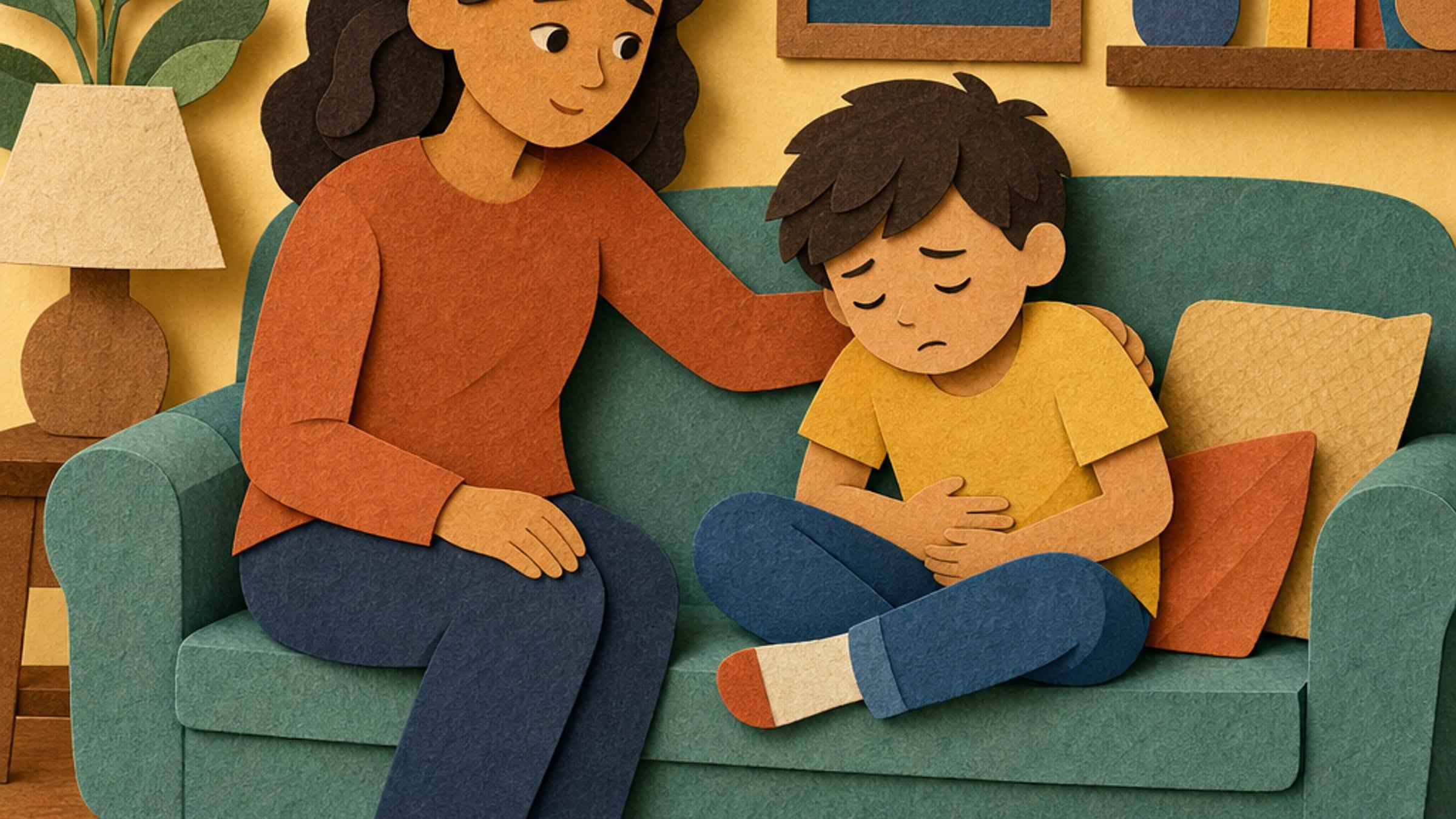
Rest days can feel boring and confusing. Explain simply: "Your brain got bumped and needs a few quiet days to heal." Set up a cozy spot with books, crayons and audiobooks, and give them small choices about the day.
If a hospital visit or scan was part of it, a personalized story about a brave hospital visit can help a young child make sense of it. See the hospital book and our guide to preparing a child for an MRI.
Related reading
FAQ
Should I keep my child awake after a head injury?
Kids can sleep if they're tired. Get emergency care if you can't wake them.
Will a CT scan show a concussion?
No. Concussions don't show on CT or MRI; scans look for other injuries.
When can my child play sports again?
Only after symptoms are completely gone and a health care provider clears them.