
A folded, stapled picture book is one more craft: see how to make a book.
A look inside
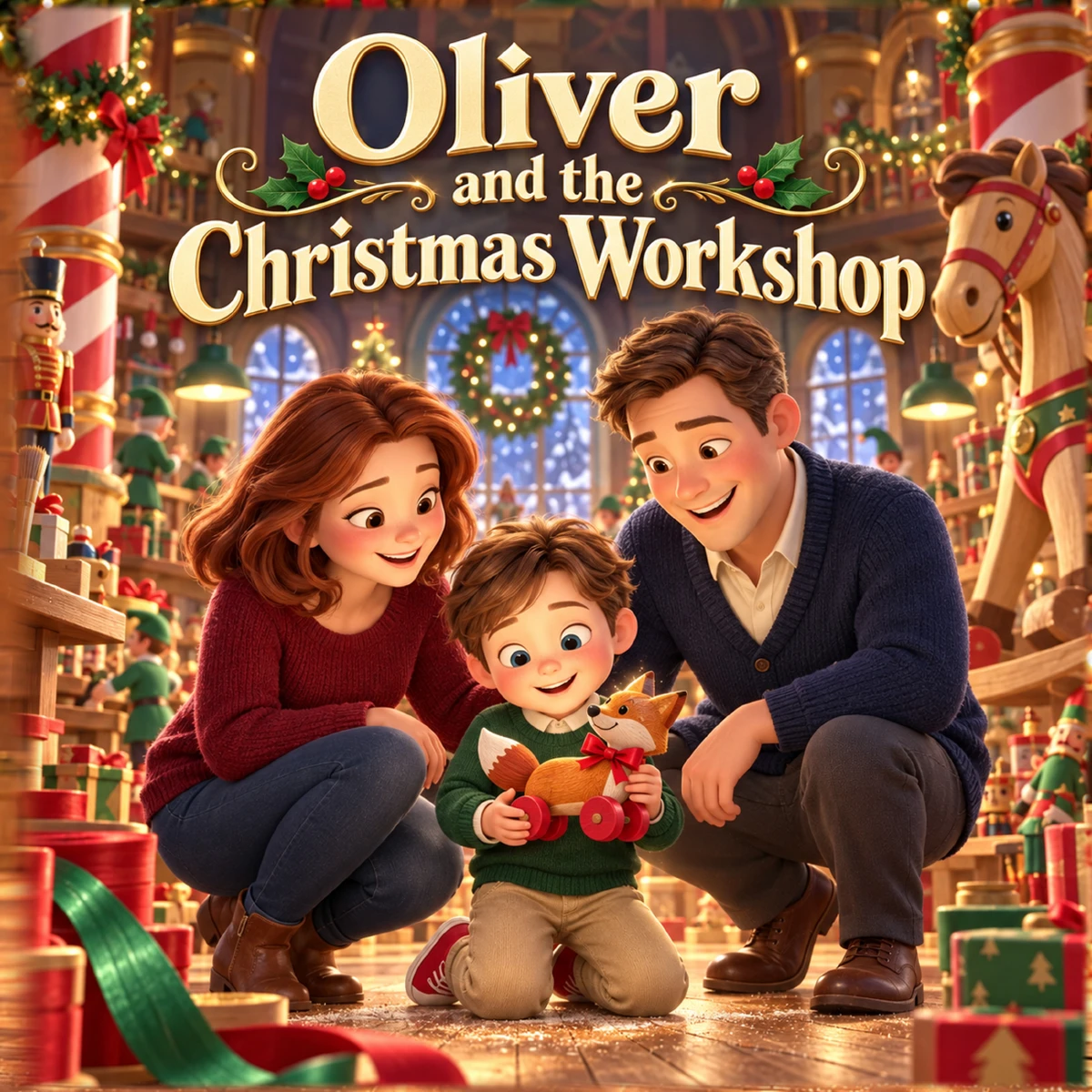
Oliver and the Christmas Workshop
Occasion: Christmas
Shown as Oliver, age band 3-7.
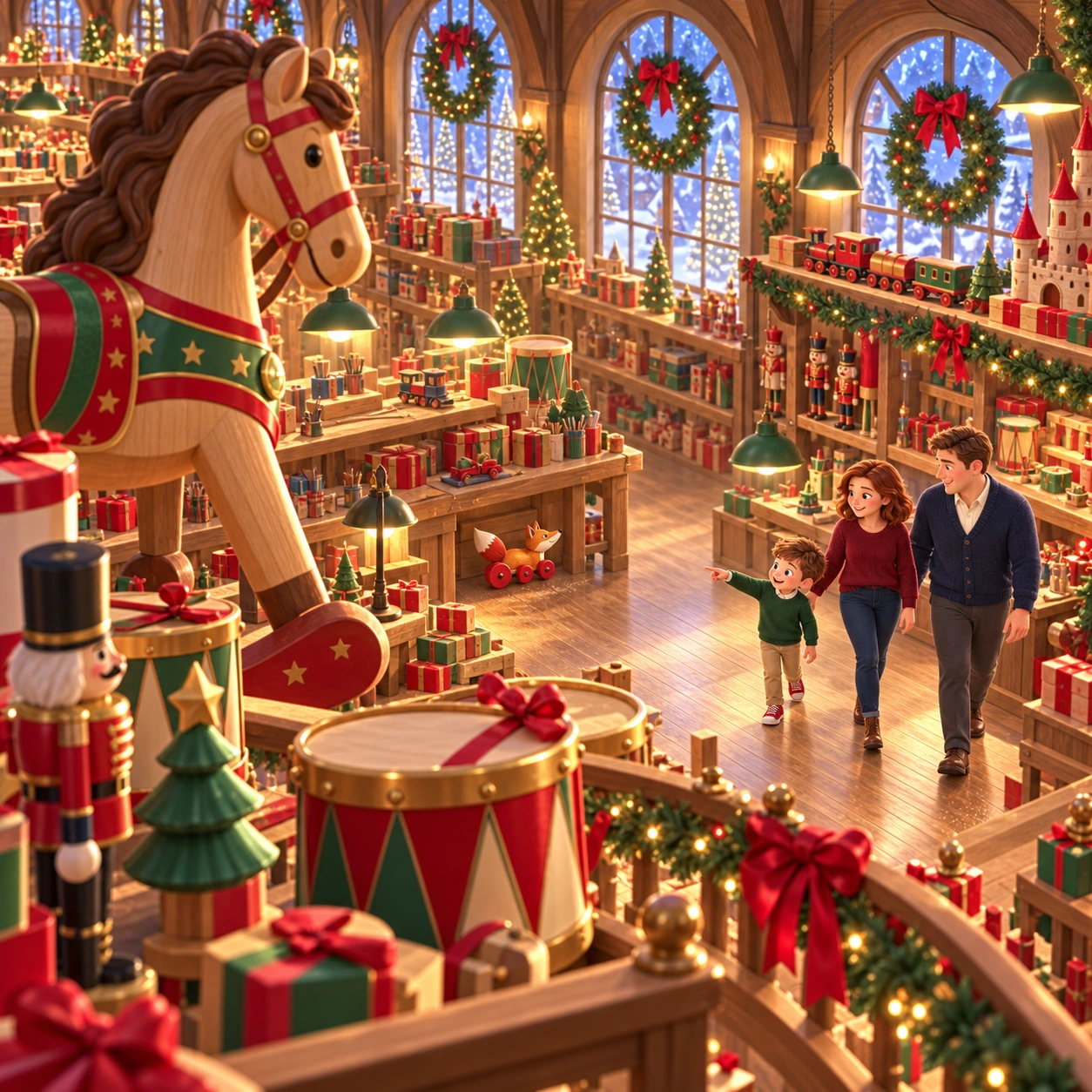
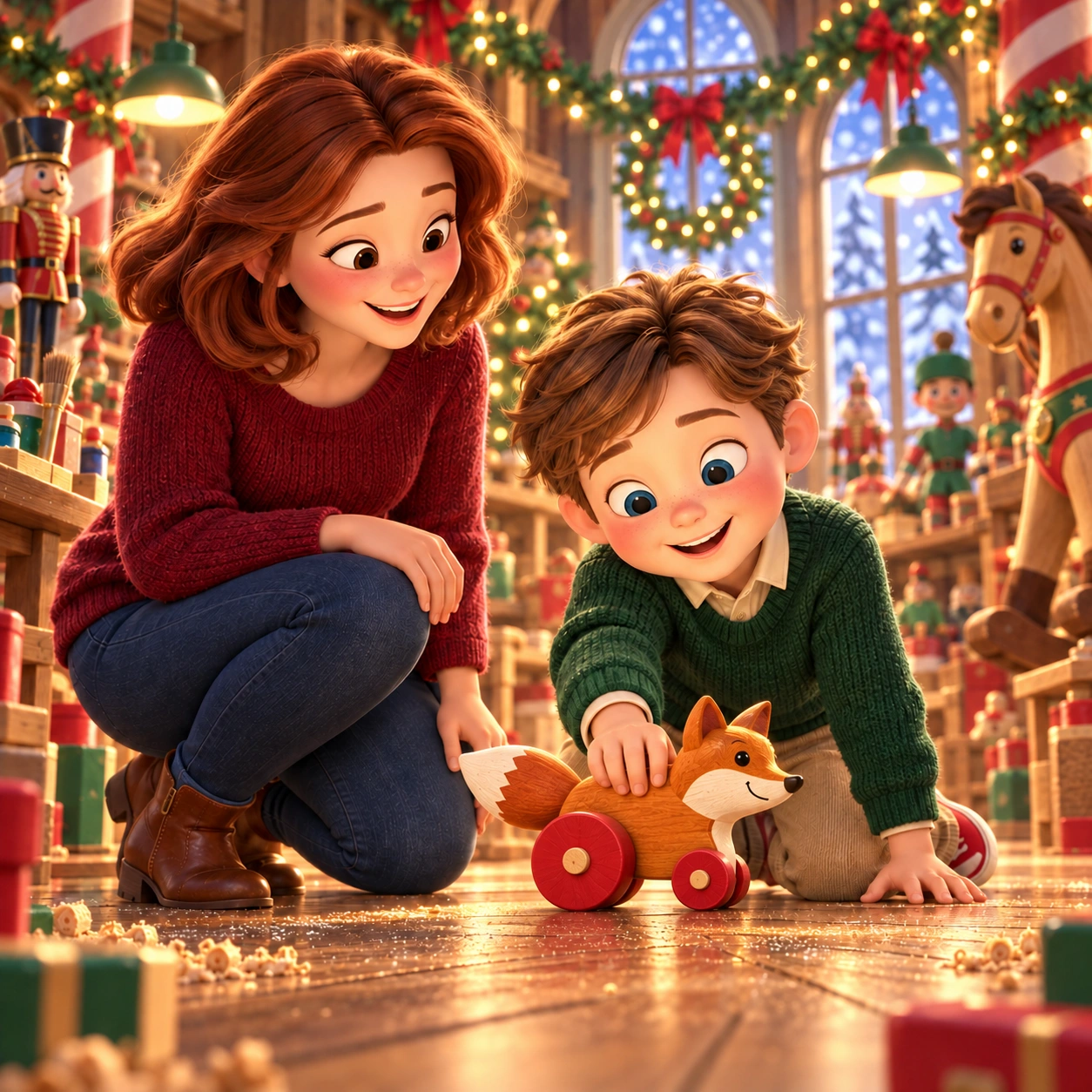
Spread 2
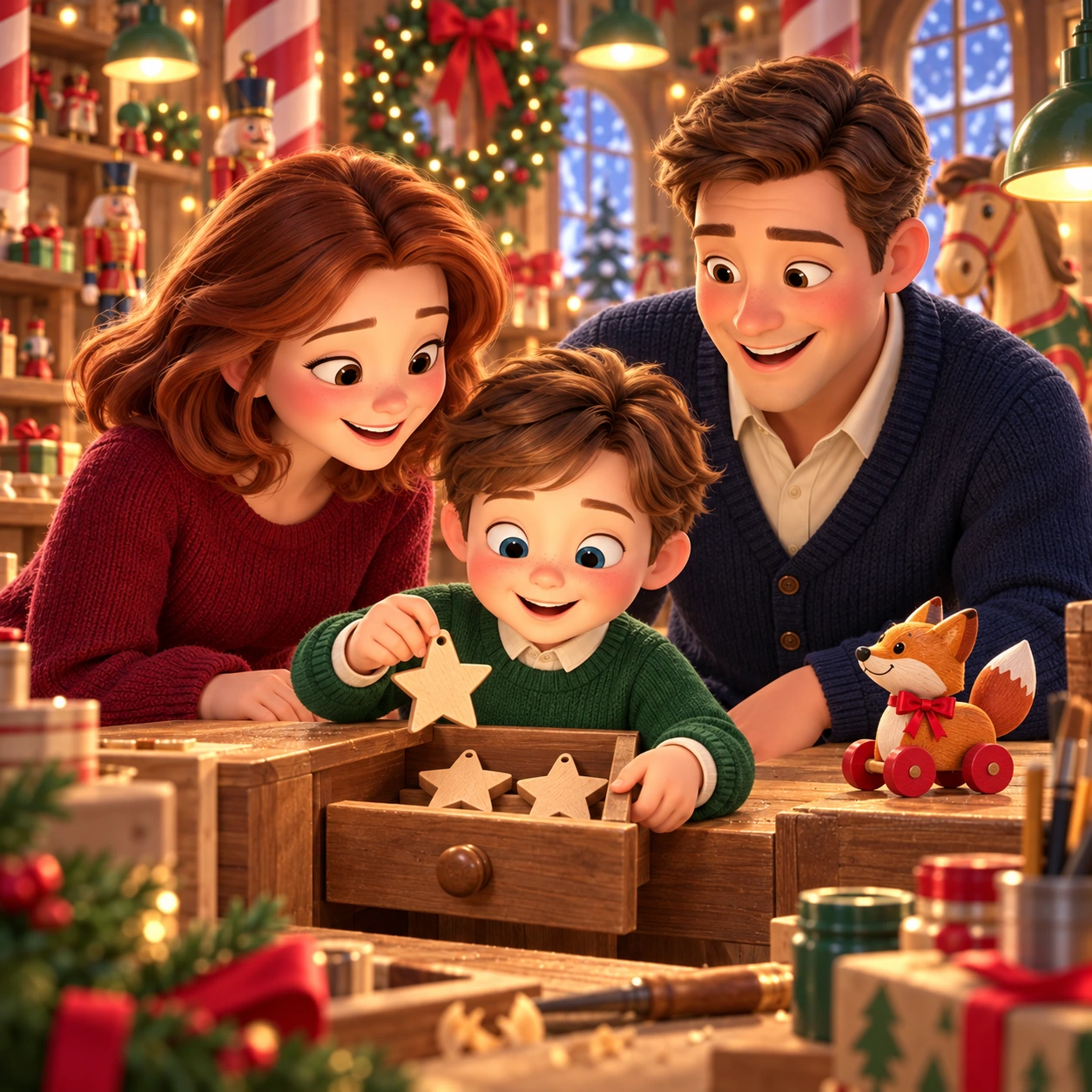
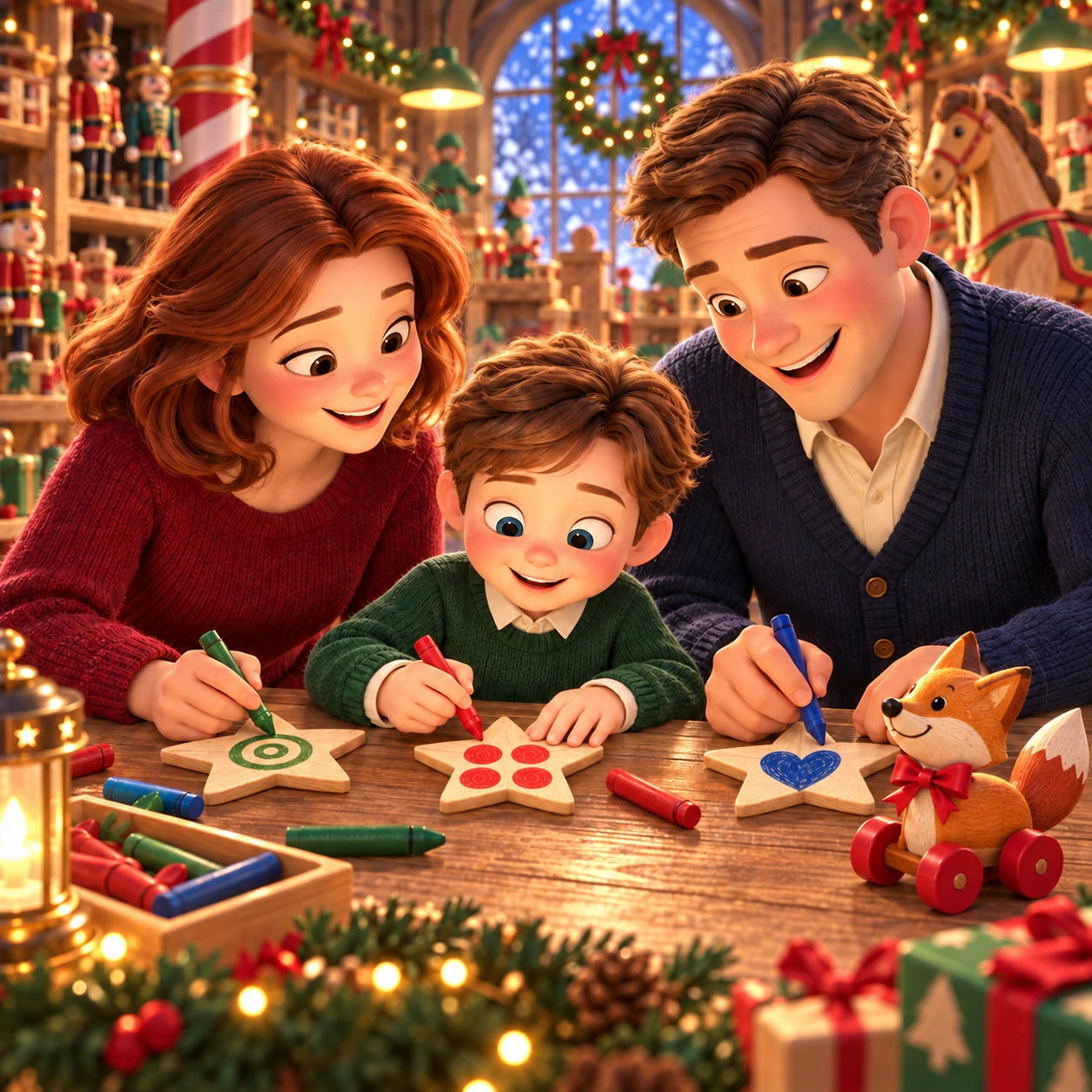
Spread 8
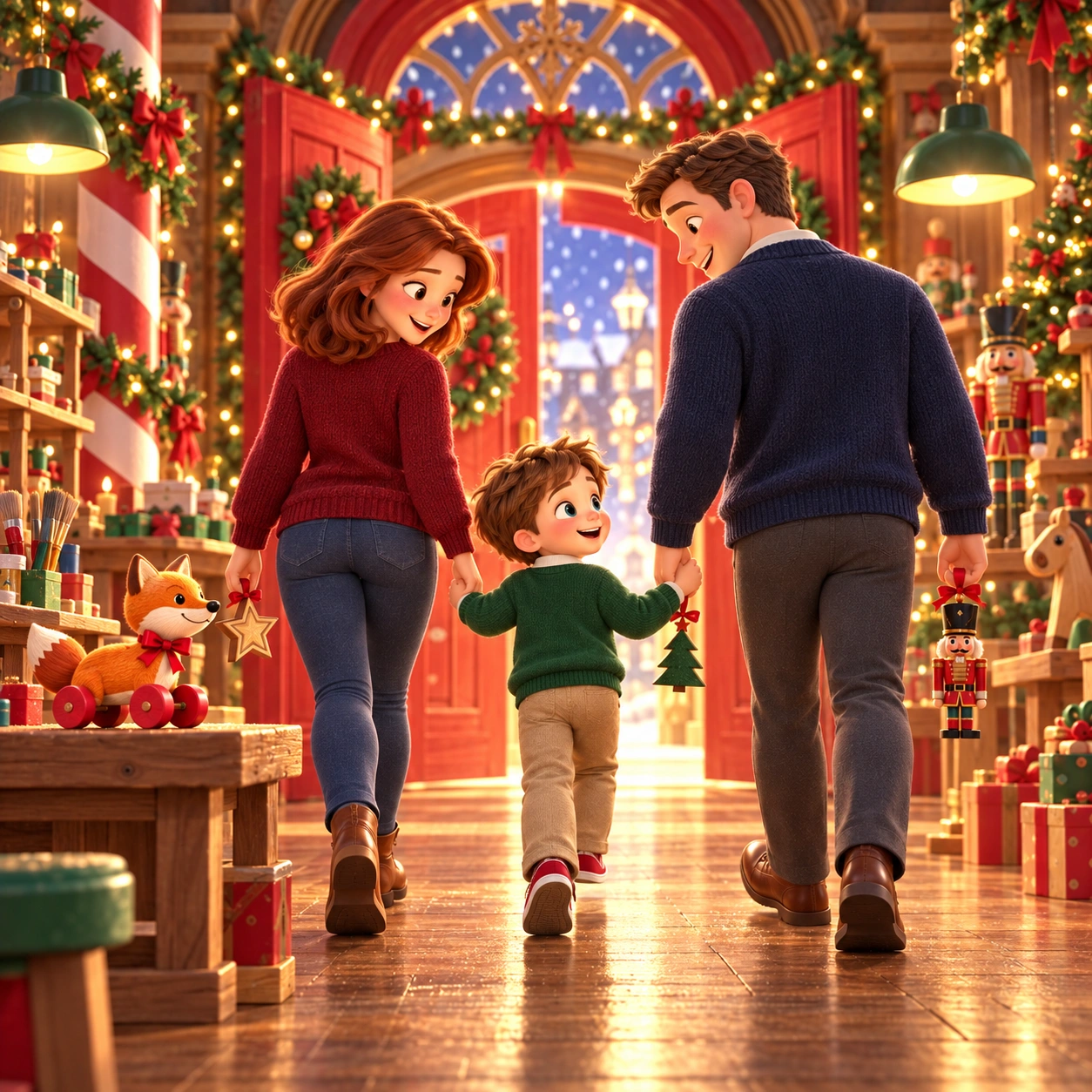
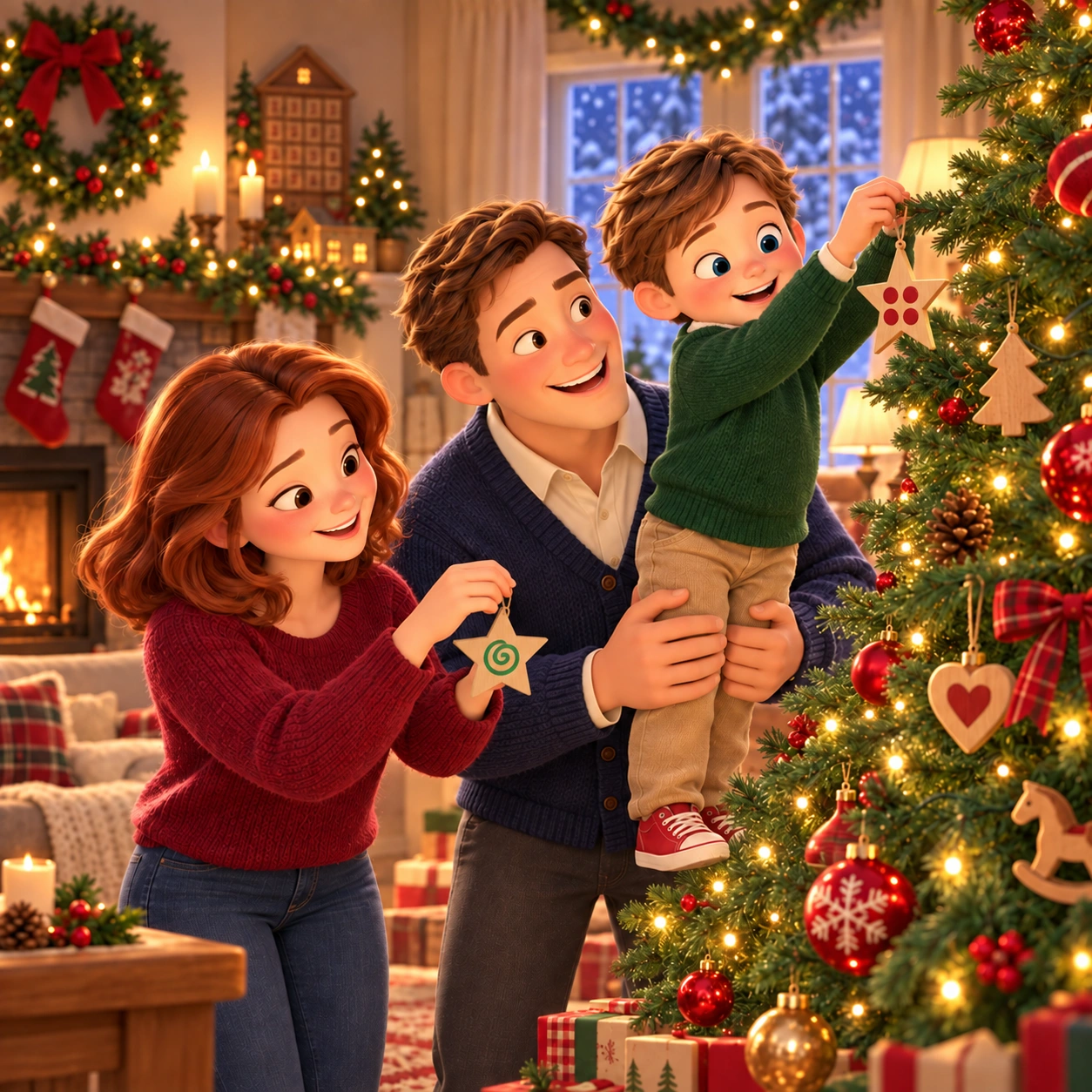
Spread 9
Story excerpt
There were rocking horses taller than Dad and drums as round as tables. Oliver spotted a tiny wooden fox beneath a bench. ‘Hello. What are you doing down there?’ He gave the fox a gentle push. Wibble. Wobble. Stop. One wheel was much too big. ‘You won’t get far like that,’ Oliver said.
These pages come from a made-up family. The book you make uses your names, photos, and the details you share, and its story is written fresh.
Makers who are three, four, or five
A preschooler around three, four, or five wants to hand over something their hands finished. These projects are one or two moves they can do. You handle anything sharp, hot, or tiny enough to swallow. A two-year-old is younger than the projects and younger than the read-aloud, which starts at 3.
Cinnamon clay tags: knead cinnamon into air-dry clay, let them press a shape, and poke a hole with a straw. Dry overnight on the counter. You thread the yarn. They did the pressing, which is the part they will announce.
Glitter snowflakes: tear flakes, then shake glitter inside a closed box so it misses the floor. You cut the outline. They shake and point. A torn-paper mosaic uses paste instead of loose glitter when the floor has had enough.
An easel painting of the person who will receive it can be rolled and tied with yarn. Keep the sitting short. One finished object beats three half-dry ones. Start early in the month if a mailbox is involved.
The keepsake is not a craft kit, and the preschooler does not write it. An adult enters one snapshot, a first name, and the customs to keep. The maker picks the person, the pet, or the habit: who visits, the cat on the sill, how you light the evening. The range is 3 to 7. You approve the proof before paper. If you start late, the file can go out the day you approve it.
Three projects are enough. Gouache or tempera on a bristled brush, with a smock and a palette, and stipple instead of a wash if the paper is buckling. A beeswax taper is an adult pour: they watch the wick, they do not hold the heat. Raffia, jute, or twine around a clothespin makes an ornament they can hang. Chenille stems bend into a shape. Cellophane on a window is a suncatcher. Decoupage is torn bits on a box, pressed flat. A lichen rubbing, an acorn cap, and a burr glued to the lid are the outside finds. Fringe cut by you, and a garland they drape, finish the table.
Set the smock before the gouache or the tempera. The bristle brush stays on the palette. Stipple, then stop. The beeswax taper stays unlit, wick centered, until a grown-up decides. Raffia, jute, and twine are not for mouths. The clothespin is the handle. Chenille stems get a count-in and a count-out. Cellophane for the suncatcher is taped by you. Decoupage scraps stay on the tray. The lichen, the acorn, and the burr stay on the lid, not the floor. You cut the fringe. They drape the garland.
Cleanup is part of the present. Rinse the bristle brush. Close the gouache and the tempera. Wipe the palette. Hang the smock. Cap the beeswax. Trim the wick only if it is long, and only you. Bag the raffia, the jute, and the twine. Count the clothespins and the chenille stems. The cellophane suncatcher stays on the window. The decoupage box dries flat. The lichen, the acorn, and the burr are already stuck. The fringe and the garland go on the package, not back in the bin.
What gets personalized
Share one snapshot, a first name, and how the household marks the day. The preschooler chooses the person, the pet, or the custom. You type.
Sentences come after checkout from what you enter. You approve a proof before paper. The range is 3 to 7. It is a read-aloud, not a worksheet. In the note, name the thing they made: gouache, tempera, bristle, smock, palette, stipple, beeswax, wick, taper, raffia, jute, twine, clothespin, chenille, cellophane, suncatcher, decoupage, lichen, acorn, burr, pressed, fringe, garland.
Format, price, and timing
Crafts take an afternoon. A printed book takes longer: production and transit are on Pricing, and the cards here are the book totals. If you start late, the digital copy can be shared with grandparents as soon as you approve it.
Prices
Digital book
$15
Total, plus shipping and tax
- Every page illustrated
- Downloadable PDF
Digital + softcover
$35
Total, plus shipping and tax
- Your full custom story
- Every page illustrated
- Shipping shown before payment
Digital + hardcover
$45
Total, plus shipping and tax
- Everything in Softcover
- Durable hardcover binding
- Gift-ready finish
- Shipping shown before payment
Pricing shows these same totals.
Questions
What can small hands actually finish?
A cinnamon-clay tag with a straw hole, a glitter snowflake shaken in a closed box, a torn-paper mosaic, or an easel painting rolled with yarn. You cut and you thread.
How do they help with the keepsake?
They pick the person, the pet, or the custom. An adult types and approves the proof. They are not asked to write sentences.
Who receives the finished read-aloud?
The preschooler, or a grandparent who wants a household keepsake. Either way the range is 3 to 7, not a baby.
Will a printed book arrive for Christmas?
Christmas order-by dates are published on the pricing page when they are visible there. Until then, use the production time in the format section below.