Story ideas
How do you help a child feel safe joining a new foster family?
How to welcome a child to a foster home with concrete present-tense information, predictable routines, privacy, and guidance from the child's team.
The short answer
Use concrete present-tense information: who is here today, where the child can keep belongings, what happens next, and which adults they can contact. Keep routines and familiar objects close, protect private history, and avoid promises about safety or permanence that a caregiver cannot guarantee. Build any personalized story with the child's caseworker or trauma-informed professional and let trust develop at the child's pace.
Key takeaways
- A child joining a foster family arrives in an unfamiliar home during an uncertain, often frightening time.
- They may carry grief, confusion, and worry, and a very real need to know they are safe.
- Offer concrete information, welcome every feeling, and avoid promises you cannot guarantee.
- A gentle story where your child is welcomed warmly, done alongside their care team, can offer real comfort.
How do you help a child feel safe joining a new foster family?
Use concrete, present-tense information: who is in the home today, where belongings go, what the next routine is, and which adults the child can contact. A child arriving at a foster home may carry grief, uncertainty, or fear. Avoid promises about permanence or outcomes and coordinate language with the child's caseworker.
A child entering foster care has often experienced a great deal, and words spoken directly can feel overwhelming. A story offers reassurance at a safe distance.
Why does a gentle story help?
A story can preview the room, people, routines, contact options, and questions without disclosing private history. Because foster care involves complex feelings and legal circumstances, a caseworker, therapist, or trauma-informed professional should help decide whether a personalized story fits this child and which facts it may include.
What does a gentle foster-family story look like?
The names and characters are invented for this example. In a real personalized book, the hero is your own child, ideally with guidance from their care team.
1. A hero arriving somewhere new
Sam came to live with a foster family, in a home he'd never been to before, with grown-ups he was just getting to know. Everything was unfamiliar, and Sam wasn't sure what to expect.
2. A worry he can name
Where was he? Was he safe? What was going to happen? Sam had a lot of big feelings all tangled up, and he didn't have words for most of them. The not-knowing was hard.
3. A familiar point of view
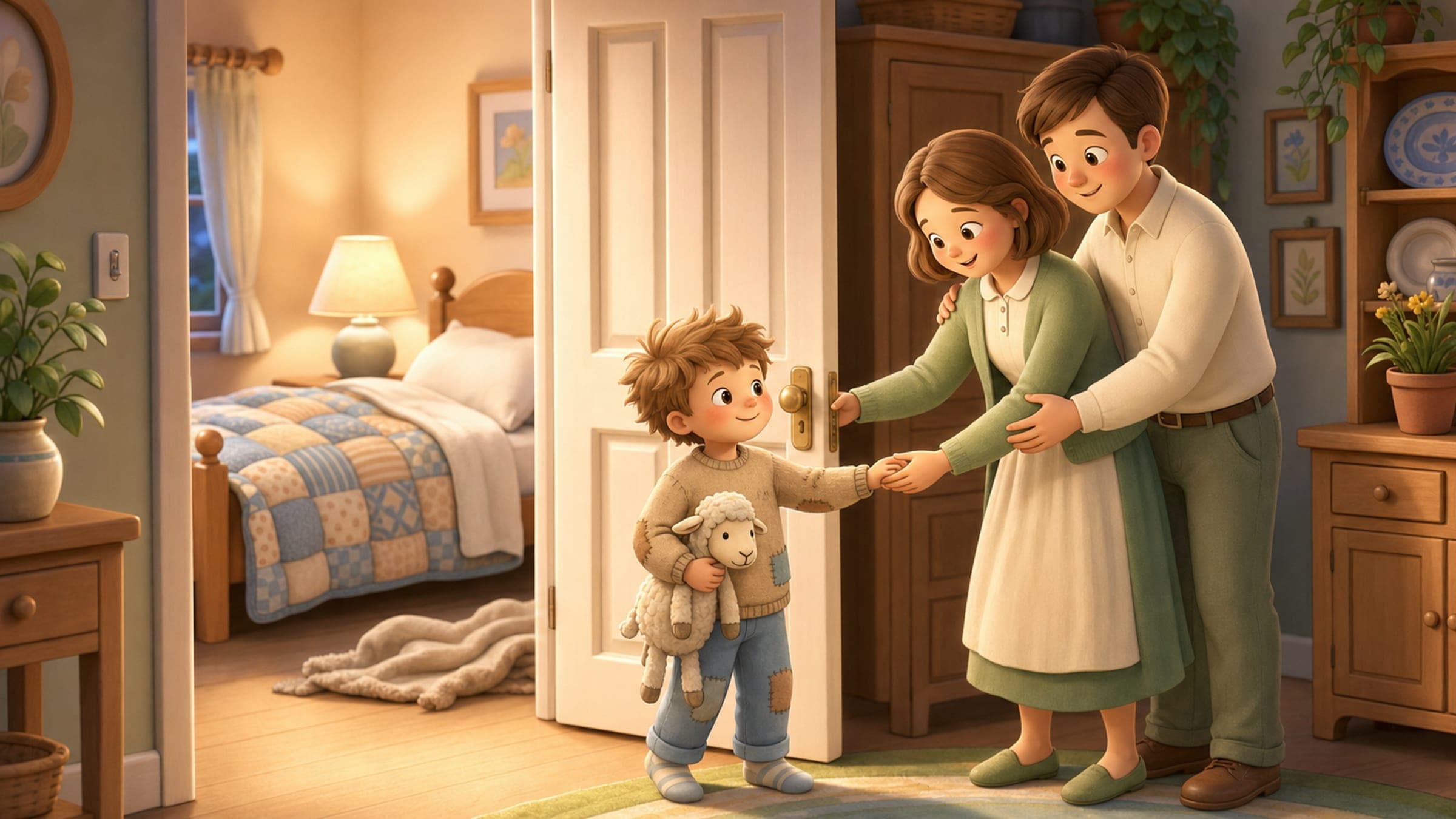
With the caseworker's guidance, a grown-up read Sam a book showing the facts confirmed for that day: who lived in the home, where Sam could keep his things, when he could contact his caseworker, and what the evening routine would be. His stuffed lamb Willow stayed beside him. The book did not include private history or promise how long he would stay.
4. He feels a little safer
As he heard the story, Sam identified the people and places he recognized. His foster family showed him his room, repeated how to reach his caseworker, and let him know he could ask questions or take a break. Sam did not have to trust the story or feel settled on a schedule.
5. He comes back to the book
The book remained available if Sam wanted it. The adults corrected details when plans changed, protected his privacy, and followed the caseworker's guidance rather than using the story as evidence that Sam should feel safe or grateful.
How can you use a read-aloud plan for joining a foster family?
- Lead with concrete present-tense facts and keep the tone gentle and unhurried.
- Welcome all feelings without pressure, and let the child set the pace.
- Keep comfort objects and predictable routines close.
- Work closely with caseworkers, therapists, and trauma-informed professionals, who can tailor support to the child's specific needs and history.
Should you use a book to talk about foster care with a child?
A gentle, personalized story can offer reassurance at a safe distance — best done in partnership with the child's caseworker or a trauma-informed therapist. The American Academy of Pediatrics explains that a new foster family, neighborhood, and sometimes school can make the transition especially hard, and recommends creating continuity and stability with familiar objects, rituals, and calm space for difficult emotions. A story can reinforce those supports, but it should follow the child's real care plan rather than promise an outcome (What Is Foster Parenting?).
What does outside guidance add for joining a foster family?
Child Welfare Information Gateway recommends trauma-informed parenting that prioritizes safety, connection, and realistic expectations. A foster-family story should avoid rescue language, promises of permanence, or disclosure of private history and should allow trust to build at the child's pace (Parenting a Child Who Has Experienced Trauma).
Keep reading: adoption and foster care involve different legal relationships and should not be collapsed into one narrative. For an adoption-specific approach, read adoption-day storytelling.
More related guidance:
- Living in Two Houses? A Story That Makes Both Places Feel Like Home
- A New Stepparent? A Story That Lets a Child Warm Up at Their Own Pace
- A Parent Is Deploying: A Story for Staying Connected
- A Parent Who Travels for Work? A Story That Makes Goodbyes Easier
- Personalized Story Ideas Hidden in Everyday Family Moments