Story ideas
How do you help a child who is being bullied?
How to help a child being bullied with the messages that matter most, it's not your fault and telling a trusted grown-up is brave, plus a gentle example story.
The short answer
Say plainly that the bullying is not the child's fault, listen without blame, document what happened, and follow the school or program's reporting process. Name several trusted adults and make a safety plan; do not require the child to confront the aggressor. A personalized story can rehearse how to report and ask for help, but adults remain responsible for stopping the behavior and arranging qualified support.
Key takeaways
- Kids who are bullied often stay silent out of fear, shame, or worry that telling will make it worse.
- The two things they most need to hear: this is not your fault, and telling is brave.
- Telling a trusted grown-up is keeping yourself safe, not tattling.
- A gentle story where your child speaks up and gets help can help them find their voice.
How do you help a child who is being bullied?
Say the vital truths, plainly and often: it's not your fault, you deserve to feel safe, and telling a trusted grown-up is brave and the right move, not tattling. If your child is being bullied, it's one of the hardest things for them to talk about. A gentle story can carry those messages and help a child find their voice.
A bullied child often can't find the words, or fears that speaking up will backfire. A story gives the feelings a safe container and models the brave step.
Why does a story work when a child stays silent?
A story can rehearse the words for reporting and name more than one adult in case the first response is inadequate. It should not promise that one disclosure ends the bullying. Adults must document, follow up, protect against retaliation, and escalate through the school or program process.
What does a gentle bullying story look like?
The names and characters are invented for this example. In a real personalized book, the hero is your own child.
1. A hero dealing with something hard
A kid at school was being mean to Reid, over and over, and it was making Reid's days miserable. He didn't know what to do, and he hadn't told anyone, because part of him worried it might be his fault or that telling would make it worse.
2. A worry he can name
Reid felt small and unsure. Was he doing something wrong? Would telling a grown-up be tattling? Would it make the mean kid even meaner? So he kept it inside, and the heavy feeling grew.
3. A familiar point of view
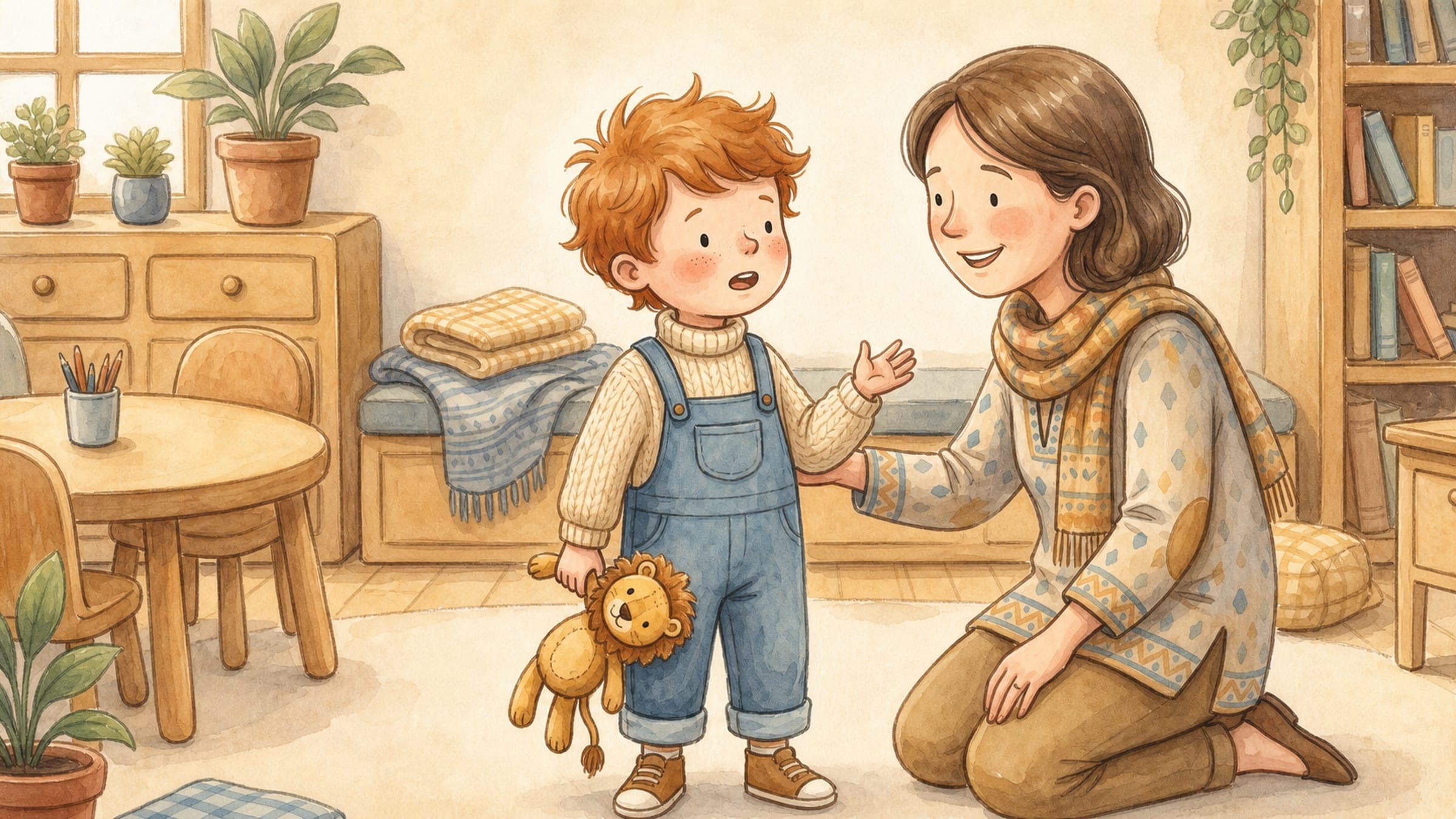
Gently, one evening, his mom read him a new book with a boy on the cover who had Reid's red hair, talking to a teacher, and Reid's own name across the top. The story said the bullying was not his fault, named several adults he could contact, and rehearsed one clear sentence: "This keeps happening, and I need help." It also showed his grown-up documenting each report and following up.
4. He finds his voice
Real Reid chose the adult he wanted to tell and used the sentence he had practiced. His grown-up recorded what he shared, asked what he needed immediately, and explained the next step. The plan included another adult Reid could approach if the first response did not protect him.
5. He comes back to the book
The book remained one optional way to review the reporting plan. Adults, not Reid, were accountable for monitoring what happened next and escalating when needed.
How can you use a read-aloud plan for being bullied?
- Repeat the core messages: it's not your fault, you deserve to feel safe, telling is brave.
- Help your child identify the trusted grown-ups they can go to.
- Take any report of bullying seriously and involve the school promptly.
- Consider a school counselor or child therapist, especially if the bullying is ongoing or affecting your child's wellbeing.
How do you get a child to tell you if they're being bullied?
Creating a safe, non-judgmental space, reassuring them it's not their fault, and normalizing asking for help all make it easier for a child to open up. The American Academy of Pediatrics notes that children often don't report bullying out of fear of retribution, and that having just one person listen and support a bullied child helps them handle it in a healthier way — so if the bullying continues, seek help from teachers, counselors, school leaders, and your pediatrician (Why Bullying Hurts All Children—and What Parents Can Do About It).
What does outside guidance add for being bullied?
StopBullying.gov recommends listening, learning what happened, and making a plan with the child and school rather than telling a child to ignore bullying or physically fight back. The story should model reaching a trusted adult and should not place responsibility for stopping the behavior on the targeted child (Support the Kids Involved).
Keep reading: feeling left out and being bullied can blur together for a hurting kid — see how this approach helps a child who's being left out at recess.
More related guidance:
- When Your Child Was the Mean One: A Story That Teaches a Real Apology
- How Storybook Studio Turns a Photo Into an Illustrated Character
- Joining a Team Where They Know Nobody: A Belonging Story
- Making a First Friend? A Story That Makes Saying Hello Feel Possible
- Personalized Story Ideas Hidden in Everyday Family Moments