Story ideas
How do you get rid of cradle cap?
Cradle cap in babies: what the yellow scaly patches are, why they appear, a gentle wash-and-brush routine to loosen them, and when to ask about creams.
The short answer
Cradle cap is a harmless kind of seborrheic dermatitis on a baby's scalp, with red, scaly or crusty yellow patches, most common between 2 weeks and 12 months old. It usually clears on its own in weeks or months. Wash daily with a mild baby shampoo and gently brush scales loose with a soft brush. If they stick, rub in a little mineral oil or petroleum jelly first. Ask your doctor before using medicated creams or shampoos.
To get rid of cradle cap, wash your baby's hair once a day with a mild baby shampoo and gently loosen the flakes with a soft brush. If they're stubborn, soften them first with a little mineral oil or petroleum jelly. Nemours KidsHealth says cradle cap usually clears up on its own in weeks or months and generally doesn't bother babies at all (Cradle Cap (Seborrheic Dermatitis) in Infants, accessed November 13, 2026).
What cradle cap is
Cradle cap is the everyday name for seborrheic dermatitis on a baby's scalp. KidsHealth says babies can develop it between 2 weeks and 12 months old. You'll see slightly red, scaly or crusty yellow patches on the scalp, sometimes thick enough to look like a cap.
The same skin condition can show up in other places:
- the forehead, eyebrows and face
- behind the ears
- the diaper area, armpits and other skin folds
In folds such as the neck and behind the ears it often looks red and moist; elsewhere it's yellowish, greasy, scaly or flaky.
Does it hurt?
KidsHealth notes that it may look irritated, but it usually isn't itchy and doesn't seem to bother infants. It isn't caused by poor hygiene, and it isn't contagious.
Why it happens
The exact cause isn't known. KidsHealth says it's probably a mix of factors, including extra skin oil (sebum) in the oil glands and hair follicles and a yeast called Malassezia that normally lives on the skin.
A gentle routine for loosening scales
From KidsHealth's guidance:
- Wash daily with a mild, tear-free baby shampoo.
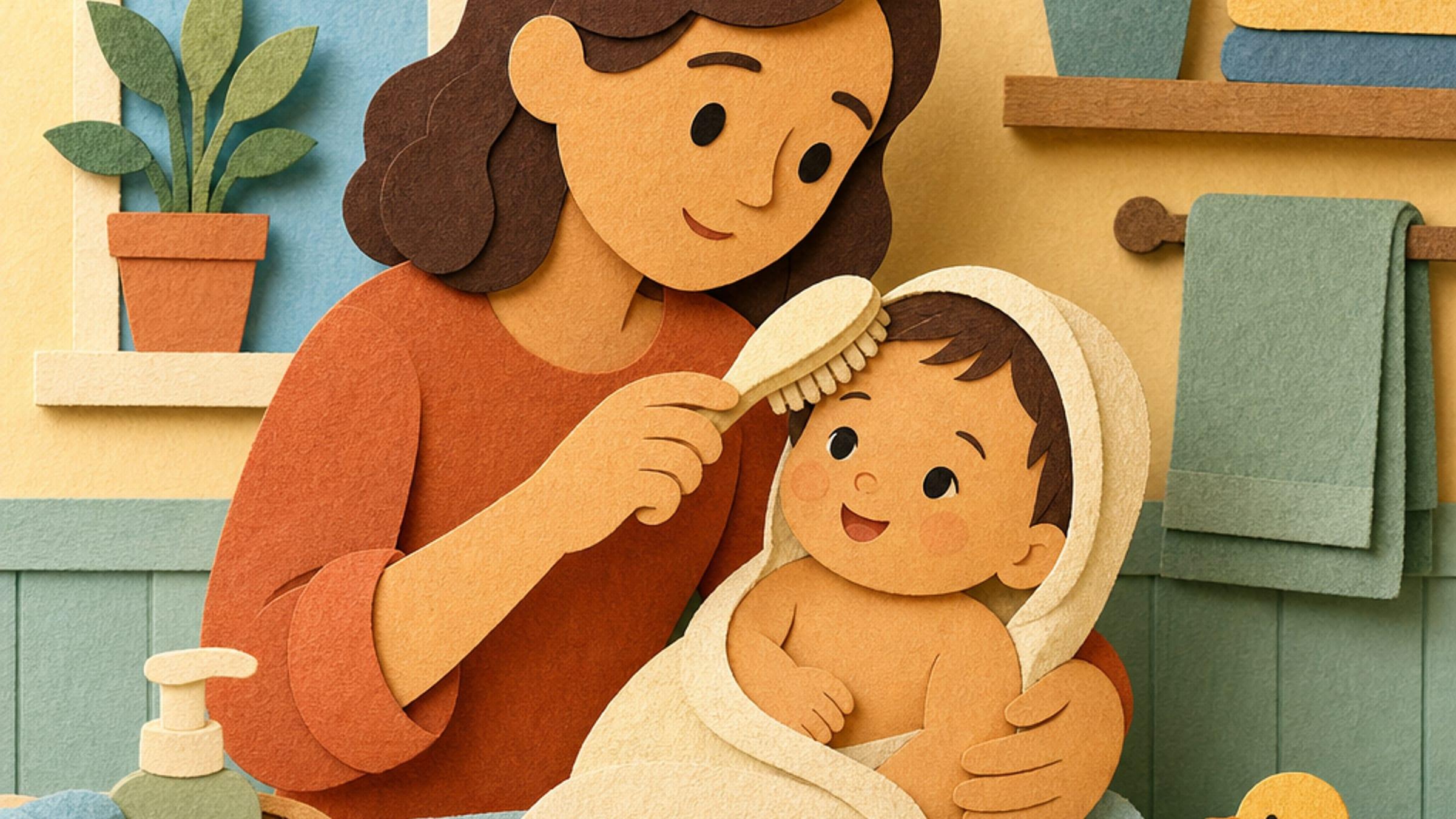
- Brush gently with a soft baby brush or a soft toothbrush, in small circles, to lift loose scales.
- Soften stubborn patches. Rub a small amount of mineral oil or petroleum jelly into the scalp and let it soak in for a few minutes to several hours.
- Brush again, then shampoo as usual so the oil doesn't build up.
A few extra tips parents find helpful:
- Do it after a warm bath, when the skin is soft.
- Go slowly. Scrubbing or picking can make the scalp sore and open the skin to infection.
- Don't expect it all to lift in one session; a little each day works.
- A small amount of hair may come away with the scales. It grows back.
When the doctor may suggest more
If regular shampooing doesn't help, KidsHealth says your doctor may recommend a mild steroid cream or an antifungal shampoo, and a mild steroid or antifungal cream for patches elsewhere on the body. Don't start over-the-counter steroid or antifungal creams, or dandruff shampoos made for adults, without checking with the doctor first. Baby skin absorbs more, and some adult products are too strong.
Signs of infection
Sometimes the rash in the diaper area or skin folds gets infected. KidsHealth advises calling the doctor if the rash gets worse or shows signs of infection: skin that looks redder, drains fluid or feels warm. Also mention it if the rash spreads widely, or your baby seems uncomfortable, isn't feeding well or has a fever.
Cradle cap or eczema?
Both can make a baby's skin scaly. As a rough guide, cradle cap tends to be greasy, yellow and not itchy, often on the scalp and in folds. Eczema is usually dry, very itchy and often on the cheeks, arms and legs; babies with eczema rub and scratch. Your doctor can tell them apart with a quick look.
Hats, blankets and the weather
Cradle cap doesn't need covering, but in winter a soft cotton hat keeps a baby's head warm without trapping sweat. Wash hats and crib sheets as usual; there's no need for special laundry. Dry indoor heat can make the surrounding skin feel tight, so a plain, fragrance-free moisturizer on the face and body, if your doctor agrees, can keep the rest of the skin comfortable.
How long it lasts
KidsHealth says cradle cap and seborrheic dermatitis in infants usually get better by 12 months of age. Seborrhea may come back around puberty as dandruff, a familiar cousin.
Questions parents often ask the doctor
At a well visit, it's worth asking:
- Is this cradle cap, or something else?
- Is the oil I'm using okay for my baby's skin?
- How often should I wash, and with which shampoo?
- Should I treat the patches behind the ears or in the diaper area differently?
- What would make you want to see it again?
Take a clear photo of the worst patch in daylight before the appointment. Cradle cap can look better or worse from day to day, and a picture shows what you've been seeing at home.
Making care time pleasant
Scalp care can become a calm part of the bedtime routine: bath, gentle brush, a song, a book. Many babies relax with a soft brush on the head. If yours fusses, try during a feed or with a toy to hold.
The baby months pass fast, flaky scalp and all. A personalized book about your child's first milestones is a lovely way to remember the first year. See the milestones book, a finished example, and milestone gifts.
Related reading
FAQ
Can I pick off cradle cap?
It's better not to. Soften the scales with oil and brush gently; picking can make the skin sore or infected.
Is cradle cap caused by not washing enough?
No. It's linked to skin oil and a normal skin yeast, not to hygiene.
Will cradle cap make my baby's hair fall out?
A little hair may come away with the scales, but it grows back.