Story ideas
How do you give a toddler liquid medicine safely?
Give liquid medicine with a marked oral syringe, dose by weight, never a kitchen spoon, and put the bottle back up and away after every dose.
The short answer
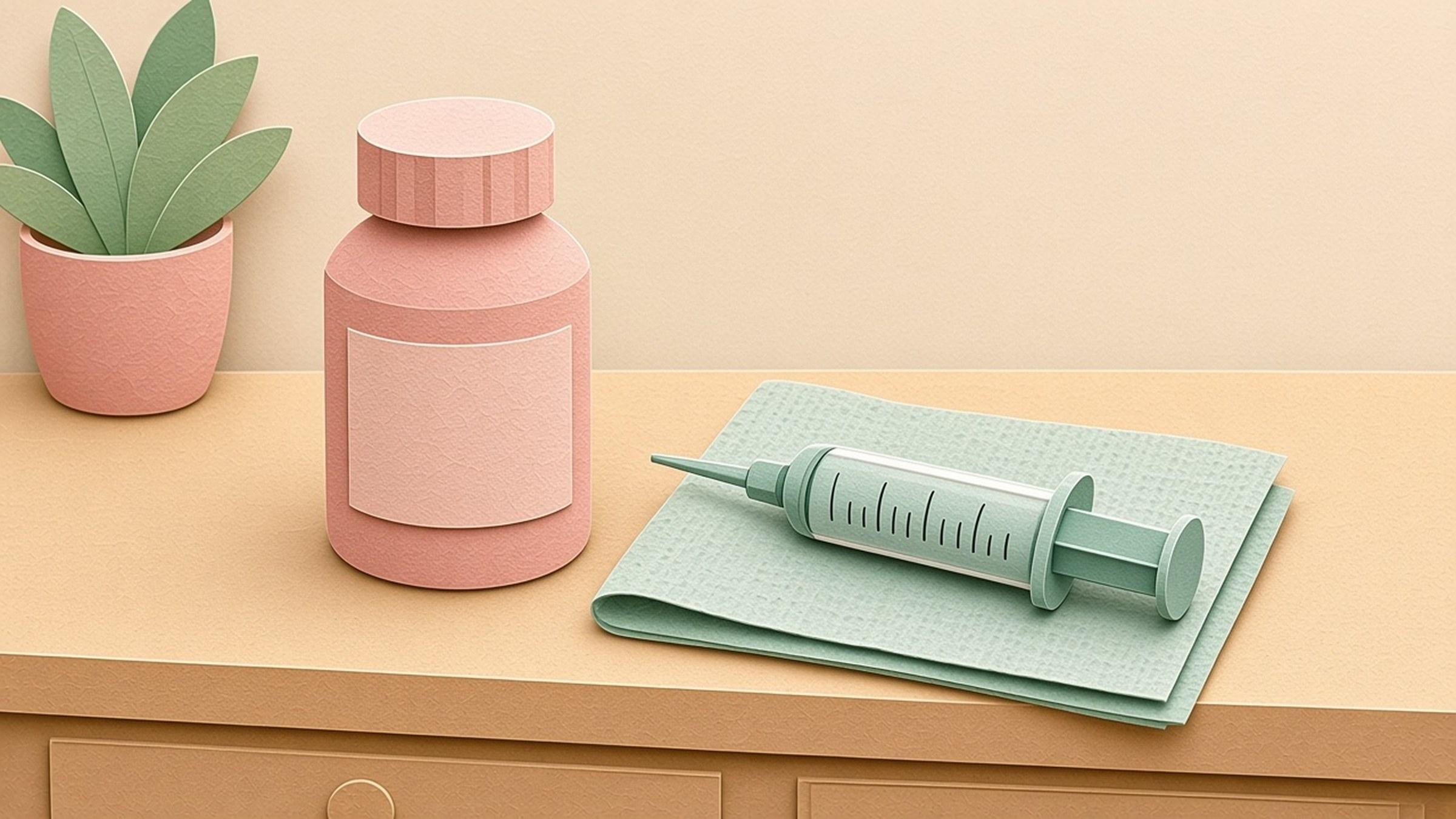
Read the label every time and dose by weight when you can. Measure with a marked oral syringe or the tool that came with the bottle, never a kitchen spoon. Squirt the medicine gently between the tongue and the side of the mouth, then put the bottle back up and away.
To give a toddler liquid medicine safely, read the label every time, dose by weight when you can, and measure with a marked oral syringe or the tool that came with the bottle — never a kitchen spoon. Squirt the dose gently between the tongue and the side of the mouth, then put the bottle back up and away before you do anything else.
Key takeaways
- An oral syringe is usually the most accurate tool, especially for amounts under 5 mL.
- "0.5 mL" is not "5 mL." A missed decimal can mean ten times too much or too little.
- If a syringe comes with a small cap, throw the cap away. It is a choking hazard.
- Never call medicine "candy." That makes an unwatched bottle look tempting later.
Read the label, then measure
Check that you have the right bottle, with your child's name on a prescription, before you draw anything up. Many bottles look alike at night.
For over-the-counter medicine, the AAP says to start with the "Drug Facts" label and use your child's weight first when the chart gives a weight range. Age is the fallback if you do not know the weight. Watch for "Do Not Use" lines, especially for children younger than six, and ask a doctor or pharmacist if the label is unclear. Some infant and children's versions of the same medicine come in different strengths, so the infant liquid is not automatically "weaker" (How to Use Liquid Medicines for Children, accessed November 10, 2026).
Nemours KidsHealth makes the same core points: dose depends on current weight, too little may not help, and too much can harm. Shake the bottle if the label says to, so the medicine is evenly mixed. Some labels say to give the dose with food or milk; others say on an empty stomach, often one hour before or two hours after a meal. Follow that line rather than guessing (Giving Kids Medicine Safely, accessed November 10, 2026).
Do not add "a little extra" to help them get better faster. The AAP is direct: giving more than directed can be dangerous, especially over several days.
Use a marked tool, never a kitchen spoon
Use the oral syringe, dropper, dosing spoon, or cup that comes with the medicine. If nothing comes with it, ask the pharmacist for a tool. Keep that tool with that bottle. Do not swap cups between medicines.
Never use a kitchen teaspoon or tablespoon. They are not standard sizes, so the same "spoonful" can vary from drawer to drawer. The AAP prefers milliliters. A useful conversion to know, so teaspoon labels do not throw you: 5 mL equals 1 teaspoon, and 15 mL equals 1 tablespoon. If the label is in teaspoons and you are unsure, ask the pharmacist to show you the line on your syringe.
Look hard at decimals. Fill only to the marked line, not to the top of the syringe. For a dosing cup, set it on a flat table and check the line at eye level; a tipped cup is easy to overfill. If you are unsure, ask the pharmacist to mark the correct line and write the instructions down.
How to give the dose
Sit your child upright. An oral syringe is usually the most accurate choice, especially for a dose under 5 mL. Do not squirt the medicine into the back of the throat. The AAP says to squirt it gently between the tongue and the side of the mouth, which is easier to swallow.
If they spit some out, do not guess a second full dose. Call the pharmacist or doctor and ask what to do for a partial spit. Do not give two doses at once to "catch up" on a missed one.
KidsHealth also notes: if you miss a dose, do not double the next one. If a child is on an antibiotic, they should finish the prescribed course even after they feel better, unless the doctor says otherwise. Check with the doctor or pharmacist before mixing medicine into milk, juice, or food. Mixing can make it hard to know how much was actually swallowed.
Put it away before you move on
About 50,000 children under five are seen in emergency departments each year after swallowing medicine they should not have had, according to the AAP. Even a pill or two of some common medicines can be dangerous for a young child.
Use a safety cap, but do not trust it as childproof. Store prescription medicines, over-the-counter medicines, and supplements in their original packages, up, away, and out of sight, ideally in a locked cabinet or a small lockbox. Put the bottle back as soon as you have drawn the dose. If you have to walk away mid-dose, take the bottle with you. Ask visitors and caregivers to keep purses and bags that hold medicine out of reach.
If a child may have swallowed medicine: call 911 if they are unconscious, not breathing, having seizures, or otherwise look very unwell. If symptoms are mild or there are none, call Poison Control at 1-800-222-1222 or use PoisonHelp.org (Medication Safety Tips for Families, accessed November 10, 2026).
What not to give
Do not give leftover medicine from an earlier illness, medicine prescribed for someone else, or an adult product. Do not give two medicines that contain the same ingredient, which is a common problem when a cold product already includes a fever reducer.
KidsHealth and the AAP both caution against cough and cold medicines in young children unless a doctor says otherwise. The AAP says over-the-counter cough or cold medicines are not recommended under age six and should never be used under age two, because they can have serious side effects and often combine more than one drug in the same bottle.
Never give aspirin to children or teens, especially during a viral illness. KidsHealth warns that aspirin during illnesses such as the flu or chickenpox is linked to Reye syndrome, which can be life-threatening.
When to get help
Call the doctor or pharmacist if you are unsure whether your child needs a medicine, how much to give, or whether two products can be used together. After a dose, watch for a rash, hives, vomiting, or diarrhea and get in touch if those appear. If your child develops wheezing or trouble breathing or swallowing after a medicine, call 911 or go to the emergency room. Those can be signs of a serious allergic reaction.
A hard week, kept simply
A stretch of doses is a lot to get right when everyone is tired. If you want a story that helps a child walk through a hard health day, a personalized last-treatment book is one way to talk about it.
Related reading
FAQ
Can I measure medicine with a kitchen spoon?
No. Kitchen spoons are not standard sizes. Use a marked oral syringe, dropper, dosing spoon, or the cup that came with the bottle, and prefer milliliters.
What if my child refuses to open their mouth?
Stay calm, keep them upright, and try again in a few minutes. Ask the pharmacist about the taste or whether another form exists. Do not pinch the nose shut or pour a dose into the back of the throat.
Can I save leftover liquid for the next fever?
No. KidsHealth says not to use leftover medicine. The next illness may need something different. Ask a pharmacist how to dispose of what remains.
Do I dose by age or by weight?
Use weight first when the label or your doctor gives a weight range. Use age only if you do not know the weight, and stop to ask if the label says the product is not for your child's age.