Story ideas
How do you treat pink eye in a toddler?
Pink eye in toddlers: how to tell bacterial, viral and allergic types apart, how to put in eye drops on a squirming child, and when they can go back to daycare.
The short answer
Pink eye (conjunctivitis) is redness and swelling of the thin layer over the white of the eye. Bacterial pink eye often needs antibiotic drops from the doctor; viral pink eye clears on its own; allergic pink eye comes with itching and no goop. Wipe the eyes with a clean warm cloth, wash hands often, and ask the doctor before drops.
To treat pink eye in a toddler, first find out which kind it is: bacterial pink eye usually needs antibiotic eye drops or ointment from your child's doctor, viral pink eye goes away on its own in about a week, and allergic pink eye calms with allergy treatment. In every case, gently wipe away crust with a clean, warm, wet cloth, use a fresh cloth for each eye, and wash hands after touching the face. KidsHealth notes that bacterial pink eye can spread as soon as symptoms appear and until 24 to 48 hours after antibiotics start (Conjunctivitis (Pink Eye) in Kids, accessed November 11, 2026).
Three kinds, three clues
| Clue | Bacterial | Viral | Allergic |
|---|---|---|---|
| Discharge | Thick yellow or green, lashes glued shut in the morning | Watery, sometimes a little mucus | Watery |
| Eyes | Often one, then both | Often one, then both | Usually both |
| Itch | Some | Some, gritty feeling | Lots |
| Other signs | Ear infection sometimes at the same time | Cold symptoms | Sneezing, runny nose, seasonal |
Only a doctor can say for sure. A toddler who also tugs at an ear or has a fever should be seen, because ear infections and pink eye often travel together.
Cleaning the eyes at home
- Wash your hands.
- Wet a clean cotton pad or washcloth with warm water.
- Wipe from the inner corner of the eye outward, once.
- Use a new pad for the other eye.
- Throw away the pads or put cloths straight into the wash.
In the morning, a warm compress held for a minute softens crust so the lids open without pulling lashes.
Eye drops on a squirming toddler
Few parents get this right on the first try. Things that help:
- Lie them down. Have your child lie on their back on the bed or across your lap.
- Use the corner trick. If they squeeze their eyes shut, put the drop in the inner corner of the closed eye. When they blink and open, it runs in.
- Wrap if needed. A blanket "burrito" holds arms gently for the few seconds it takes.
- Ointment goes along the lower lid. Pull the lower lid down a little and lay a thin line inside it.
- Keep the tip clean. Don't let the bottle touch the eye or lashes.
- Finish the course as prescribed, even if the eyes look better.
Two adults make it much easier: one to hold and sing, one to drop.
Stopping the spread at home
- Separate towels, washcloths and pillowcases for the child with pink eye; wash them hot.
- Wash hands after every eye wipe and every drop.
- Clean toys that go in the mouth or near the face.
- Throw out eye makeup an adult used while infected.
- Keep your toddler's nails short and offer distraction when they rub.
Daycare and pink eye
Rules vary by center. Many ask that children with goopy, bacterial-looking pink eye stay home until they've had treatment for a day. KidsHealth's guide to sick days says kids should stay home for things like a fever over 100.4°F, vomiting or diarrhea, and that the school or the doctor can help with specific conditions (Is My Child Too Sick to Go to School?, accessed November 11, 2026). Ask your center for its policy in writing so you aren't guessing at 7 a.m.
When to call the doctor
Call your child's doctor if:
- the eye is painful, or your child is bothered by light;
- vision seems blurry or your child keeps rubbing and crying;
- the eyelid or the skin around the eye is very red and swollen;
- there is a fever, ear pain, or your child seems unwell;
- your baby is very young and has any redness or discharge;
- symptoms don't improve after a few days of treatment.
The KidsHealth fact sheet repeats the main warning signs in one short page you can keep handy (Pinkeye, accessed November 11, 2026).
Allergic pink eye in fall and spring
If both eyes are itchy and watery every time the leaves turn or the pollen counts rise, think allergy. Wash your child's face and hands after outdoor play, change clothes, and keep windows closed on windy days. Ask the doctor about child-safe allergy drops or medicine.
Helping a toddler who hates drops
Practice when it's not urgent. Let your child put "drops" of plain water on a doll's eyes. Name what you are doing in short words: "Lie down. One cold drop. Blink. Done." Give a small job, like holding the tissue. Offer one predictable reward, such as choosing the next song.
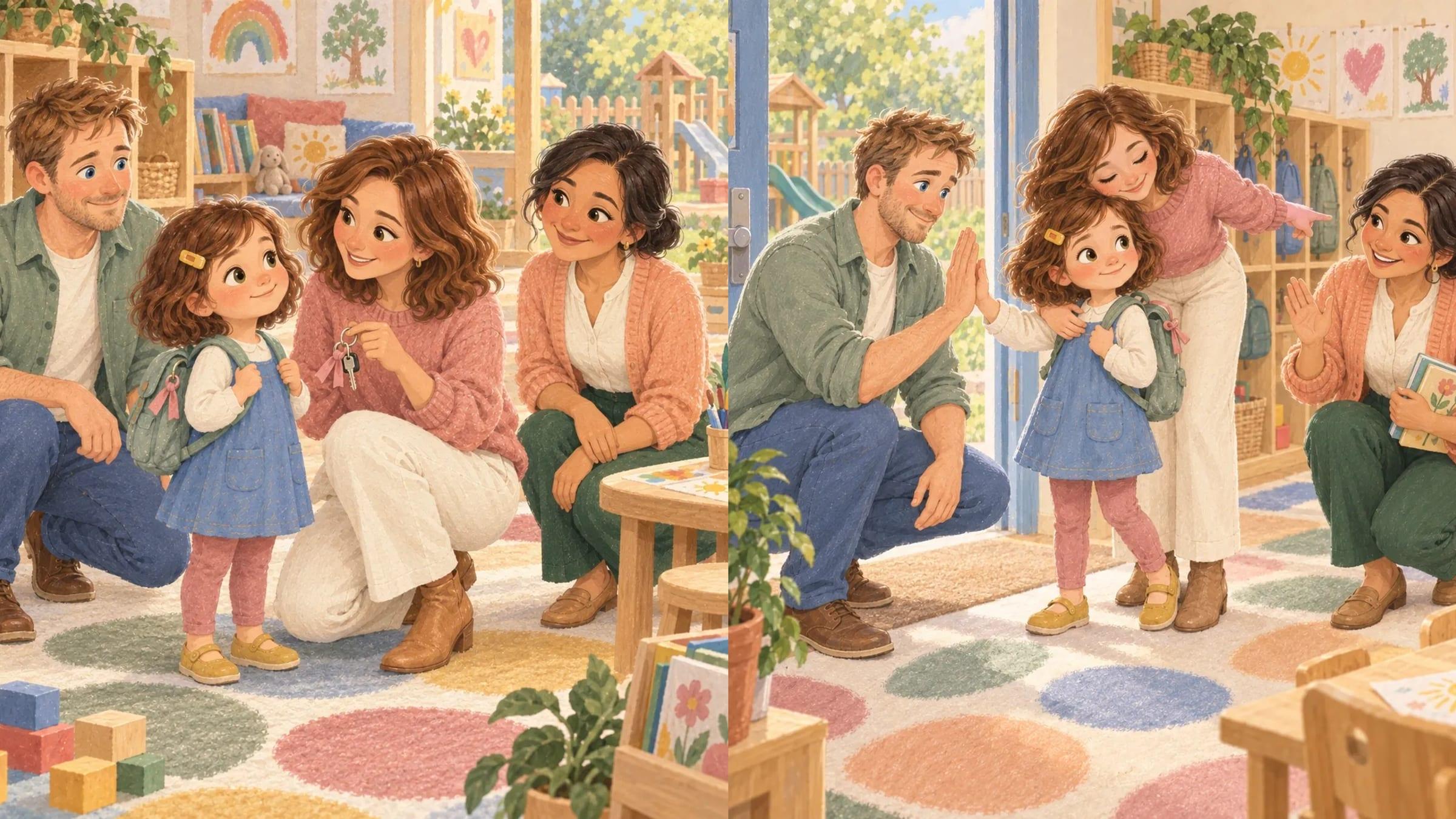
Morning drop-offs can be wobbly after a few days at home with red eyes. A personalized daycare goodbye book can walk your child through the return with their real teacher and cubby.
Related reading
- Daycare goodbye books
- Crying at daycare drop-off
- Daycare goodbye book gift
- How to Teach a Toddler to Blow Their Nose
- What to Pack for Daycare: A Checklist by Age
Making eye drops less of a fight
Toddlers hate drops. Lay your child flat, ask them to close their eyes, and put the drop in the inner corner by the nose. When they open their eyes, it slides in on its own. Two adults help: one holds a favorite toy above the face to look at, the other gives the drop. Wash your hands before and after, and toss any tissues right away. Warm, damp washcloths can loosen crust in the morning before you try.
FAQ
Can pink eye go away without treatment?
Viral pink eye usually does on its own. Bacterial pink eye may also clear, but treatment shortens it and lets your child return to care sooner. Ask the doctor.
Is breast milk a safe home remedy?
Don't put anything in your child's eyes that the doctor hasn't recommended.
Can my toddler wear contact lenses later if they had pink eye?
Yes. Pink eye in childhood doesn't affect that.