Story ideas
How do you teach a toddler to blow their nose?
Teach a toddler to blow their nose in steps: blow out candles with the mouth, then a feather with the nose, one nostril at a time, then a tissue and hand wash.
The short answer
Teach nose blowing in stages, when your child is well. First practice breathing out through the mouth, then through the nose with the mouth closed, moving a feather or a tissue square. Then press one nostril and blow gently into a tissue, toss it, and wash hands.
To teach a toddler to blow their nose, break it into small steps they can practice when they're well: blow air out through the mouth, then out through the nose with lips closed, then one nostril at a time into a tissue. Kids get plenty of chances to need it: KidsHealth notes that children can catch eight or more colds a year (Common Cold, accessed November 10, 2026). Practice as a game first, because a stuffy, cranky child is the hardest student there is.
Why it's tricky
Young children don't feel the difference between breathing in and out through the nose. When you say "blow," many sniff hard instead. Others blow through the mouth, puff their cheeks, or press the tissue so hard nothing can move. The fix is to give them something they can see move.
Stage 1: Mouth blowing
Start with games that use only the mouth:
- blowing out a birthday candle (with an adult holding it);
- blowing bubbles;
- blowing a cotton ball across the table;
- blowing on a spoonful of warm soup.
This teaches "air goes out." Spend a few days here if needed.
Stage 2: Nose blowing, mouth closed
Now the key step. Ask your child to close their lips tight, as if holding in a secret. Then:
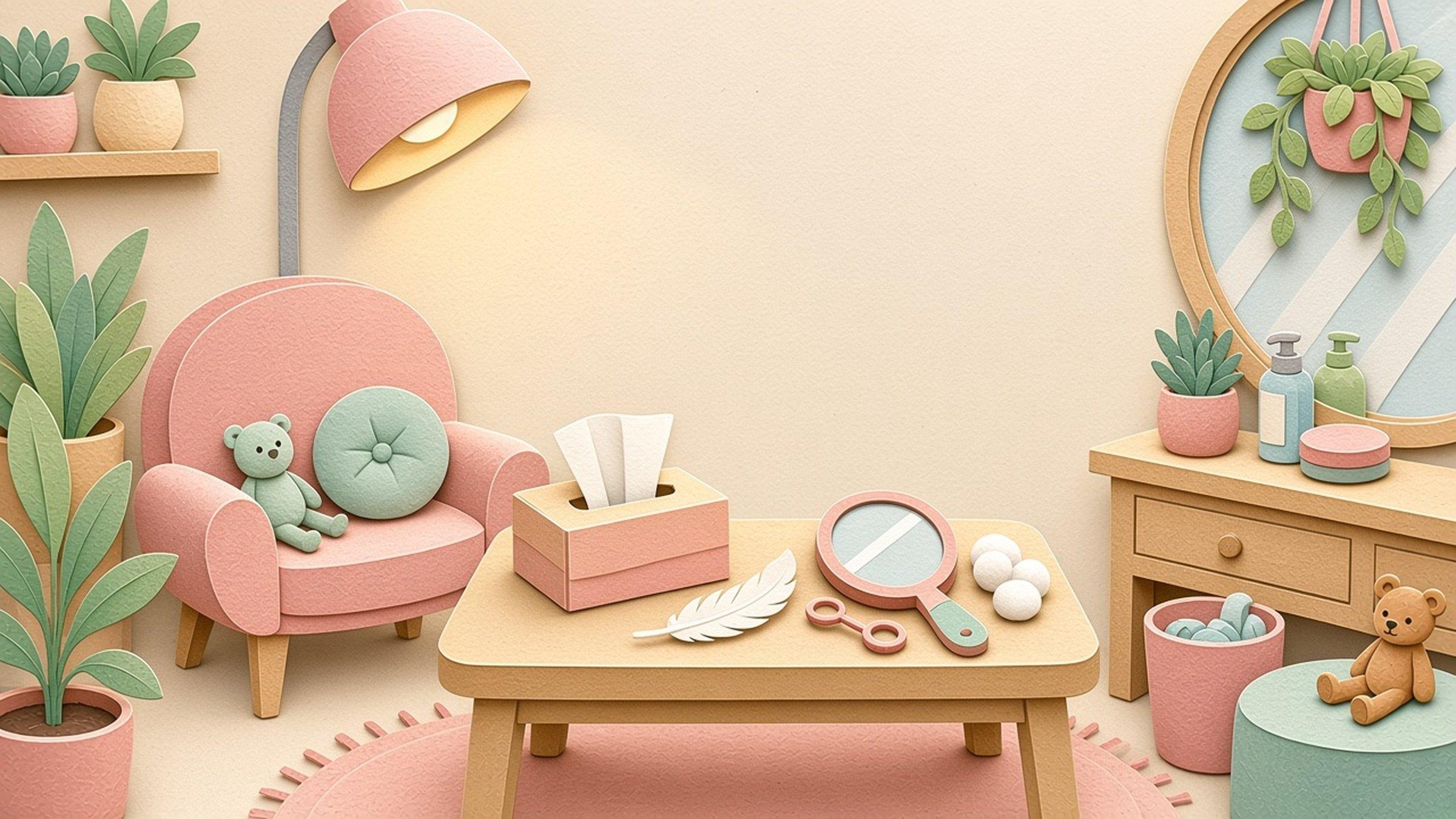
- Hold a small mirror under the nose. Breathing out fogs it. Can they make a cloud?
- Put a feather or a tiny square of tissue on the table and see if they can move it with nose air only.
- Hum with lips closed; the air has to come out of the nose.
If they open their mouth, laugh and try again. Show them yourself, slowly and a little silly.
Stage 3: One side at a time
Press gently on one nostril with a finger and ask them to blow the feather with the open side. Swap. One side at a time is easier to control than both at once.
Stage 4: Add the tissue
Hold the tissue loosely over the nose, not pinched tight. Say the same words each time: "Close your mouth. Press one side. Blow gently." Then the other side. Then fold, toss, and wash hands.
KidsHealth suggests washing hands well and often, especially after blowing the nose, and coughing or sneezing into a tissue or an elbow instead of hands (Common Cold, accessed November 10, 2026). Its handwashing page explains why the soap-and-scrub step matters so much for spreading germs (Hand Washing: Why It's So Important, accessed November 10, 2026).
Make tissues easy to reach
Put a box of tissues and a small trash can at your child's height in the living room and the bedroom. Kids can't build a habit if every tissue means asking a grown-up. A small pack in the car and the daycare bag helps too.
When they have a cold
Don't expect a toddler to learn on a stuffy day. Help with the tools for their age:
- saline drops to loosen thick mucus;
- a cool-mist humidifier in the bedroom;
- a thin layer of petroleum jelly under the nose for raw skin;
- plenty of fluids.
KidsHealth lists these comfort steps and notes that experts see no reason to give over-the-counter cold medicine to children younger than six. A cold usually clears in about a week. For a bad cold, the American Academy of Pediatrics suggests nasal saline with gentle suctioning and a cool-mist humidifier to help break up mucus (RSV: When It's More Than Just a Cold, HealthyChildren.org, accessed November 10, 2026).
Common hiccups
They sniff in instead of blowing out. Go back to the mirror or feather. They need to see the air leave.
They blow so hard it hurts. Teach "gentle," one side at a time, and stop if it hurts.
They hate the tissue on their face. Let them hold it. Try a soft, lotion tissue or a damp cloth.
They wipe on sleeves. Normal. Keep tissues closer and praise every tissue use.
When to call the doctor
Call your child's doctor if a runny nose comes with trouble breathing, a fever of 103°F or higher (or 101°F or higher for more than a day), ear pain, a cough that brings up a lot of mucus, or if your child seems to be getting worse rather than better after a few days. The AAP adds a call if symptoms get worse or don't start to improve after 7 days. KidsHealth notes that mucus can turn thick and yellow or green during an ordinary cold.
Marking the skill
Blowing their own nose is one of those small skills nobody celebrates but every parent notices. If you're keeping track of firsts like this one, a personalized milestones book can hold them; so can a line on the calendar.
Related reading
- Milestones ideas and books
- Teaching toddlers to wash hands
- Personalized milestones book
- See a sample milestones book
FAQ
What age do kids learn to blow their nose?
It varies a lot. Some take longer, especially kids who don't like things near their face.
Should I use a nasal aspirator instead?
For babies and young toddlers, a bulb or aspirator with saline helps before feeding or sleep. Keep teaching blowing alongside it as your child grows.
How do I teach a child who refuses?
Drop the tissue for a week and keep playing the mirror and feather games. Kids often try it on their own once it feels like a trick they've mastered.