Meaningful gifts
How do you plan snow day activities for kids without overdoing the cold?
Snow day activities for kids in three blocks: a short time outside, an indoor making block, and a quiet block, plus AAP frostbite signs and when to call.

The short answer
Snow day activities for kids work as three blocks: a short time outside, an indoor making block, and a quiet block before the day frays. The American Academy of Pediatrics says children lose heat faster than adults and that outdoor play in temperatures or wind chills below minus 15 degrees Fahrenheit should be avoided. Come in for numbness that does not fade, and call 911 if a child becomes sluggish or slurred. This plan is for ages 3 and up.
Snow day activities for kids stay kinder as three blocks: outside while cheeks are warm, inside to make one thing, then quiet before bedtime collapses. If the thermometer or the wind chill is already too low, the outside block is a look through the window, not a dare.
Key takeaways
- Ages 3 and up. Not a plan for babies or children under 3.
- The AAP says children lose heat faster than adults because their bodies are smaller, and that play below minus 15 degrees Fahrenheit, temperature or wind chill, should be avoided.
- The National Weather Service gives one concrete pair: 0 degrees Fahrenheit with a 15 mph wind feels like minus 19, and exposed skin can freeze in 30 minutes at that wind chill.
- Numbness that continues after warming is a call to the pediatrician. Sluggishness, clumsiness, or slurred words is 911.
How do you decide whether the outdoor block happens?
Check the number before the boots. The AAP's winter page says that, in general, playing outside in temperatures or wind chills below minus 15 degrees Fahrenheit should be avoided, because at those temperatures exposed skin begins to freeze within minutes. Children are more at risk than adults. They lose heat more quickly, and if they are having fun they may not come in when they are getting too cold.
The National Weather Service describes wind chill as how cold people feel, based on heat leaving exposed skin. Its worked example: if the air is 0 degrees Fahrenheit and the wind is 15 mph, the wind chill is minus 19 degrees Fahrenheit, and exposed skin can freeze in 30 minutes at that wind chill. That example is already past the AAP's minus 15 line. If either source's number says the yard is too cold, skip the yard. You do not average them into "a little while."
A day at 30 degrees with no wind is a different day. Go out. Set a short block anyway, because wet mittens end the fun faster than the clock does.
What does a short outdoor block look like?
Twenty minutes is a full outside block for a preschooler in real cold, less if the wind picks up or a mitten soaks through. The AAP says to set reasonable time limits and to have a place indoors for regular warm-up breaks.
Dress in several thin layers, not one thick coat over a T-shirt. The AAP says insulated boots, mittens or gloves, and a hat are essential, and that children should change out of wet clothes right away. Mittens beat gloves for a small hand that will not keep five fingers warm. Snow in a boot is the end of the block, not a reason to "tough it out."
One job outside is enough. A path of footprints from the door to a tree and back. A small pile, not a sculpture contest. An adult stays out with them. Coming in is the adult's decision when cheeks go from pink to pale, or when a child stops using their hands.
At the door: wet hat, wet mittens, and wet socks come off before the next block. Dry clothes. A warm drink. Then the indoor block. Do not send them back out to "use the snow" if the first block already ended in soaked cuffs.
What are the indoor block and the quiet block?
Indoor making, one project. A paper chain, a drawing of the yard, or a single tray from a recipe an adult runs. The point is hands busy and the coat off. Stop when the project is done or when interest leaves. Chasing a child back to a half-made chain is how a snow day becomes a fight.
Quiet block. Lights lower. A book you already own, or questions asked of a grandparent on a video call if that call is short and the child can leave the frame. Recording grandparent stories for kids is the interview version of that call, with questions written down first. The quiet block is not a second outdoor session in the hallway.
The holiday book has a picture for this third block: a mother, a father, and a child under a knit blanket, mugs in their hands, snow on the trees outside the window, a fire in the hearth. It is the end of a day, not the sledding. See the finished December book.
What do frostbite and hypothermia look like, and who do you call?
The AAP describes frostbite as skin, and sometimes the tissue under it, freezing. Fingers, toes, ears, and noses are the usual places. Skin may hurt or feel like it is burning, then go numb. It may turn white or pale gray, and blisters can appear.
Bring the child inside. Do not rub the area. Do not pop blisters. Do not put anything hot directly on the skin. The AAP says to soak frostbitten areas in warm, not hot, water for 20 to 30 minutes, and to use warm washcloths on noses, ears, and lips. Then dry, cover with blankets, and offer a warm drink. If the pain or numbness continues for more than a few minutes, call the pediatrician.
Hypothermia is different. The AAP says that when body temperature drops below normal from the cold, a child may shiver and then become sluggish, clumsy, or slur their words. That is a medical emergency. Call 911. While you wait, bring them inside, take off wet clothes, wrap them, and offer a warm drink if they can swallow safely. If breathing or a pulse stops, the AAP says to give rescue breathing or CPR.
Call the pediatrician the same day if you rewarmed a pale patch and you are unsure it recovered, or if a child who was out too long will not eat or seems off even after they are warm. Do not promise that hot cocoa fixes tissue. Cocoa is a drink. The call is the medical step.
A snow day does not diagnose anything. If you are deciding between "wait until morning" and "call," call.
Where does the rest of the day go?
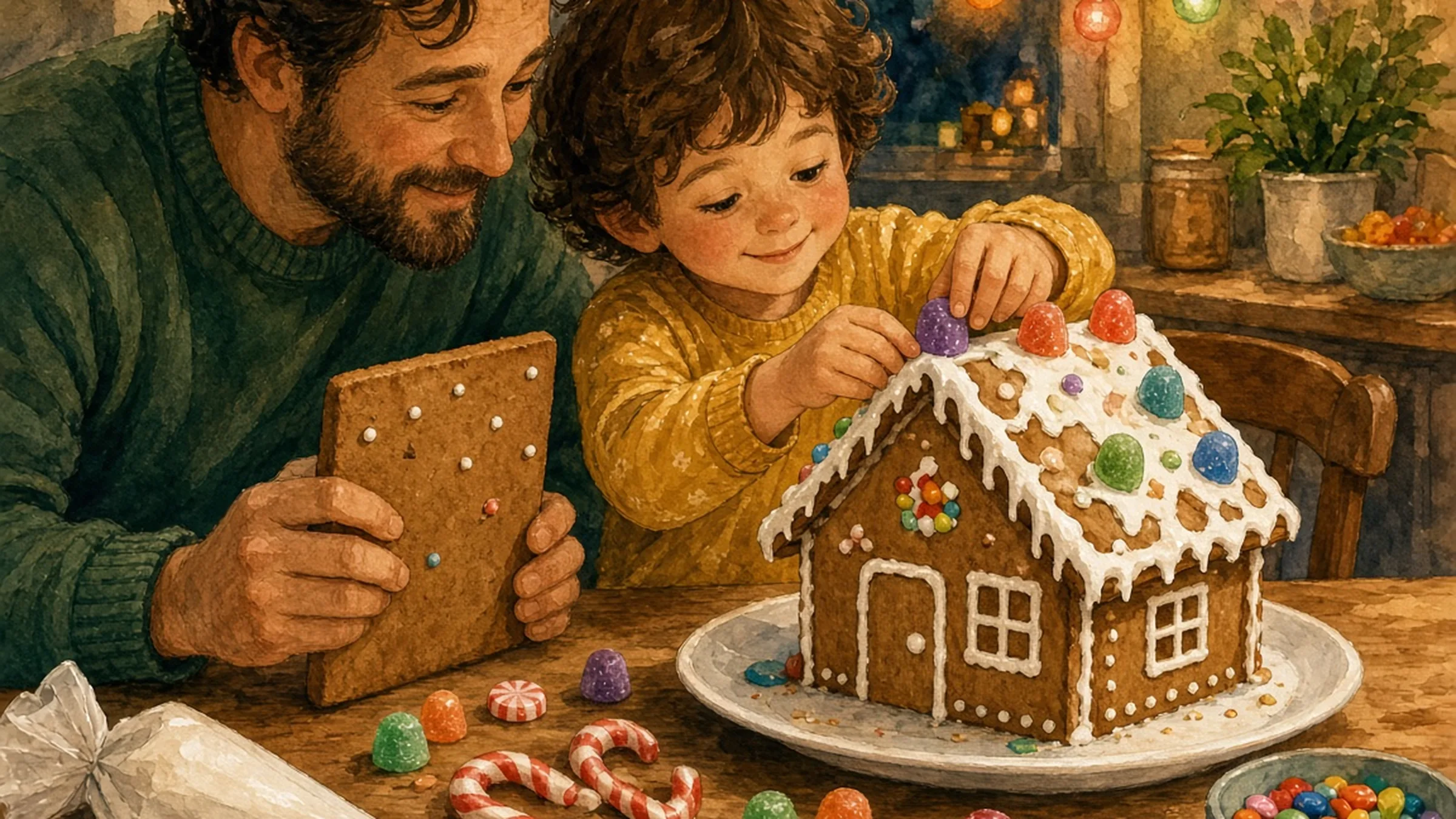
Cookie trays, if the oven is for baking and not for warming the room, are Christmas cookie baking with kids. A cracker build is gingerbread house tips for kids. The Christmas book guide and the December lander are the book itself. Other days are in personalized story ideas for everyday family moments.
Start a holiday story if you want the snow day written for ages 3 to 7. Words and pictures are created after you pay, and you approve a proof before printing. Prices are on the pricing page.
Frequently asked questions
Is sledding the outdoor block?
Only if the hill is one you already know, an adult is on it, and the cold numbers allow any outside time. A new hill on a day below the AAP line is a no. Footprints in the yard count as the whole outdoor block.
What if they want to stay out?
Fun is not a temperature reading. The AAP notes that children may not come in on their own. You end the block. The indoor project is the reason coming in is not a punishment.
Can the quiet block be a movie?
A movie can be the quiet block if everyone is dry and warm and you are not using it to avoid a child who still seems cold or confused. Confusion, clumsiness, or slurred words is 911, not a film.
Do we need special gear for one short trip to the yard?
Hat, mittens, boots, and a dry change for afterward. The AAP lists those as essential. A costume coat with no hat is not the outdoor block.
Sources
- Playing Outside in Winter, American Academy of Pediatrics, accessed October 30, 2026
- Understanding Wind Chill, National Weather Service, accessed October 30, 2026