Story ideas
How do you help an autistic child understand their autism positively?
How to discuss autism with accurate, age-appropriate language shaped by the child's communication, support needs, preferences, and autistic perspectives.
The short answer
Explain autism accurately and without shame, using the identity language the child or family prefers. Describe this child's communication, sensory experiences, interests, disabilities, and support needs without assigning universal strengths or "superpowers." Include autistic perspectives and qualified clinicians. A personalized story can support conversation, but it should not prescribe pride, minimize disability, or speak over the child.
Key takeaways
- Autism isn't a flaw to be fixed; it's a different, valid way of experiencing the world.
- Every autistic person has an individual mix of abilities, disabilities, and support needs.
- Let the child choose identity language and how much the story says about them.
- A story can support discussion but cannot prescribe pride or replace individualized support.
How do you help an autistic child understand their autism positively?
Explain autism accurately and without shame, using the language the child or family prefers. Describe the child's own communication, sensory experiences, interests, disabilities, and support needs instead of assigning a standard set of autistic traits. Give the child room to feel proud, neutral, frustrated, curious, or something else.
Avoid cure or tragedy framing, but do not minimize disability or imply that a positive script determines the child's self-image.
Why does an affirming story work?
A story can put familiar words, supports, and experiences in one place. It should be shaped by the child's communication and privacy preferences and informed by autistic perspectives, not used to manufacture a particular emotional response.
What does a good autism-affirming story look like?
The names and characters are invented for this example, and every autistic child is wonderfully unique. In a real personalized book, the hero is your own child, and the story can reflect their particular strengths and experiences, ideally shaped with input from people who know autism well.
1. A hero who wonders about himself
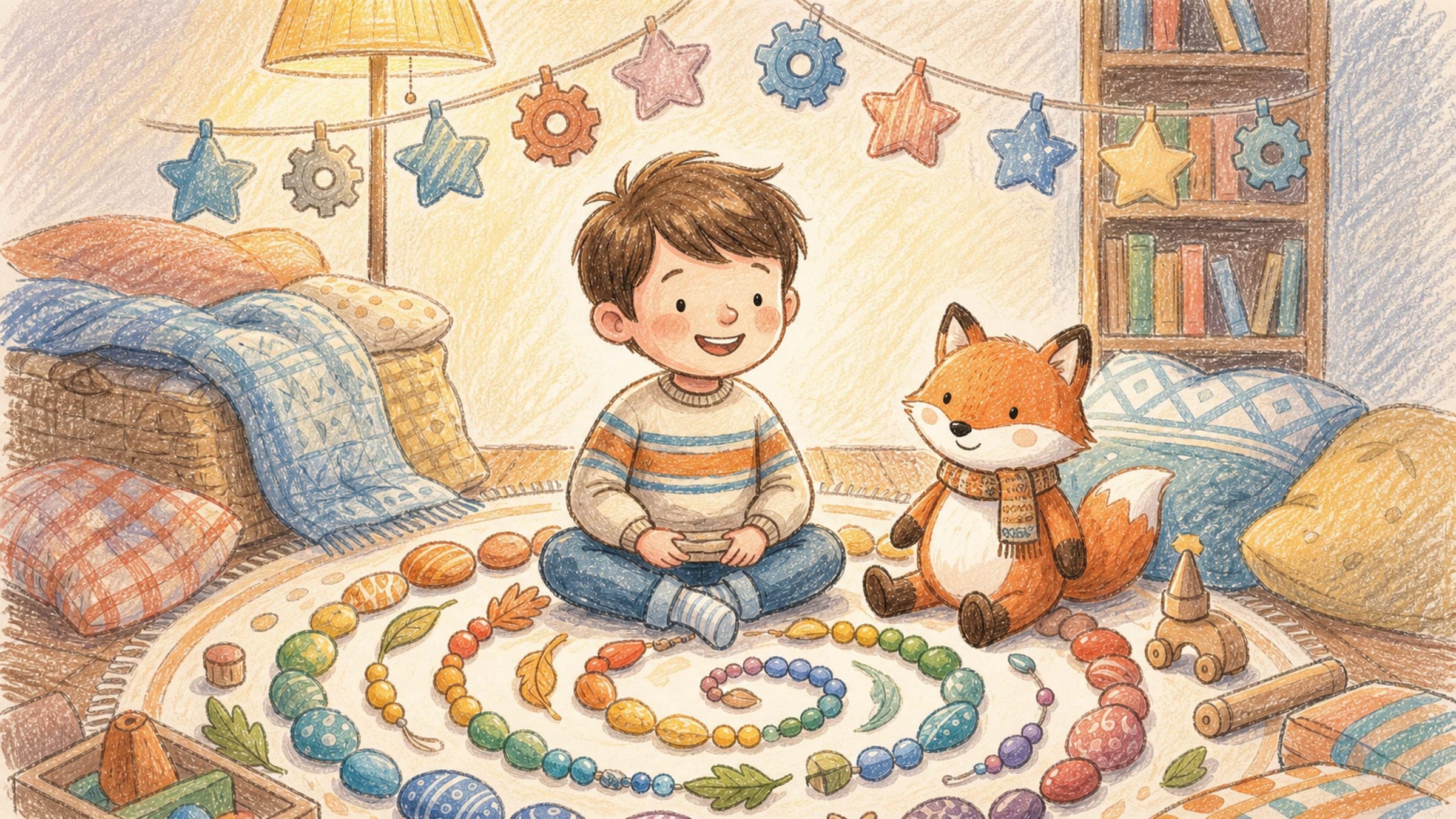
Asher noticed he was different from some other kids in certain ways. He loved deeply focusing on the things he was passionate about, he noticed details others missed, and some things, like loud rooms or sudden changes, were harder for him. He wondered what that all meant.
2. A feeling he can name
Sometimes being different felt confusing, or made Asher wonder if something was wrong with him. He didn't yet have a way to understand his own wonderful, particular brain.
3. A familiar point of view
One evening his family read a book with a boy on the cover who had Asher's brown hair and Asher's own name across the top. Using words Asher understood and preferred, the story explained that he was autistic. It described his own communication, sensory preferences, interests, and supports without claiming those traits apply to every autistic person.
4. He understands, and feels proud
Asher paused on the pages that described his headphones and preferred way to communicate. His grown-up checked whether the words felt right and marked one sentence to change. Asher did not have to feel proud or grateful for the book; his response guided the next version.
5. He comes back to the book
The book remained optional and editable. As Asher's language, privacy choices, and support needs changed, the family updated it with his input.
How can you use a read-aloud plan for understanding autism?
- Talk about autism openly, honestly, and positively, using the words your family and child are comfortable with.
- Celebrate your child's specific strengths and interests.
- Acknowledge the things they find hard without framing them as failures.
- Seek out autistic voices and creators, and lean on professionals who use affirming, strengths-based approaches.
Should you tell a child they're autistic?
Many autistic people and professionals support telling children early, in age-appropriate, affirming ways, because understanding themselves builds self-acceptance. The American Academy of Pediatrics describes autism as a complex neurodevelopmental difference in how children communicate, play, and experience the world, and emphasizes that many autistic children do well throughout life, especially with support, services, and a strong sense of connection to their community (Understanding Autism: Information for Families).
What does outside guidance add for understanding autism?
CDC describes autism as a developmental disability with varied characteristics and support needs. Avoid presenting one child as a template for all autistic children; personalize the story around that child's communication, sensory preferences, interests, and chosen language (About Autism Spectrum Disorder).
The Autistic Self Advocacy Network's autistic-led parent guide emphasizes presuming competence, respecting communication differences, and learning from autistic people rather than presenting autism as something to overcome. Use those perspectives to review the story's language and assumptions, while still following the child's individualized clinical and educational supports (Start Here: A Guide for Parents of Autistic Kids).
Keep reading: understanding your brain and understanding your senses go together — see how this approach helps a child with too much noise and sensory overload.
More related guidance:
- Using a Wheelchair, Walker, or Prosthetic? A Story About Access
- Using an Inhaler for Asthma? A Story That Makes the Routine Calm
- ADHD and Feeling Like 'Too Much'? A Story About Needs and Strengths
- Broke a Bone and Needs a Cast? A Story That Turns It Into a Badge
- Personalized Story Ideas Hidden in Everyday Family Moments