Story ideas
How do you help a child with sensory overload in busy, noisy places?
Validate sensory overwhelm, reduce demands, offer child-accepted headphones or an exit, and rehearse a break. A story cannot diagnose or treat.
The short answer
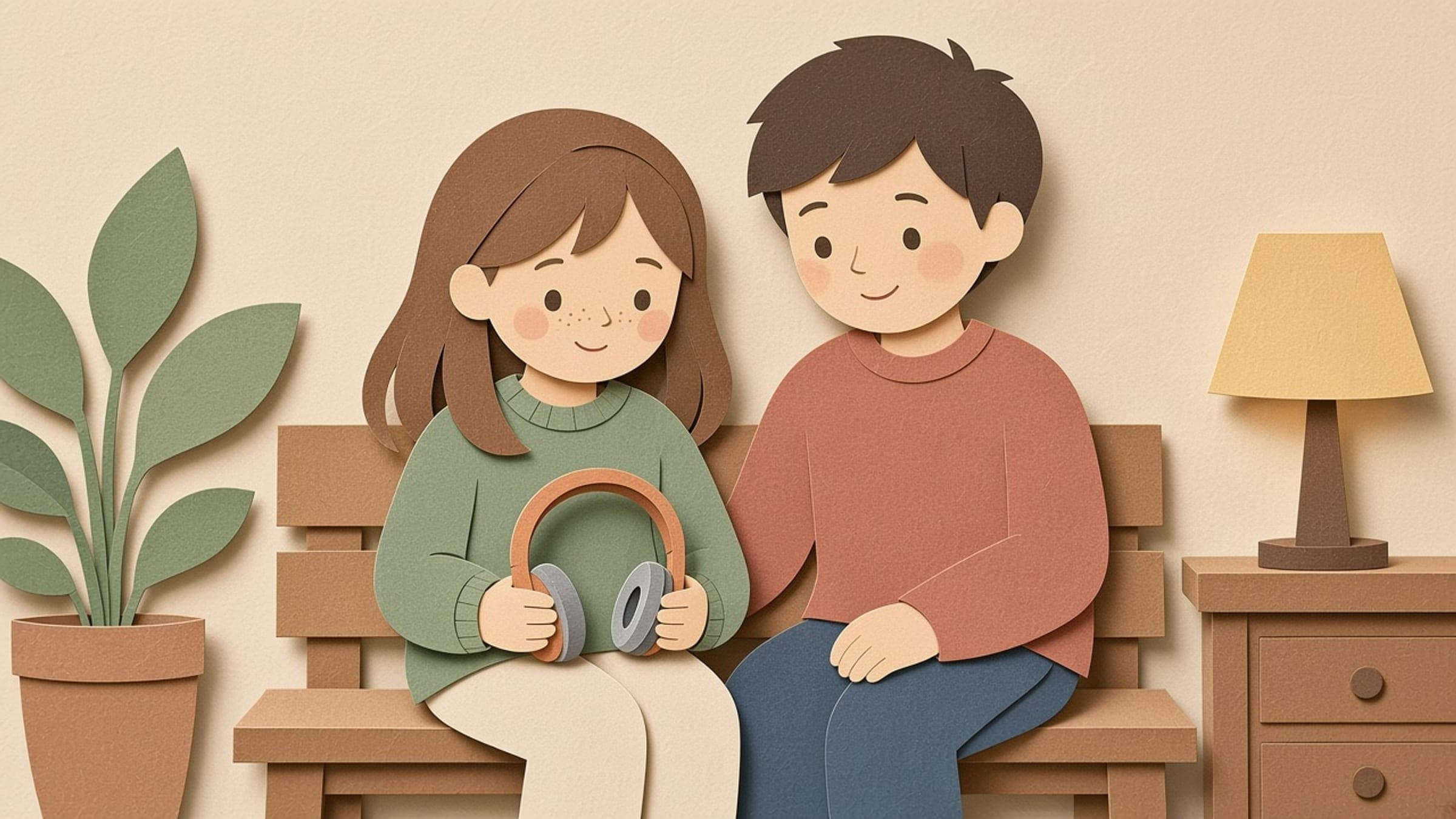
Treat the overwhelm as real. Lower language and demands, then offer one accommodation the child already accepts — leaving, a quieter corner, or headphones they chose. Rehearse a break signal and an exit that actually happens. A story can preview those options. It cannot diagnose autism or a sensory disorder from one meltdown, treat sensory processing, or promise calm.
Key takeaways
- Overwhelm from noise, crowds, or bright busy places is a real sensory load — not a character flaw and not a diagnosis from one outing.
- In the moment, reduce demands. Offer one option the child already accepts. Do not force headphones, a hug, or "just try a little longer."
- Rehearse a break signal and an exit that actually happens. "Go" means go.
- A story can preview those options. It cannot diagnose autism or a sensory disorder, treat processing, or promise calm.
How do you help a child with sensory overload in busy, noisy places?
Treat the overwhelm as real. Lower your language and your demands. Then offer one accommodation the child already accepts — leaving the room, sitting in a quieter corner, or putting on headphones they chose. Rehearse a break signal on a calm day so they are not inventing the words while the store is already too much.
This page is that accumulated-load job: a child who does fine in a quiet kitchen and then unravels in the grocery store, the cafeteria, the birthday gym, or the assembly — noise plus people plus lights, stacked. It is not afraid of loud noises, which owns one sudden sound an adult can warn about, move away from, or shorten: the vacuum, the hand dryer, the fireworks. It is not afraid of thunderstorms, which owns weather nobody can pause. It is not big feelings and tantrums, which owns the emotional wave after a limit or a disappointment. A sensory pile-up is not a startle at one boom, and it is not a tantrum about the tablet.
Keep the diagnosis pages separate too. Understanding autism owns identity language for a child who is already autistic. ADHD and feeling like "too much" owns ADHD shame and supports with that care team. One overloaded outing does not write either of those stories.
Child Mind Institute describes what the pile-up can look like from the outside. A first-grader may do fine in a quiet setting with a calm adult, then have an extreme, hard-to-stop tantrum in a grocery store full of visual and auditory stimulation. That is a neurological panic response to everyday sensation, not a child choosing to ruin the trip (Sensory Processing Issues Explained). ZERO TO THREE names the same load in temperament language: when a child gets more sensory information than they can manage, they might cry and act out, or withdraw and shut down (Your Child’s Sensory Threshold: Mastering the Messiness of Springtime).
Your job tonight is smaller than "fix their senses." Make this outing survivable. A story can walk a hero through noticing "too much," using a signal, and watching an adult change the environment. It cannot diagnose why the load landed, treat sensory processing, or promise the next party will stay easy.
Is this sensory overload, a loud-noise scare, a tantrum, or a diagnosis?
Sort the job before you sort the child. One hard afternoon is information. It is not a label.
The American Academy of Pediatrics describes children who are hypersensitive or hyposensitive to what is around them. Loud music that other people tolerate can cause intense discomfort. Bright fluorescent lights that bother some children can rivet others. Those differences show up in how a child behaves and in everyday skills. If you suspect your child has trouble with sensory processing, talk with the pediatrician; there may be community resources for further evaluation (Sensory Integration Therapy).
Child Mind Institute is the diagnosis line. Parents often call this sensory processing disorder, or SPD. Psychiatrists note that SPD is not a recognized disorder in the Diagnostic and Statistical Manual. Sensory processing problems are now considered a symptom of autism because many autistic children and adults also have significant sensory issues — and many children with sensory issues are not on the spectrum. The same page lists ADHD, OCD, other developmental delays, or no other diagnosis at all (Sensory Processing Issues Explained).
CDC's autism signs page is the same "do not leap" rule from a second publisher. Unusual reactions to the way things sound, smell, taste, look, or feel can appear among restricted or repetitive characteristics related to autism. CDC also says some people without ASD might have some of these symptoms. Contact the child's doctor if you have concerns about development. Screening and a list of examples are not a diagnosis you make from one party (Signs and Symptoms of Autism Spectrum Disorder).
| What you saw | Treat it as | Do not treat it as |
|---|---|---|
| Hands over ears at the vacuum, then they recover | A startle at one sound — use afraid of loud noises | Proof they cannot handle any noise |
| Fine at home, then a grocery-store collapse | Accumulated load: noise, lights, crowd (Child Mind) | A child "being difficult" on purpose |
| Cry, bolt, or shut down after a loud birthday | More input than they can manage (ZERO TO THREE) | A character verdict |
| One hard outing this month | Information to write down | Autism, ADHD, or "SPD" from a single afternoon |
| Frequent, intense, or daily overload that shrinks ordinary life | A reason to call the pediatrician (AAP, ZERO TO THREE) | A plot a picture book can treat |
The table is editorial sorting. Child Mind names the quiet-to-grocery-store swing and the unofficial-SPD line. ZERO TO THREE names cry / act out / withdraw when the threshold is crossed. AAP names hypersensitivity and a pediatrician conversation. CDC names unusual sensory reactions as possible autism-related examples that also appear in people without ASD. None of them publish a scorecard you can check off in the parking lot.
If the hard part is rage after a limit, that is big feelings and tantrums. If the hard part is one boom they can be warned about, stay on afraid of loud noises. This page stays with the stacked room.
What do you do in the first minutes of overwhelm?
Stop adding jobs. Safety first. Then one quieter option. Do not lecture a child whose thinking is already full.
ZERO TO THREE's Big Reactors page is the validation line: hold them if they want that, and name the load without a verdict. The example that page gives is "I know it's hard when it's loud. I see you're upset." Big reactions are not bad. Do not label the child as overreacting. Feeling strongly is okay; the adult's job is comfort and a plan, not punishment for the feeling (Parenting Low and Big Reactors).
Child Mind Institute is the leave-now rule. When things become too overwhelming, it is time to go. Do not wait until the child is on the brink of a meltdown. Have a reasonable exit strategy ready. If you can see they are reaching a breaking point, leave. Pushing past that point can make the next outing harder, not braver (Tips for Going Places With Sensory-Challenged Kids).
The same Child Mind explainer adds what the body may do instead of "using words." Another response to being overwhelmed is to flee — dashing across a playground or parking lot, away from something upsetting or toward something that calms the system. A child might also become aggressive. Peske, quoted there, calls that a neurological panic response to everyday sensation. Safety takes the front seat (Sensory Processing Issues Explained).
- Get to a safer, smaller input. Step into a hallway, a car, a bathroom, or the edge of the room. Child Mind's going-places page names sitting in the car, taking a walk, or putting headphones on for a little while as in-the-moment plans.
- Drop extra language. ZERO TO THREE's sensory-threshold page is the environment lever: quieter space, less background noise. This is not the minute for "use your words" or a speech about gratitude.
- Name the load, not the character. ZERO TO THREE's line: "I know it's hard when it's loud. I see you're upset." Not "you're overreacting."
- Offer one accepted option, then wait. Headphones they already chose. A stuffed animal from the bag. Leaving. Do not stack three new tools they have never practiced.
- If they are heading for the parking lot, you move with them. Child Mind's flee example is a safety fact, not a defiance story. Hold a hand. Get to the car. Sort the feeling later.
The numbered script is editorial sorting. Child Mind names the exit, the car, headphones, and the flee/panic response. ZERO TO THREE names validation and turning the environment down. Neither publishes a five-line store protocol.
Write down what the room was doing, in their words if they have any: "the lights hummed," "too many voices," "the smell." A vague "they melted down again" evaporates. A dated note — place, load, what helped, what you forced — is what you take to the pediatrician if this does not stay occasional.
Which accommodations does the child actually accept?
An accommodation is an option they will use. It is not a costume you buckle on them so the party can continue.
ZERO TO THREE's sensitive-child list is environmental first: soft clothes with tags removed, quiet play spaces, turning off the TV and other devices so background noise drops, avoiding crowded spaces at peak hours, and introducing a new sensory experience slowly — put the play-dough on the table; do not make them touch it (Your Child’s Sensory Threshold: Mastering the Messiness of Springtime). The Big Reactors page adds a calm environment with soft music, gentle lighting, and cozy textures, plus a preview: "Tyler's birthday might be noisy. Should we bring your headphones or take breaks outside?" (Parenting Low and Big Reactors).
Child Mind Institute's going-places page is the kit and the signal. Pack a go-bag with things that already calm this child: noise-cancelling earmuffs, sunglasses, a fidget, a favorite stuffed animal. When you go out, plan what happens if they need to settle: the car, a walk, or headphones for a little while. Set up a simple, subtle signal — a wave — so they have a graceful way to say they have had enough. "Go" means go (Tips for Going Places With Sensory-Challenged Kids).
Child Mind's school page is the same idea in a building they cannot leave at will. Talk with the teacher about changes that might help: noise-blocking headphones when it gets loud, sitting away from a buzzing light or a noisy vent, a visual schedule, a break near the door during an assembly, or lunch in a quieter room with a teacher or aide if the cafeteria is too stimulating. Occupational therapists are the specialists that page names for sensory issues; there is no medication that treats sensory processing issues (How Sensory Processing Issues Affect Kids in School).
| Offer | What it is for | What it is not |
|---|---|---|
| Headphones or earmuffs the child will wear | Child Mind's go-bag and in-the-moment headphone option | A forced headset so you can stay |
| A quieter corner, car, or hallway | Child Mind's break space; ZERO TO THREE's quiet play space | A time-out for "behavior" |
| Leaving when they signal | Child Mind: go means go | "Five more minutes" after they asked to go |
| Soft clothes, tags out, lower background noise | ZERO TO THREE's sensitive-child list | A personality makeover |
| Teacher-agreed headphones, quiet lunch, assembly exit | Child Mind's school adjustments | A diagnosis you write into the planner |
| Hearing supports prescribed for hearing | A different job — getting hearing aids | Optional noise-reducing headphones |
If the cafeteria is the problem — the noise, the crowd, the smell — a quieter table is the accommodation, not a friendship lecture. That lunch belongs here and on eating lunch alone only for the social part. If the playground itself is the pile-up, a quieter corner or a smaller game is the same split: this page for the load, left out at recess for the join-in script.
Do not put hearing-aid care on this page. Audiologist-fit hearing aids are a clinical device with their own adjustment story. Child-accepted earmuffs are optional load reduction. Keep those jobs apart.
The AAP's sensory-integration page is the therapy boundary. Sensory integration therapy is play-oriented occupational-therapy work that may include swings, deep pressure, brushing, or weighted vests. Those approaches appear to sometimes calm an anxious child, and the evidence that sensory integration therapy treats autism is limited and inconclusive. Talk with the pediatrician before anyone sells you a program. A story does not prescribe brushing, a weighted vest, or a sensory diet (Sensory Integration Therapy).
How do you rehearse a calm exit before the next outing?
Practice the signal and the leaving on a day that is still quiet. Do not debut the plan inside the party.
Child Mind Institute starts with warning and a shared schedule. Unexpected transitions and new sensory environments can turn an outing into a meltdown. Predictability helps kids who are not getting reliable information from their senses feel more secure. Give information way in advance about where you are going and what will happen. Let the child have input. Go over the plan together. When you are there, agree on a safe break place a grown-up can still see. Kids who are more self-aware can start those breaks; kids who are less able to self-regulate may need you to suggest a walk or ten minutes in the car (Tips for Going Places With Sensory-Challenged Kids).
ZERO TO THREE's Big Reactors page is the preview sentence: name that the birthday might be noisy, then offer headphones or outside breaks as a choice (Parenting Low and Big Reactors). The sensory-threshold page is the pace rule: introduce the new thing slowly, and do not make them touch it (Your Child’s Sensory Threshold: Mastering the Messiness of Springtime).
- Name the place and the load, once, while they are calm. "The gym will be loud and bright. We can take breaks." Child Mind wants the warning early. ZERO TO THREE wants the choice attached.
- Pick one signal they help choose. Child Mind's example is a wave. A word, a card, or a tap on your wrist is fine if they will actually use it.
- Pack only what they already use. Child Mind's go-bag is "anything that helps to calm and reorganize the child" — not a catalog of tools they refused last week.
- Say what leaving looks like. Who they tell. Where you walk. That you will not bargain for five more minutes after the signal. Child Mind: go means go.
- Read the story, then say the real sentence out loud. The hero uses the signal. The adult changes the room. Then your child says tonight's sentence once: "I need a break," or the wave, or "headphones." Close the book.
The names below are invented for illustration. In a real personalized book the hero is your own child, built from your own photo.
In the story, Noor walks into a bright, noisy gym. The book does not ask her to love it. She uses the hand signal she chose. A grown-up walks her to the hallway, offers the headphones she packed, and does not make her go back in to prove she is fine. The last page is not "and then parties were easy." It is Noor leaving when she asked, and the adult treating that as the plan working.
Then the read-aloud has a job outside the book: say the real place, the real signal, and the real exit, and have them do the signal once before you close the cover. A story that ends at "they handled every crowd" is entertainment. A story that hands them tonight's one exit is preparation.
How the studio keeps the rehearsal specific
The Plot Outline step asks a plain question — "What should happen in the story?" — as a free-text box, with the guidance that a few sentences is plenty. That is where the real room, the real signal, and the real accommodation go, in your child's words, rather than a generic "learned to stay calm" last page. The story requires you to name one Story hero. On the Story step you review the complete written story before illustrating the opening pages, and you can use edit mode if a promised forever-calm ending slipped in.
Do not write a last page where one book makes busy places easy. Write a last page where the load was named, the adult reduced demands, and the child's accepted option actually happened.
For other everyday moments that can hold a rehearsal like this, see personalized story ideas in everyday family moments.
When is this a story job, and when do you call the pediatrician?
A story helps in a calm hour, as a rehearsal of noticing "too much," using a signal, and being believed. It does not help as a diagnosis, and it does not replace a clinician.
Ordinary, occasional overload that eases when you leave, plus a child who can use a practiced signal, is the pattern ZERO TO THREE already called a sensory threshold: some children need very little input before they react; some can manage a crowded birthday. When the load is more than they can manage, they cry, act out, or shut down. That page tells parents with frequent or very strong reactions to talk with a health care provider (Your Child’s Sensory Threshold: Mastering the Messiness of Springtime). The Big Reactors page repeats the line: frequent meltdowns, difficulty calming down, or extreme responses to sensory input may need a pediatrician, an early childhood specialist, or an occupational therapist (Parenting Low and Big Reactors).
A story cannot diagnose autism, ADHD, anxiety, or a sensory disorder. Child Mind is explicit that SPD is not an official DSM diagnosis, that sensory issues can travel with autism or appear without it, and that grocery-store collapse is a processing problem — not a plot you name from a picture book (Sensory Processing Issues Explained). CDC's autism page is the same caution in the other direction: unusual sensory reactions can be among autism-related examples, and some people without ASD have some of those symptoms. Concerns about development go to the doctor, not into a last page (Signs and Symptoms of Autism Spectrum Disorder).
The AAP is the evaluation door, not a home program. Talk with the pediatrician if you suspect sensory-processing difficulties. Sensory integration therapy's effectiveness as a therapy for autism is limited and inconclusive. Auditory integration training and behavioral optometry have not been shown to be scientifically valid on that page. Do not let a story, a kit, or an online checklist stand in for that conversation (Sensory Integration Therapy).
Call the pediatrician when overload is frequent or intense, when leaving never settles them, when they bolt toward danger, or when ordinary places — school, stores, meals — keep shrinking. One loud birthday is not that pattern. A child who cannot get through a typical week without collapse might be. This page does not diagnose it.
Keep reading: if the hard part is one sudden sound they can be warned about, start with afraid of loud noises.
More related guidance:
- Why Is My Child Scared of Loud Noises? What Actually Helps
- Understanding Autism: A Story That Uses the Child's Own Language
- Big Feelings and Tantrums? A Story That Helps a Child Find Their Calm
- ADHD and Feeling Like 'Too Much'? A Story About Needs and Strengths
- Personalized Story Ideas Hidden in Everyday Family Moments
Sources
-
Sensory Integration Therapy — American Academy of Pediatrics
-
Tips for Going Places With Sensory-Challenged Kids — Child Mind Institute
-
How Sensory Processing Issues Affect Kids in School — Child Mind Institute
-
Your Child’s Sensory Threshold: Mastering the Messiness of Springtime — ZERO TO THREE
-
Signs and Symptoms of Autism Spectrum Disorder — Centers for Disease Control and Prevention