Meaningful gifts
When do babies start crawling?
When babies crawl: typical age range of 6 to 10 months, the stages leading up to it, different crawling styles, how tummy time helps, babyproofing, and when to
The short answer
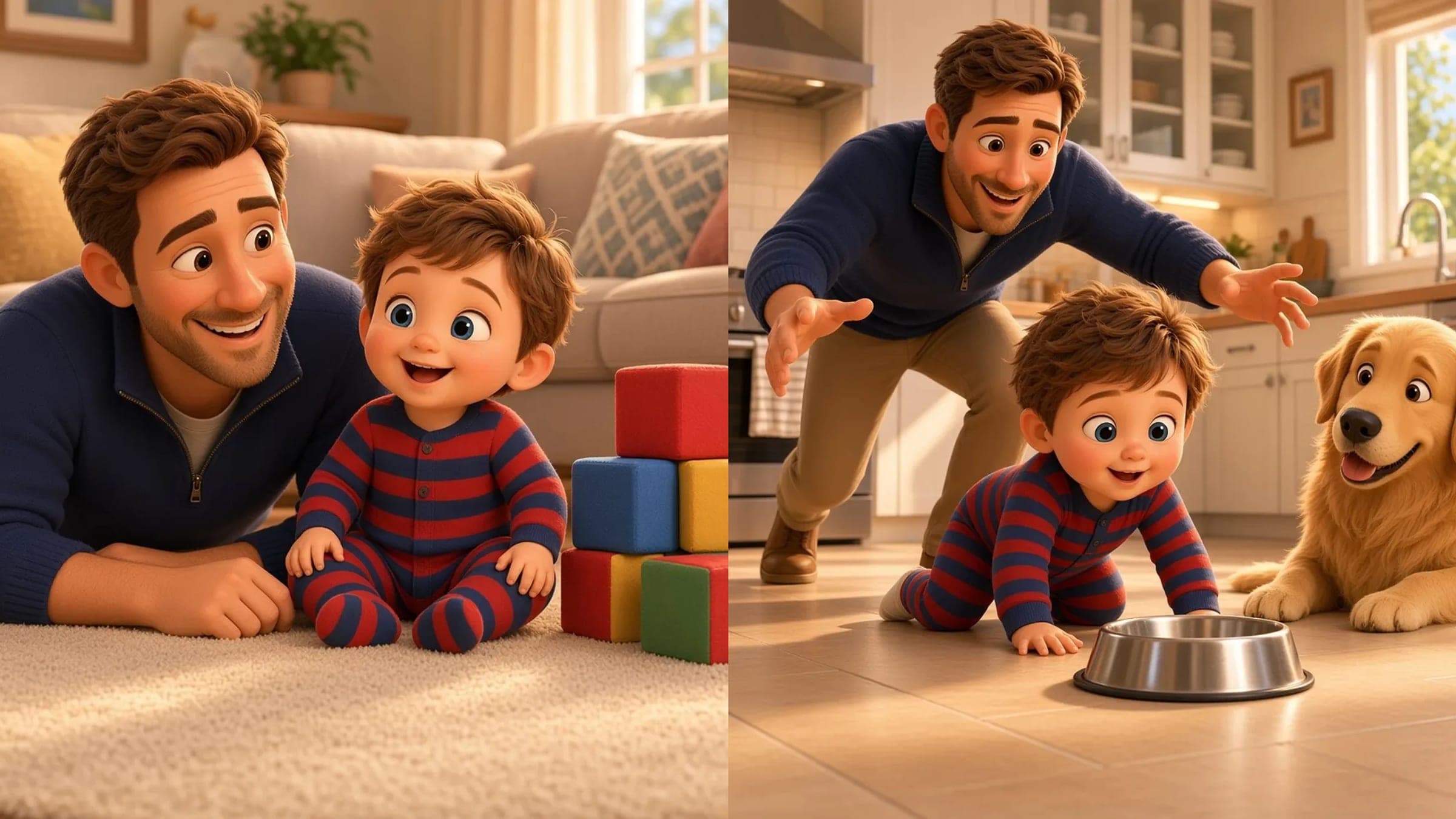
Most babies crawl between about 6 and 10 months, though some scoot, roll or go straight to walking. Before crawling, babies push up on their hands, rock on hands and knees and pivot. Plenty of floor time helps. Ask your pediatrician if your baby isn’t moving around by 12 months.
Most babies start crawling between about 6 and 10 months. Before they move forward, they usually push up on straight arms, get onto hands and knees and rock back and forth. Some babies army-crawl on their bellies, scoot on their bottoms or roll everywhere, and a few skip crawling entirely and go straight to pulling up and walking. What matters most is that your baby finds a way to get around and uses both sides of the body.
Key takeaways
- The age range is wide; many healthy babies crawl late or not at all.
- Floor time on a firm surface builds the strength crawling needs.
- Uneven crawling, using one side much more, is worth mentioning.
- Babyproof before crawling starts, not after.
Steps before crawling
- Tummy time in the first months strengthens neck, shoulders and back.
- Pushing up on arms, around 4 to 6 months.
- Rolling both ways.
- Sitting with less support.
- Pivoting in a circle on the tummy.
- Rocking on hands and knees.
Crawling styles
- Classic. Hands and knees, opposite arm and leg moving together.
- Commando or army. Belly on the floor, pulling with arms.
- Bear. Hands and feet, with straight arms and legs.
- Crab. Sideways or backward.
- Scooting. Sitting and pushing with one leg or arms.
- Rolling. Using rolls to get across the room.
All of these count as getting around.
How to encourage crawling
- Daily floor time on a play mat, not long periods in seats or carriers.
- Place a toy just out of reach.
- Get down on the floor face to face.
- Make tunnels with pillows and cushions (supervised).
- Let your baby go barefoot for grip.
Babyproofing for crawlers
- Gates at the top and bottom of stairs.
- Outlet covers.
- Anchor furniture and TVs to walls.
- Cord holders for blinds.
- Lock cabinets with cleaners and medicines.
- Check the floor at baby height for small objects.
What comes next
After crawling, babies usually pull to stand, cruise along furniture, stand alone, and take first steps between 9 and 15 months.
When to ask your pediatrician
- No attempt to move around by 12 months.
- Using one side of the body much more than the other.
- Very stiff or very floppy muscles.
- Losing skills they had.
Developmental checks at well visits track these milestones. Early intervention services are free in many places if help is needed.
Late crawlers and non-crawlers
Babies born early may reach milestones on their corrected age. Some babies who spend more time held or in carriers crawl later but catch up.
Knee protection
Babies crawling on hard floors may like soft pants or knee pads.
Common questions
Does skipping crawling cause problems? Research doesn't show that it does.
Should I help my baby crawl by moving their legs? Not needed; floor time works best.
Floor time by age
- Newborn to 3 months: several short tummy-time sessions daily, building to about an hour total.
- 4 to 6 months: longer tummy time with toys just out of reach.
- 6 to 9 months: free floor play on a clean rug or foam mat, with gates around hazards.
Limit time in bouncers, walkers and seated containers, which reduce practice moving on the floor. The AAP recommends against baby walkers because of injury risk.
Surfaces and clothing
Hardwood floors can be slippery for knees and hands. Short sessions on carpet, grass or a play mat give better traction. Bare feet help babies push off; long pants protect knees on rough surfaces.
Crawling and safety at home
Once a baby crawls, they can reach outlets, cords, plants and small items quickly. Get down to their eye level and scan each room. Anchor furniture, cover outlets and put cleaning products up high or behind latched doors.
Playing together on the floor
Lie down facing your baby and roll a ball between you, or build a small tunnel of cushions to crawl through. Your face and voice are the best motivation for moving forward.
Crawling and brain development
Crawling coordinates both sides of the body and builds shoulder, core and hip strength. Babies who skip it can still develop normally.
When a big first finally happens, the milestones book turns a photo into an illustrated story you approve before ordering.
A milestone gift: a gift idea for big firsts
Look through a sample milestones book, then start from a photo.
Sources
- Movement: Babies 8 to 12 Months, HealthyChildren.org (American Academy of Pediatrics), accessed November 4, 2026
- Your Child’s Development: Milestones, KidsHealth (Nemours), accessed November 4, 2026