Story ideas
How do you teach a child to catch a ball?
How to teach a child to catch a ball: what's typical at 1, 2 and 4, the right ball for small hands, the hug catch, short drills, and help for kids who flinch.
The short answer
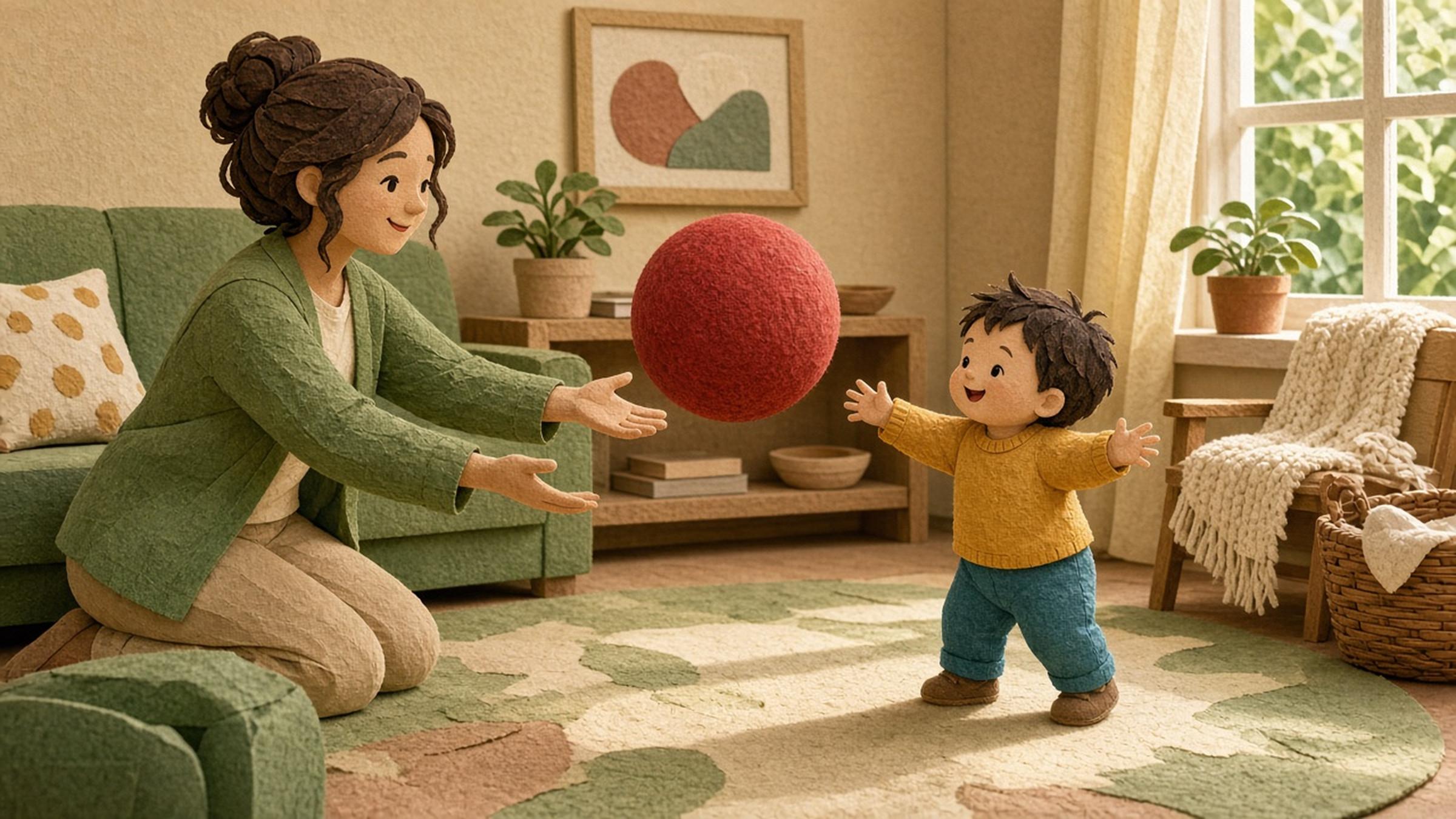
Start close with a large, light, soft ball. Roll it back and forth first, then toss it gently underhand into outstretched arms so your child can hug it to their chest, and step back only after several catches in a row. Throwing usually comes before catching: KidsHealth lists throwing a small ball at 18 months and catching a large ball among skills many 4-year-olds have.
Teach a child to catch by starting close with a large, light, soft ball and building in small steps: roll it back and forth on the floor first, then toss it gently underhand into their outstretched arms, and move back only after they've caught it several times in a row. Throwing usually shows up well before catching; KidsHealth lists throwing a small ball among 18-month skills and catching a large ball among skills many 4-year-olds have (Developmental Milestones at 4 Years, accessed November 12, 2026).
What's typical at each age
Pediatric milestone guides describe ball skills in broad steps, not exact dates:
| Age | What the guides describe |
|---|---|
| 1 year | Follows a simple direction, like throwing a ball (KidsHealth, 12 months) |
| 18 months | Throws a small ball; rolling or tossing a ball back and forth is a suggested activity (KidsHealth, 18 months) |
| 2 years | Kicks a ball (KidsHealth, 24 months); Seattle Children's lists kicking and catching larger balls for 1- and 2-year-olds |
| 4 years | Catches a large ball; tossing a ball is a suggested activity (KidsHealth, 4 years) |
The 18-month sheet suggests rolling or tossing a ball back and forth as an everyday activity (Developmental Milestones at 18 months, accessed November 12, 2026). Seattle Children's toy guide for 1- and 2-year-olds lists kicking and catching larger balls, and recommends large, light and soft balls (Toys and Play: 1- and 2-Year-Olds, accessed November 12, 2026). Every child gets there on their own timeline, and a child who plays catch often will look further along. That's practice, not talent.
Pick the right ball
- Toddlers: a large, light foam or fabric ball. Slow and soft gives them time to react, and a big ball is easier to trap with two arms.
- Preschoolers: a slightly underinflated playground ball, so it doesn't bounce away after a miss.
- Kindergartners: a smaller foam or rubber ball, then a bean bag, which stays put when dropped.
- Older kids: a tennis ball, then a softball-size ball.
Size matters for safety too. Seattle Children's advises that balls for 1- and 2-year-olds be large enough that they can't be swallowed when squashed down. The American Academy of Pediatrics lists balloons and small balls among the most common choking hazards and warns that balloons pose a choking risk up to age 8 (Choking Prevention, accessed November 12, 2026). Skip balloons for catch practice with young children, and keep small balls away from toddlers.
The steps
1. Roll it. Sit facing each other, legs in a V. Roll the ball back and forth. This teaches watching a ball come toward them, with no fear of being hit.
2. The hug catch. Have your child stand with arms out straight, palms up, "like a forklift." Toss the big ball gently into their arms from close range. They squeeze it to their chest. Cheer.
3. Ready position. Teach a starting shape: feet apart, knees soft, hands up in front, eyes on the ball. Use the same cue every time: "Ready, eyes!"
4. Hands, not arms. Once the hug catch is easy, show "make a basket." Pinkies together, palms up, for a ball coming below the chest. Thumbs together for a ball coming high.
5. Bounce catch. Bounce the ball once between you. The bounce slows it down and gives them a beat to get ready.
6. Step back. After five catches in a row, take one step back. If they miss three in a row, step in again.
Drills that make it a game
- Bean-bag toss. Toss a bean bag up to yourself, then catch. Kids can count how many in a row.
- Scarf catch. Toss a light scarf up; it floats down slowly. Good for children who flinch.
- Wall bounce. Older kids throw a ball against a wall and catch it on the rebound.
- Number call. Call out a number before tossing; they say it back while catching. It splits attention, like in real games.
- Bubble pop. Clap bubbles between both hands. Same motion as catching.
- Laundry-basket target. Take turns tossing a soft ball into a basket. Throwing practice builds the timing that catching needs.
When they close their eyes or turn away
Flinching is common. A ball coming at the face feels scary. Ways to help:
- Switch to a softer, lighter ball, or a scarf.
- Toss from closer and lower, to the belly rather than the face.
- Let them toss to you first, so they see how slowly a soft ball moves.
- Praise looking, not catching: "You watched it the whole way!"
Building the skills behind catching
Catching uses eye tracking, timing, and two hands working together. Other play builds the same skills: climbing, swinging, pouring cups in the bath, stacking blocks, and threading big beads. KidsHealth says 4-year-olds should be physically active throughout the day and lists tossing a ball among activities to try, alongside tag, dancing, hopping and tumbling. Ball games count.
When to check in
Share any concern with your child's doctor, even a small one. KidsHealth's milestone sheets say to tell your doctor if your child isn't meeting one or more milestones, or if they had a skill and have lost it. Clumsiness that stands out next to other children, frequent tripping, or avoiding all physical play are worth mentioning at a well visit. The doctor can say whether a therapy evaluation makes sense.
Make it a memory
The first real catch, two hands and a big grin, is a moment kids like to hear about later. If you're making a milestones book, add a page for it. See the milestones book and milestone gift ideas.
Catching with a partner who isn't you
Grandparents, older cousins and friends can all be good catch partners, but they may throw too hard or too far. Before they start, share the basics: stand close, use a big soft ball, toss underhand and slow, and aim at the chest. Ask them to cheer the try, not just the catch. Kids often practice more happily with a new partner, and hearing the same words from another grown-up ("Hands ready, watch the ball") helps the steps stick. At the park, a wall works as a partner too: toss a soft ball gently against it and catch the bounce.
Related reading
- Hopping, skipping and jumping by age
- Learning to ride a bike
- Teaching left and right
- Learning to swim
FAQ
How long should practice last?
Five to ten minutes. Stop while it's still fun.
Should I use a glove?
Not until they can catch a small ball with bare hands.
My child only wants to throw. Is that okay?
Yes. Throwing comes first for most kids, so take turns: one throw for them, one catch for them.