Story ideas
What is a good big sister book for a child expecting a new sibling?
Choose a big sister book that shows crying, naps, and jealousy, plus time with her parents. Start reading a few weeks to a couple of months before the due date.
The short answer
A good big sister book shows daily care, including crying, naps, and feeding, plus room for mixed feelings and time with her parents. Choose a length she can follow. Start reading a few weeks to a couple of months before the due date, and keep the book out after everyone is home.
Key takeaways
- The most useful big sister books are honest: crying, lots of sleep, and no play yet.
- Choose by age: a few simple pages for a two-year-old, a real story with feelings for a four-year-old.
- Start a few weeks to a couple of months before the due date, and keep reading after everyone is home.
A good big sister book prepares a child for daily care and tells her, plainly, that she still has time with her parents. The best ones show ordinary details (diapers, naps, crying for no clear reason) and room for pride, boredom and jealousy, which is normal.
What makes a good big sister book
When you look through options, check for these things:
Realistic care. A wakeful infant does not play, smile on cue or share toys. Books that show a ready-made playmate can set up disappointment. Look for spreads where someone sleeps, needs a burp or a swaddle, and cries, while a girl helps in small ways.
Room for mixed feelings. Pediatric guidance on preparing siblings stresses that jealousy and regression, like wanting a bottle again or asking to be carried, are common. A page that lets her feel annoyed or left out, and then shows a parent noticing, gives your child words for her own feelings.
Time with parents. The reassuring message for most children is not "you'll love them" but "you still get Mom and Dad." Look for a scene with one-on-one time.
The right length. Toddlers do best with a few short, concrete pages. Preschoolers can follow a plot with a beginning, a problem and a warm ending.
At the library, ignore the blurb and check the spreads. A useful spread shows a swaddle, a burp, or a rattle left on the floor because nobody is ready to play. Rhyming is optional. Annoyance on the page is a welcome sign. Nightwaking belongs there. A promise that the newcomer will be fun by the weekend does not.
When to start reading it
For most children, a few weeks to a couple of months before the due date is about right. Very young children have little sense of time, so starting months early can make the wait feel endless. Tie the timing to something they understand: "After your birthday" or "when it gets cold."
Some ways to use the book well:
- Read it as part of an ordinary routine, not as a big announcement. Mixing it into bedtime keeps it low pressure.
- Pause on the feelings pages. Ask, "How do you think she feels?" and accept any answer.
- Point out real things. If the book shows a car seat or a bassinet, show her yours.
- Keep it out after the birth. Many children want it most in the first weeks at home, when the change is real.
How to choose by age
Two-year-olds. Short board books or simple picture books with one idea per page: sleep, a meal, a diaper. Your daughter may not understand the whole plot, and that is fine.
Three- and four-year-olds. This is when a plot with feelings works. Look for a girl who gets frustrated, does something kind and ends the day with a parent. She may ask to hear it many times.
Five and older. Older children can handle more honesty, including the idea that care will take a lot of time for a while. A plot where she has a real job, like choosing an outfit or reading aloud, fits this age.
What a finished personalized sibling book looks like
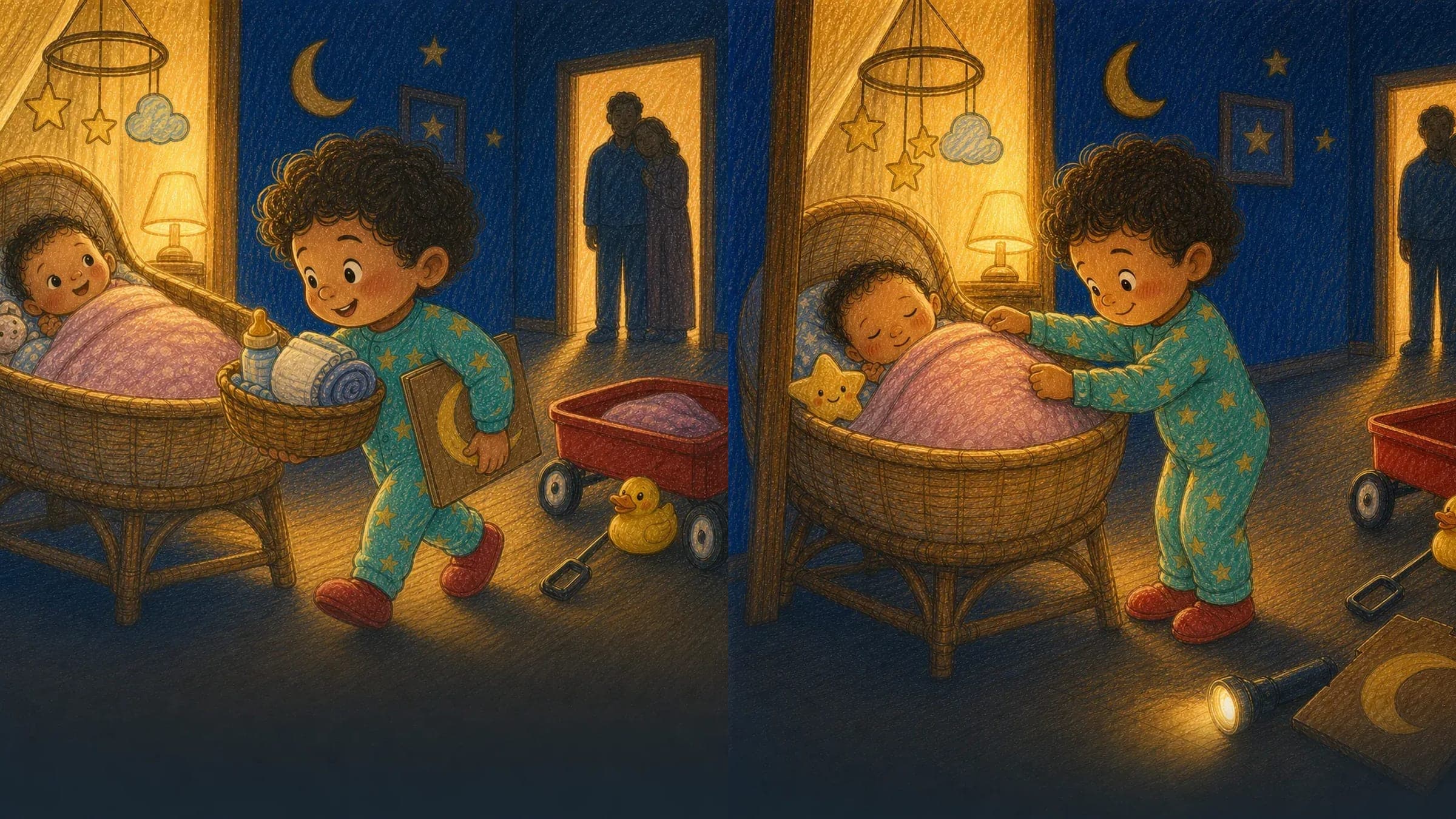
The finished sample puts the older child on the page. It is a brother version: in one spread a toddler in pajamas carries a basket with a bottle and a folded blanket to a bassinet while his parents watch from the doorway. In the next, he gently tucks the blanket around the sleeping child.
You choose who belongs, so the same cast works for a daughter. A mom, a dad, an older girl, and one infant is the simple group it is made for. The digital copy stands on its own, and you can order a printed copy later.
You can see the finished sample, read more about becoming a big sibling, or browse the siblings gift guide.
Frequently asked questions
When should we start reading a big sister book?
A few weeks to a couple of months before the due date works for most children. Younger toddlers do better with a shorter lead time because months feel very long to them.
What should a big sister book avoid?
Avoid books that promise the baby will be an instant playmate or that suggest the older child must always be happy about the change. Those can make normal jealousy feel like failure.
Can a big sister book be about our own family?
Yes. A personalized book can be about your own family. You choose who appears, such as parents or a pet, and you approve the photo the drawings come from.
Is a big sister book a good gift from grandparents?
It is a thoughtful one, especially if grandparents give it to the older child before the baby arrives. It shows her she is being thought of too, not only the new baby.
What if my daughter does not want to read it?
Leave it on the shelf and try again later. Some children need time, and many come back to the book after the baby is home.
Related reading:
- See a finished personalized big brother book
- Start from a photo
- Siblings gift guide
- Personalized story ideas for everyday family moments
- Becoming a Big Sibling: Make Room for Mixed Feelings
- First Christmas as a Big Sister: What to Give Her
- Gaining Stepsiblings? A Story That Turns a Bigger Family Into a Team
- First Birthday Themes for a One-Year-Old
- Night Before Christmas Book: Editions by Age
- A book about the new baby sibling
- A big sibling gift from the new baby
Sources
- Preparing Your Family for a New Baby, American Academy of Pediatrics (HealthyChildren.org)
- Preparing Your Child for a New Sibling, Nemours KidsHealth