Story ideas
How can you tell whether a child is ready for a new family pet?
Use this readiness checklist to prepare a child for a new pet, teach supervised gentle interaction, and choose age-appropriate responsibilities.
The short answer
There is no birthday that guarantees pet readiness. The AAP suggests waiting until children are older than 4 because younger children may not control impulses around animals; the CDC says young children still need close supervision. Before bringing a pet home, check whether your child can follow calm-touch rules, leave an eating or sleeping animal alone, wash hands, and accept that an adult—not the child—owns the animal's daily care.
Key takeaways
- Age is one input; impulse control, listening, supervision, and the animal's needs matter more.
- An adult remains responsible for care even when a child has one small, reliable job.
- Practice leaving a sleeping, eating, nervous, or toy-protective animal alone before the pet arrives.
- A story can rehearse the family's rules, but it cannot predict an animal's behavior or prevent a bite.
Is there a right age for a child to get a family pet?
There is no birthday that makes every child ready. The American Academy of Pediatrics suggests waiting until children are older than 4 before adopting a pet because younger children may not yet control their impulses around animals. It also recommends choosing a pet whose needs and temperament fit the household, not simply the animal a child finds most exciting (How old should our children be before we adopt a pet?).
That guidance is a starting point, not a pass/fail test. The CDC advises adults to supervise young children around dogs even when the dog is a trusted family pet. Any dog may bite when frightened, nervous, eating, playing, or protecting toys or puppies (Dogs).
Treat pet readiness like other milestones: being excited to feel "big" is not the same as being ready for every responsibility. If that distinction is useful at home, the birthday readiness guide offers another way to separate a milestone from a maturity test.
What readiness signals should you look for?
Observe your child around calm animals before making a commitment. The useful question is not "Do they love pets?" but "Can they follow the safety rule when excitement is high?"
| Observe | A useful readiness signal | Adult safeguard |
|---|---|---|
| Stopping on cue | The child pauses and backs away when asked | Stay close enough to intervene immediately |
| Gentle contact | One slow hand on the back or shoulder; no hugging or face-to-face contact | Ask the animal's caregiver before any touch |
| Respecting space | The child leaves an eating, sleeping, hiding, or toy-holding animal alone | Give the pet a child-free retreat |
| Hygiene | The child washes hands after touching the animal or its supplies with reminders | An adult supervises handwashing |
| Responsibility | The child completes one small job without treating it as ownership | An adult remains responsible for feeding, exercise, health care, and cleanup |
A small routine is more informative than a promise. Try a week of refilling an empty practice water bowl or putting a stuffed animal's supplies away. The same principle appears in the toothbrushing routine guide: make the action concrete, brief, and repeatable.
What should a parent say about gentle interaction?
Use one script the whole family can repeat:
"We stop and ask first. We let the pet come closer. One gentle hand stays on the back. We leave pets alone when they eat, sleep, hide, or hold a toy. An adult stays with us."
Then practice three possible responses with a stuffed animal:
- The pet moves closer: stay still and let the adult guide the interaction.
- The pet turns away: lower your hand and give it space.
- The pet is eating, sleeping, hiding, stiff, or nervous: do not approach.
Waiting for the animal to choose contact can be hard for an eager child. The active-waiting story guide gives parents language for practicing that pause without framing it as punishment.
What can a personalized preparation story rehearse?
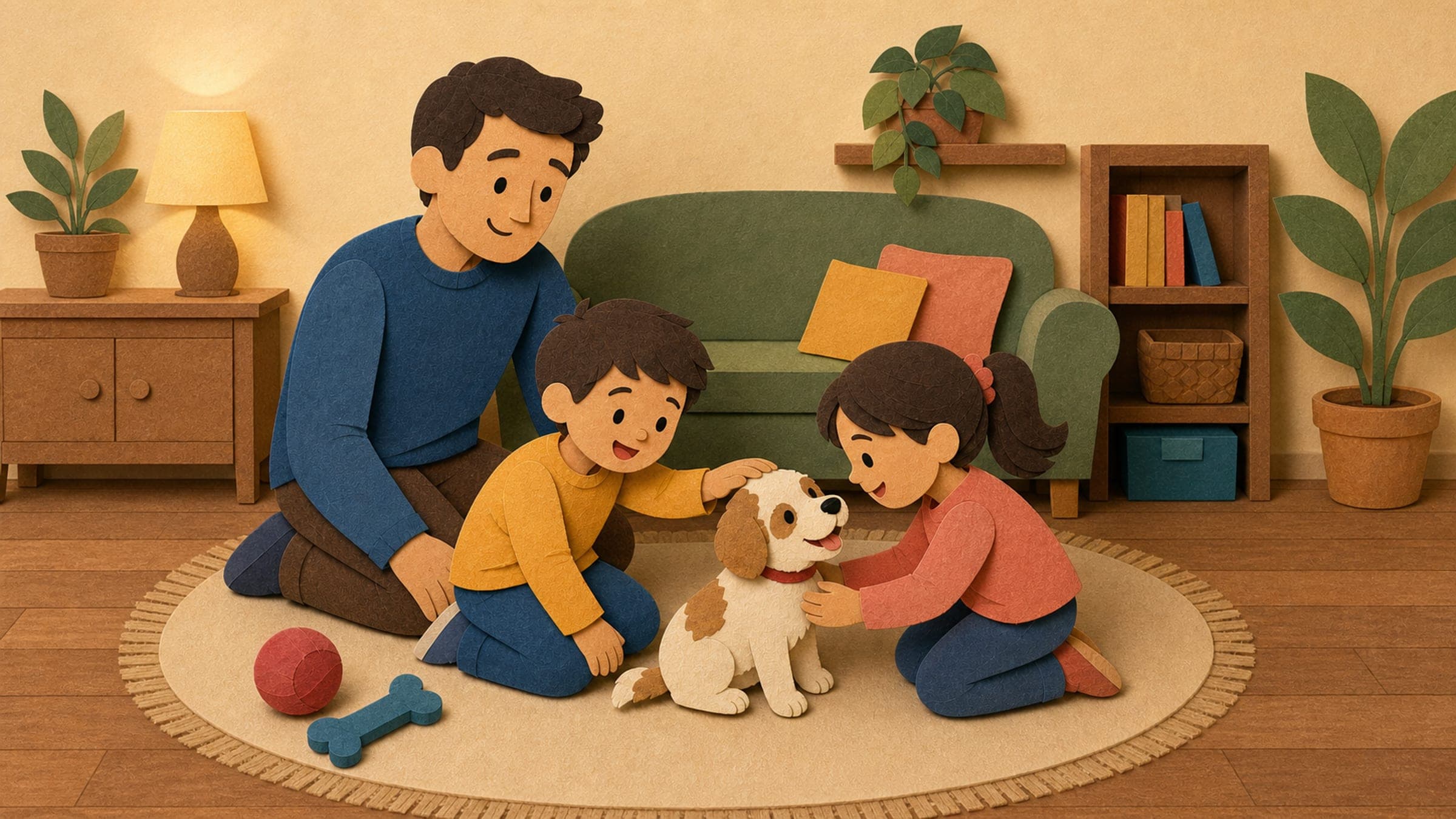
A useful story gives the rules a memorable sequence instead of promising that the new pet will immediately become a best friend. One scene might show the child stopping at the doorway, one might show an adult asking the dog's caregiver for permission, and one might show the child backing away when the puppy chooses its bed.
Keep the outcome modest: the child follows the plan, the adult notices, and the animal has room to choose. Avoid a scene where the child earns an animal's trust through one perfect interaction or where the pet's affection becomes a reward for compliance.
A personalized story cannot assess whether a child or animal is ready, choose the right species or temperament, replace advice from a veterinarian or pediatrician, or prevent bites and illness. It can help the family name and rehearse the rules they have already chosen.
For more ways to turn a real transition into a specific rehearsal story, use the everyday family-moment idea guide.
What should happen before the pet comes home?
- Ask a veterinarian or reputable rescue about the animal's temperament, health needs, history, and fit for a home with children.
- Decide which spaces and supplies are child-free.
- Assign the child one small job and write down which adult owns every essential care task.
- Practice the family's interaction script and handwashing routine.
- Plan the first meeting for a calm time with close adult supervision.
- Reconsider the decision if the household cannot reliably meet the animal's needs or supervise contact.
More related guidance:
- Crying at Daycare Drop-Off? A Story That Makes Goodbyes Confident
- Digital vs. Printed Personalized Storybooks: What Is the Difference?
- Giving Up the Tablet Without a Meltdown? A Script That Helps
- A Cancelled Plan: Sit With the Feeling, Then Name a Backup
- Personalized Story Ideas Hidden in Everyday Family Moments