
Story ideas
How do you prepare a child for getting tonsils out or ear tubes?
How to prepare a child for tonsil surgery or ear tubes with honest language, a comfort object, and details matched to the child's care plan.
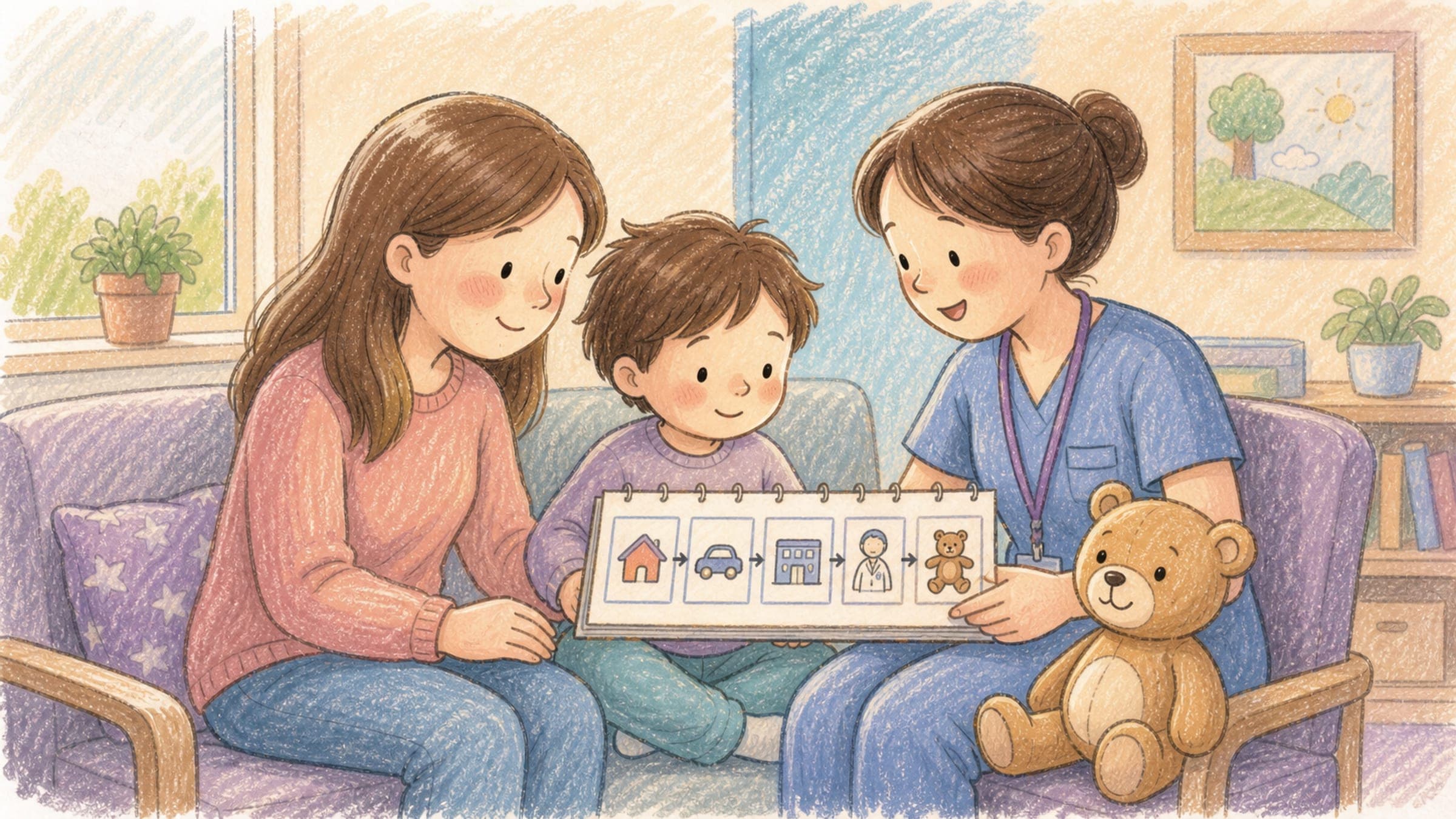
The short answer
Ask the care team what this child will actually see, hear, and do, then preview those steps in clear, age-appropriate language. Bring an approved comfort object and explain that the team will manage anesthesia, pain, food, and recovery. A personalized story can make the sequence more familiar, but it must not promise a painless procedure, a particular food, or an uncomplicated recovery.
Key takeaways
- These are common, safe, everyday procedures — but a young child doesn't know that.
- The unknowns may include anesthesia, unfamiliar rooms, equipment, and recovery.
- Preview only the details the child's care team has confirmed.
- A story where your child moves through the day and wakes up safe makes it familiar.
How do you prepare a child for getting tonsils out or ear tubes?
Ask the care team what this child will see, hear, and do, then walk through those confirmed steps in gentle, accurate terms. For many children this is a first procedure, and anesthesia, unfamiliar rooms, equipment, and recovery can raise questions. Do not call the procedure risk-free or promise a specific sequence.
Some parents worry that explaining a procedure will scare a child, so they skip the details. Usually the unknown is scarier than the truth, gently told.
Why does a story work when hiding the details doesn't?
A story tells the truth gently and gives the day a shape. When a child watches a hero move through each step and wake up safe, the whole thing becomes a story they already know the ending to. Center the story on your child's name and face and the calm becomes theirs.
What does a good hospital-day story look like?
The names and characters are invented for this example, and every hospital is a little different. In a real personalized book, the hero is your own child, and the details can match what your doctor tells you.
1. A hero with something big to learn
Ivy was going to the hospital to have a small procedure. The doctors would help her, and a grown-up would be with her the whole time, before and after. But Ivy had never done anything like it, and the not-knowing made her tummy flip.
2. A worry she can name
What would the hospital be like? How might she feel afterward? What questions should she ask the anesthesia team? Ivy had many unknowns and wanted clear answers.
3. A familiar point of view
The night before, Mom read her a new book with a girl on the cover who had Ivy's dark hair, a hospital gown, and Ivy's own name across the top. In the story, Ivy reviewed the plan her care team had provided: who she would meet, how the anesthesia team would explain its part, where her approved comfort bear could go, and what the family knew about recovery. The book also listed questions they still needed to ask.
4. She tries, and feels proud
Story-Ivy noticed familiar steps and used the words she had practiced when something differed from the plan. Real Ivy knew that recovery could feel different for each child. The helpful part of the story was not a guaranteed ending; it was knowing whom to ask, how to describe discomfort, and which comfort item could come along.
5. She won't stop asking for the book
Ivy used the book to review the confirmed plan and to collect questions. Afterward, the family corrected any details that had been different so the story remained honest about her experience.
How can you use a read-aloud plan for getting tonsils out ear tubes?
- Match the story to what your medical team actually tells you, since every hospital and procedure differs.
- Be honest in age-appropriate terms. The truth, gently told, beats a scary imagination.
- Bring a comfort object and let your child know a grown-up will be there before and after.
- Lean on your care team and child-life specialists, who prepare kids for procedures every day.
Should you tell a child the details or keep them vague?
For most children, an honest, age-appropriate walkthrough is more reassuring than vagueness, because the unknown tends to be scarier than the truth. The American Academy of Pediatrics reminds parents to follow the fasting and prep instructions the care team gives, to keep their own anxiety in check since children pick up on it, and to expect a child to be sleepy on waking, with the medical team and child-life specialists there to help you find the right words (Preparing Your Child for Anesthesia: What to Expect on the Day of the Procedure).
What does outside guidance add for getting tonsils out ear tubes?
ENT Health recommends following the surgical team's instructions before and after tonsil or adenoid surgery. Keep the story honest about uncertainty and use the child's actual plan; do not promise a painless visit, a fixed recovery time, or universal food and medication advice (How To Prepare for Tonsil and Adenoid Surgery).
Keep reading: a hospital day and a shot are both big doctor moments — see how this approach helps a child scared of getting a shot at the doctor.
More related guidance:
- Living With a Food Allergy? A Story to Practice the Safety Plan
- New Type 1 Diabetes Diagnosis? A Story That Makes the Routine Normal
- Starting Speech Therapy? A Story to Preview the First Sessions
- Staying Overnight in the Hospital? A Story to Preview the Night
- Personalized Story Ideas Hidden in Everyday Family Moments