Story ideas
How do you help a child live confidently with a food allergy?
How to rehearse a child's food-allergy plan, practice what to say, and keep responsibility with informed adults and the child's care team.
The short answer
Rehearse the child's written allergy plan in language supplied by their allergist: which foods to avoid, which adults can check ingredients, where prescribed medicine stays, and how to get help. Practice a short script for meals and parties while keeping safety responsibility with informed adults. A story can support recall, but it cannot teach emergency treatment or replace the child's plan.
Key takeaways
- You're balancing two things: keeping your child safe, and keeping them from feeling scared or left out.
- A list of rules can feel like a list of things that make a child different.
- Rehearse the child's plan while keeping safety responsibility with informed adults.
- A story can support recall but cannot teach emergency treatment.
How do you help a child live confidently with a food allergy?
Teach the child the age-appropriate parts of the written allergy plan while keeping prevention and emergency decisions with informed adults. A food allergy may involve prescribed epinephrine and specific school or caregiver procedures. The goal is not to make a child solely responsible for staying safe.
A list of allergy rules can feel isolating or overwhelming. A story can make the child's real plan more familiar while showing adults checking food, carrying prescribed medicine, and taking responsibility for safety.
Why does a story work when rules alone don't?
A story can rehearse a short script and show the child finding an informed adult. It should not turn a medical condition into an identity test, imply that a child can always assess risk, or teach generic emergency steps.
What does a good food-allergy story look like?
The names and characters are invented for this example. In a real personalized book, the hero is your own child, and the specifics can match your allergy plan.
1. A hero with something big to learn
Priya has a food allergy, which means some foods that are fine for other kids are not safe for her, and her family carries her emergency medicine everywhere. Priya knew her allergy was important, but at parties and lunch tables it sometimes made her feel like the odd one out.
2. A worry she can name
What if she accidentally ate the wrong thing? What if a friend offered her a snack and she didn't know if it was safe? Feeling unsure at snack time made Priya anxious, and being the only one who couldn't eat certain foods sometimes made her feel different.
3. A familiar point of view
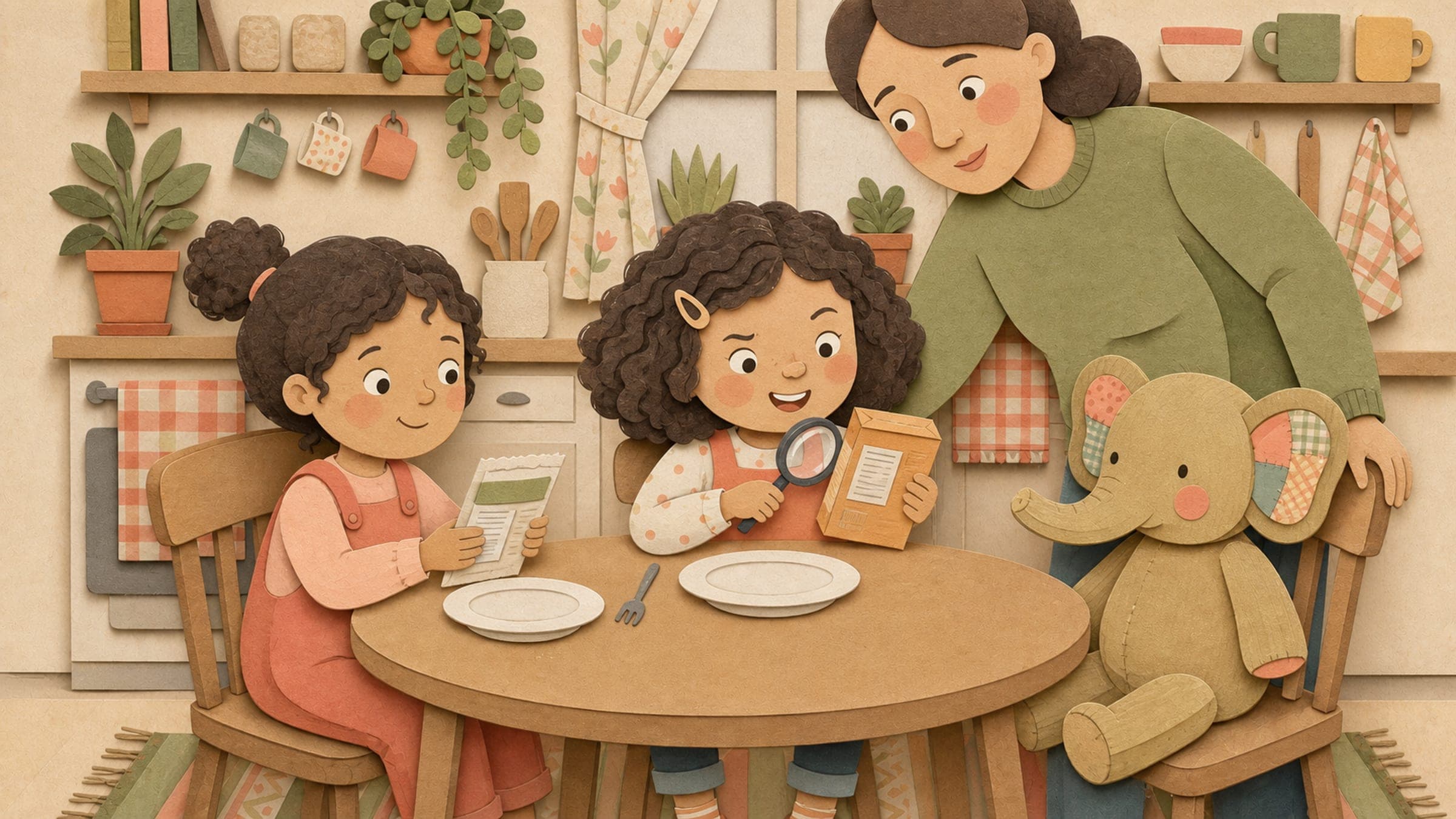
One evening her dad read her a new book with a girl on the cover who had Priya's dark hair, a bright confident smile, and Priya's own name across the top. In the story, Priya had a food allergy too. Her grown-ups checked labels and followed her allergist's written plan, while her stuffed elephant Pippa helped her practice one clear line: "Please check with my grown-up before I eat this." The story also showed exactly which adult Priya should tell if she noticed a symptom.
4. She tries, and feels proud
At a birthday party, Story-Priya used her practiced sentence and brought the food to her grown-up to check against the plan. Real Priya knew the same words could help her pause and find an adult; she did not have to decide whether a food or symptom was safe on her own.
5. She won't stop asking for the book
Priya returned to the book to rehearse her sentence and identify the adults who knew her plan. Her feelings about the allergy could still change from day to day, and the adults remained responsible for the medical details.
How can you use a read-aloud plan for living with a food allergy epipen?
- Use the child's written plan and assign responsibilities by age with the care team.
- Practice a confident line for parties and lunch tables.
- Teach the rules alongside your allergist's specific plan for your child.
- Make sure caregivers, schools, and friends' parents know the plan and how to help.
How do you explain an EpiPen or emergency medicine to a child?
Describe it in simple terms as a helper that keeps them safe, and follow your medical team's guidance on how and when it's used and who is trained to use it. On the practical side, the American Academy of Pediatrics recommends a written allergy and anaphylaxis emergency plan, keeping epinephrine readily available (children at risk should have at least two doses on hand), and a team approach among parents, the pediatrician, and the school (Managing Food Allergies at School: Information for Families). Always follow your allergist's specific plan.
What does outside guidance add for living with a food allergy epipen?
FARE advises following the child's emergency care plan and using epinephrine promptly for anaphylaxis. A story can help a child practice speaking up and finding an adult, but it must not teach a generic symptom threshold or substitute for the family's clinician-approved plan (Recognizing and Responding to a Reaction).
Keep reading: a food allergy is one of several things a kid learns to manage — see how this approach helps a child using an inhaler for asthma.
More related guidance:
- New Type 1 Diabetes Diagnosis? A Story That Makes the Routine Normal
- Starting Speech Therapy? A Story to Preview the First Sessions
- Staying Overnight in the Hospital? A Story to Preview the Night
- Too Much Noise or Sensory Overload? A Story to Rehearse Accommodations
- Personalized Story Ideas Hidden in Everyday Family Moments