Meaningful gifts
How much toothpaste should a child use?
How much toothpaste kids need by age: a rice-grain smear of fluoride paste under 3, a pea-size amount from 3 to 6, and why spitting beats rinsing.
The short answer
Use a smear of fluoride toothpaste about the size of a grain of rice from the first tooth until age 3, then a pea-size amount from 3 to 6. Supervise, teach your child to spit rather than swallow, and skip rinsing so the fluoride stays on the teeth.
Children should use a smear of fluoride toothpaste about the size of a grain of rice from their first tooth until age 3, and a pea-size amount from age 3 to 6. That's the current guidance from the American Academy of Pediatrics and dental groups. The amounts are small on purpose: enough fluoride to protect teeth, little enough that swallowing some is safe.
Key takeaways
- Fluoride toothpaste is recommended from the very first tooth, not only after age 2.
- A rice grain is a thin smear covering just a few bristles.
- A pea-size dot is about a quarter of the bristle length.
- Spit, don't rinse, so fluoride stays on the enamel.
Why the guidance changed
Older advice said to wait until age 2 for fluoride toothpaste. In 2014 the AAP updated its guidance to recommend fluoride toothpaste for all children from the first tooth, in a very small amount. Tooth decay is one of the most common chronic conditions of childhood, and fluoride strengthens enamel and helps reverse early weak spots.
Picturing the amounts
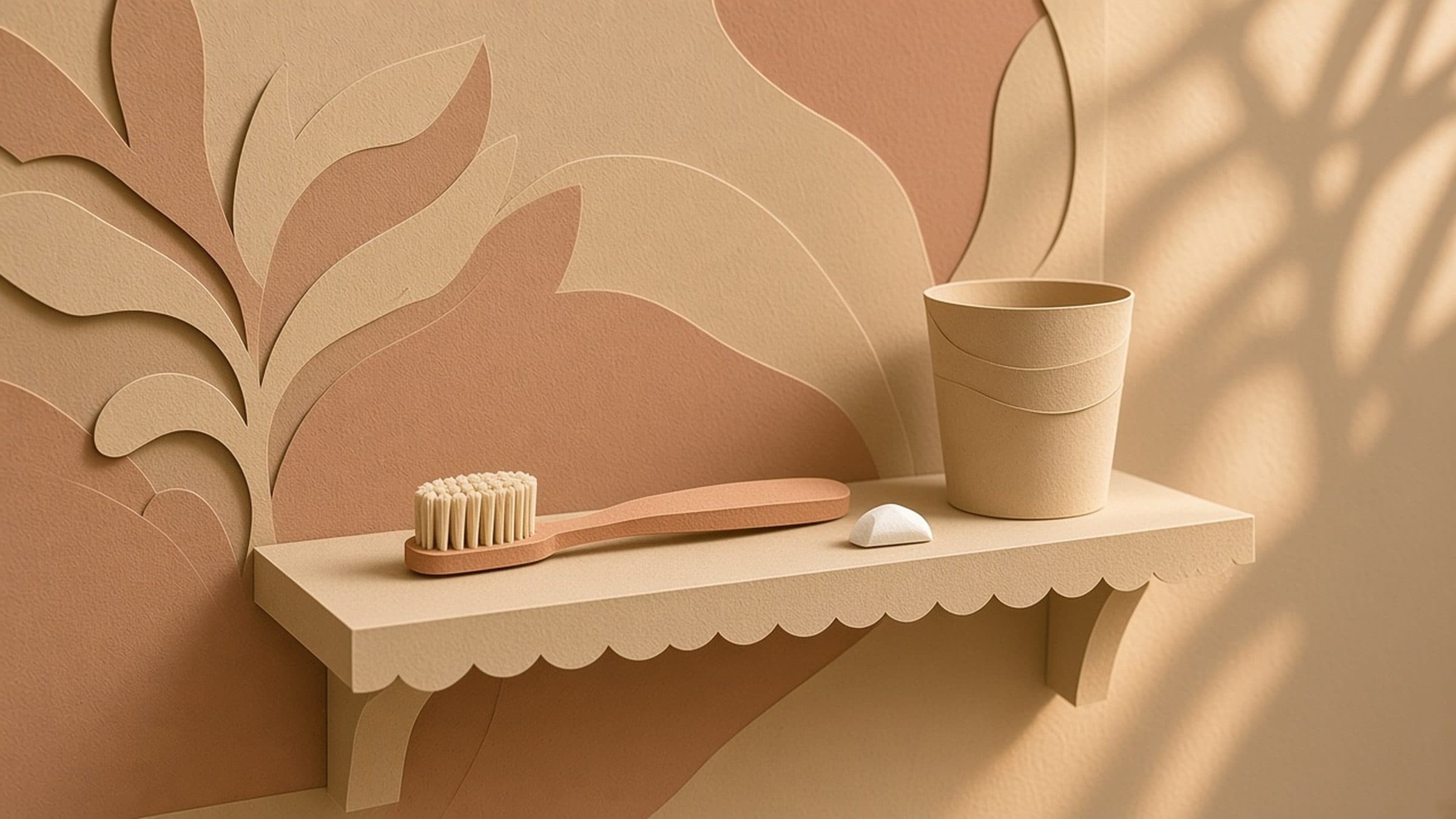
Rice grain (under 3). Squeeze gently and touch the tube to the bristles so a thin film sits on the tips. If you can see a blob, it's too much.
Pea size (3 to 6). A small round dot on the middle of the bristles. Most children's toothbrushes need less paste than the length of the brush head.
After 6. Many children can manage a pea-size amount alone but still need help with technique.
Why not more?
Swallowing a lot of fluoride over time while adult teeth are forming can cause dental fluorosis, faint white streaks on the teeth. It's usually cosmetic. Small amounts and supervision prevent it. Keep toothpaste tubes out of reach.
Spit, don't rinse
Teach children to spit out the extra foam and skip the rinse. A little fluoride left on the teeth keeps working. Babies can't spit; just wipe away extra foam with a cloth.
Supervision matters
Children under about 6 to 8 lack the hand skills to clean every surface. Let them have a turn, then do a "parent turn" to reach the back molars and the gum line. Brush twice a day for two minutes, with one session right before bed.
Choosing a toothpaste
- Look for fluoride on the label.
- Choose a mild flavor if your child dislikes mint.
- The ADA Seal of Acceptance shows the product has been reviewed for safety and effectiveness.
- "Training" toothpaste without fluoride doesn't protect against cavities.
Toothpaste for children with special needs
Some children with sensory sensitivities can't tolerate foaming or flavored pastes. Unflavored or low-foam fluoride options exist, and a dentist can suggest alternatives. Children who can't spit at all may still use the rice-grain amount safely, with extra foam wiped away by a cloth. If your child has a medical condition that affects swallowing, ask your dentist or pediatrician for a plan.
Storing and traveling
Keep the tube capped and up high, away from toddlers who might squeeze and eat it. For travel, a small tube in a zip bag is enough for a week of rice-grain or pea-size amounts. Hotel or relative's toothpaste may be whitening or extra-strength; pack your own.
Fluoride in water
Many community water systems add fluoride. Ask your pediatrician or dentist whether your water is fluoridated and whether your child needs fluoride varnish at checkups. Nemours KidsHealth notes that bottled water may not contain fluoride.
Making it easier
- Let toddlers choose between two brushes.
- Use a timer or a two-minute song.
- Brush together so they can copy you.
- Try brushing on your lap with their head tilted back.
- Keep it short and positive if they're upset; consistency matters more than perfection.
A quick check
Squeeze out the amount, then hold the brush next to a grain of rice or a pea. If you can't tell them apart, it's right.
Common questions
What if my toddler swallows the toothpaste? A rice-grain smear is a very small amount and is safe if swallowed. Keep practicing spitting as they get older.
Can I use adult toothpaste? Yes, in the right amount. Children's versions mainly differ in flavor.
Does the amount change for a child with many cavities? Sometimes. A dentist may prescribe a higher-fluoride paste or varnish for an older child at high risk. Follow their instructions rather than adding more of an ordinary paste.
What about whitening toothpaste? Not for young children. Plain fluoride toothpaste is all they need.
When to see the dentist
The AAP and the American Academy of Pediatric Dentistry recommend a first dental visit by age 1. See a dentist sooner if you notice white or brown spots on the teeth, or if your child complains of pain.
Twice a day goes easier when children know the routine. The toothbrushing book tells an illustrated story with your own child at the sink.
Gifts for this age: gift ideas for 3-year-olds
Related reading:
Sources
- Brushing Up on Oral Health: Never Too Early to Start, HealthyChildren.org (American Academy of Pediatrics), accessed November 4, 2026
- Fluoride and Water, Nemours KidsHealth, accessed November 4, 2026
- Parent FAQ, American Academy of Pediatric Dentistry, accessed November 4, 2026