Meaningful gifts
When can toddlers climb stairs?
When toddlers climb stairs: crawling up around 12 months, walking up holding a rail near 2, alternating feet by 3 to 4, how to teach going down backward, and
The short answer
Many babies crawl up stairs around 12 months. Most toddlers walk up holding a railing or hand, one step at a time, by about 2, and go up with alternating feet between 3 and 4. Teach going down backward on the tummy first, and keep gates at the top and bottom until they are steady.
Stair climbing develops in stages over several years. Many babies crawl up stairs around their first birthday. Most toddlers walk up holding a railing or an adult's hand, placing both feet on each step, by about 2. Going up with alternating feet, one foot per step, usually comes between 3 and 4, and going down that way a little later. Teaching a safe way down, and using gates until then, prevents most falls.
Key takeaways
- Going up is easier than coming down at every stage.
- Teach "feet first, tummy down" for coming down.
- Gates at the top should be hardware-mounted, not pressure-mounted.
- Practice on a short flight of two or three steps with you right behind.
Typical progression
- About 12 months: crawls up stairs.
- 13 to 18 months: slides down backward on the tummy with guidance.
- About 2: walks up with a hand or rail, two feet on each step.
- 2 to 3: walks down holding a rail, two feet per step.
- 3 to 4: walks up alternating feet.
- 4 to 5: walks down alternating feet.
The AAP lists climbing onto and down from furniture without help, and walking up and down stairs holding support, among skills many 2-year-olds have.
Teaching the way up
- Stand one step below your toddler.
- Encourage them to put hands on a higher step and bring up a knee.
- As they get steadier, hold one hand while they step up.
- Show them how to grip the railing.
Teaching the way down
- Turn your toddler around to face the stairs.
- Help them lie on their tummy, feet toward the bottom.
- Guide them to slide one foot down, then the other.
- Say the same phrase each time: "Turn around, feet first."
Sitting and bumping down on the bottom is another safe way.
Safety
- Install gates at the top and bottom. Top-of-stairs gates must screw into the wall.
- Keep stairs clear of toys, shoes and laundry.
- Add a railing that small hands can reach, or a second lower rail.
- Good lighting with switches at both ends.
- Non-slip treads on wooden stairs.
- Socks with grips or bare feet, not slippery socks.
When to remove gates
Most families remove gates around 2 to 3, once the child reliably climbs up and down safely. Keep the top gate longer if your child sleeps upstairs and could wander at night.
Playgrounds and outings
Play structures, bleachers and building steps offer practice. Stay close; heights and gaps vary.
When to talk to your pediatrician
Mention it if by about 2 your child can't walk steadily, or by 3 can't climb stairs even with help, or if one leg seems weaker. Physical therapy can help when needed.
Common questions
Should I carry my toddler on stairs? Sometimes, but regular supervised practice builds skill.
Is a staircase-shaped climber toy useful? Yes, a low indoor climber gives safe practice.
Stair games that build skill
- Count the steps: say each number aloud as your toddler goes up.
- Sticker trail: place a small sticker on every other step to aim for.
- Teddy delivery: have them carry a light soft toy up one step at a time, holding the rail with the other hand.
- Step up and down: use a single low step or a sturdy curb for repeated practice.
Keep sessions short and stop before your toddler gets tired, since tired legs lead to stumbles.
Carrying things on stairs
Teach early that hands stay free for the railing. Toddlers shouldn't carry bulky toys, cups or blankets on stairs. Adults carrying a baby should keep one hand on the rail and avoid carrying laundry baskets at the same time.
Different staircases
Open-backed stairs, spiral stairs and steep basement steps need extra caution. Block openings wider than 4 inches between balusters with clear panels or mesh, and keep doors to basement stairs closed.
Visiting other homes
Grandparents' or friends' houses may not have gates. Bring a portable gate or ask an adult to stay by the stairs while your toddler explores.
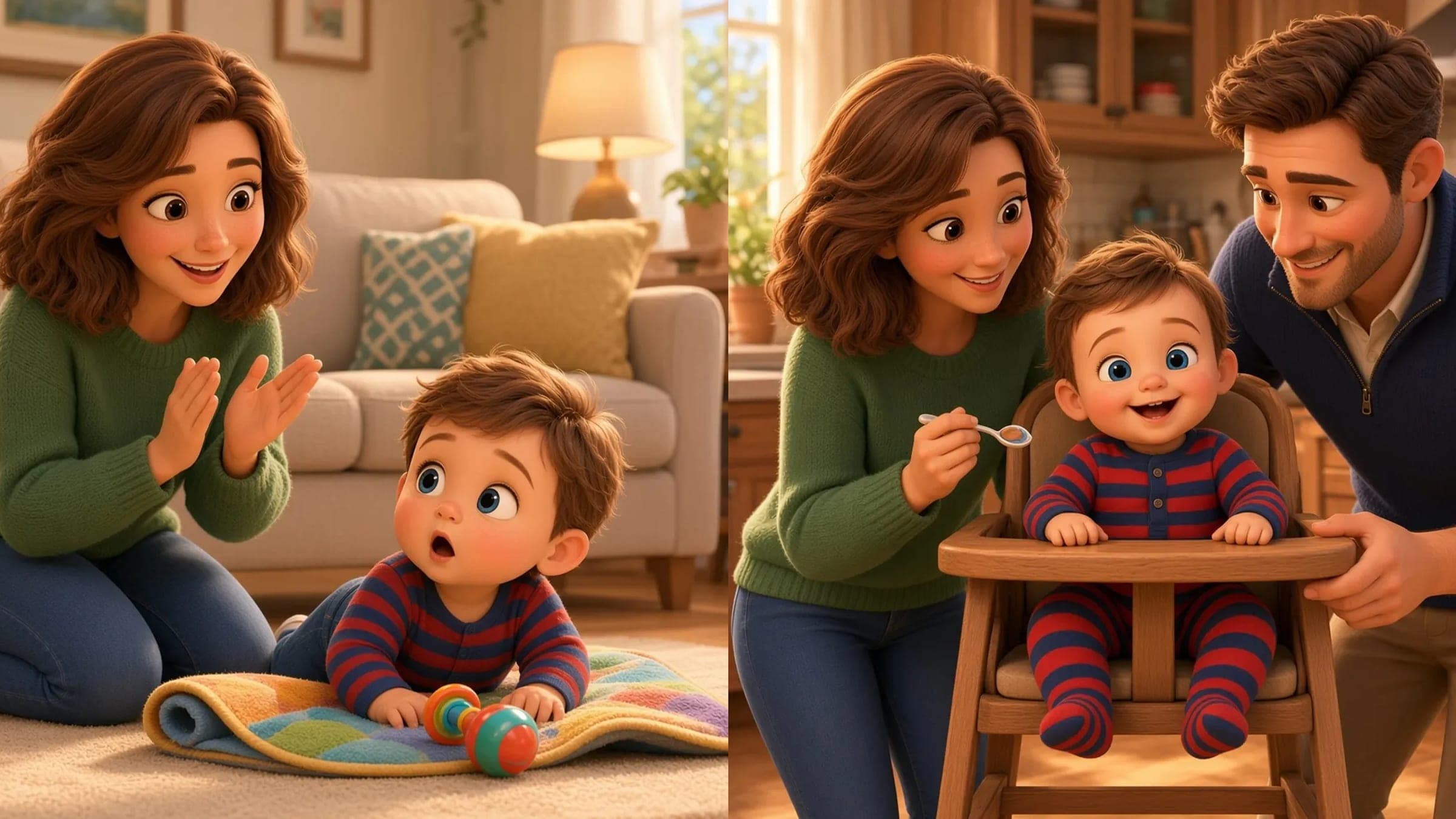
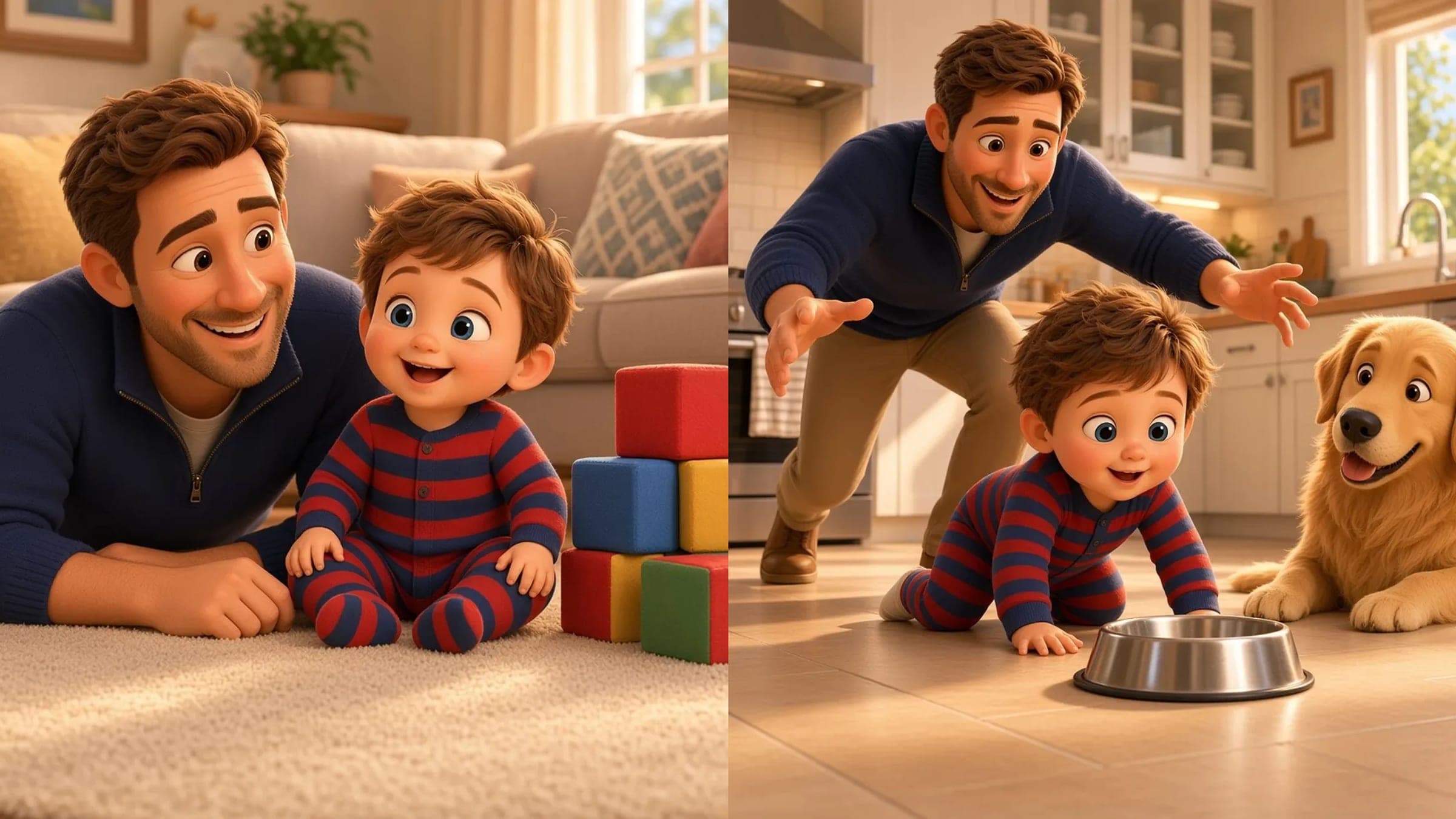
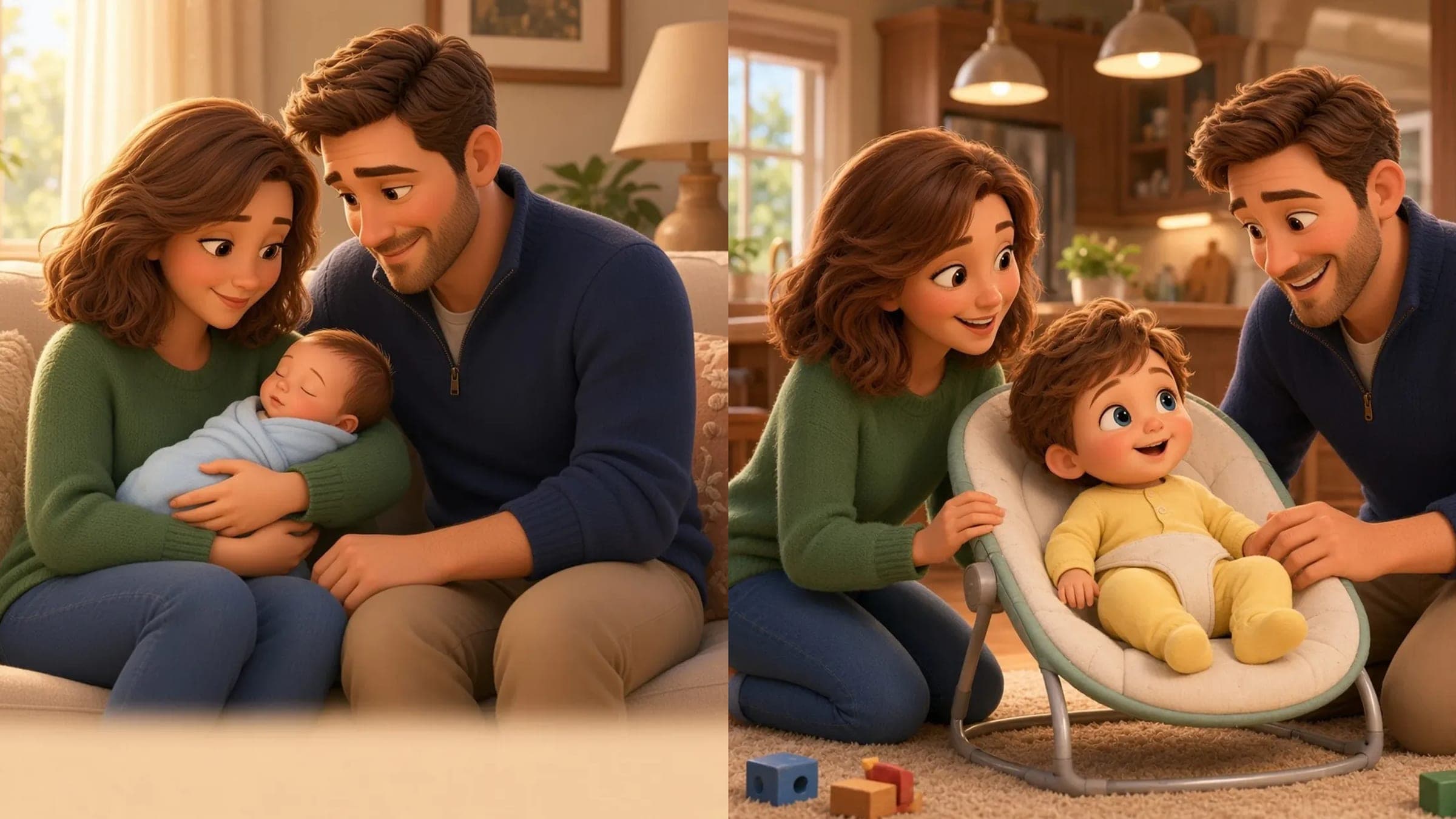
When a big first finally happens, the milestones book turns a photo into an illustrated story you approve before ordering.
A milestone gift: a gift idea for big firsts
Look through a sample milestones book, then start from a photo.
Sources
- Developmental Milestones: 2 Year Olds, HealthyChildren.org (American Academy of Pediatrics), accessed November 4, 2026
- Developmental Milestones: 3 to 4 Year Olds, HealthyChildren.org (American Academy of Pediatrics), accessed November 4, 2026