Story ideas
How do you teach a toddler to use a fork and spoon?
Teach fork and spoon skills in steps: a short rounded spoon, thick foods that stay on it, then a blunt fork, with your child seated and an adult close by.
The short answer
Start with fingers, then a short, rounded toddler spoon and thick foods that stay on it. Help load the spoon, then let them finish the trip to the mouth. Add a blunt fork once scooping is fairly steady. Keep your child seated, stay close, and expect spills for a long time.
To teach a toddler to use a fork and spoon, begin with finger foods, then offer a short, rounded spoon and thick foods that stay on it. Help load the spoon at first and let your child finish the trip to the mouth. Add a blunt fork once scooping is fairly steady. Keep them seated, stay close, and treat spills as practice, not a problem to fix in one meal.
Key takeaways
- Thick foods (oatmeal, yogurt, mashed banana) stay on a spoon longer than thin soups or loose rice.
- A short handle and a small, rounded bowl are easier to control than an adult spoon.
- If dishes start flying, put the utensils back once, calmly. If it keeps happening, end the meal and try again next time.
- Practice happens at a table or in a high chair, never while walking around.
Why this skill takes time
Using a utensil is a chain of small moves: pick it up, get food onto it, keep it level, and open the mouth at the right moment. Toddlers can do each piece before they can do them together. Fingers still work, and they should. The spoon is an extra tool, not a replacement for eating.
Nemours KidsHealth says children usually explore self-feeding first with their fingers and then with utensils at around 15 to 18 months. Give lots of chances to practice, help when frustration shows up, and step back as the skill grows (Feeding Your 1- to 2-Year-Old, accessed November 10, 2026).
The American Academy of Pediatrics, on HealthyChildren.org, describes the same stretch in more detail. By 15 months many children can fill a spoon and get it to the mouth fairly often, though it still tips at the last second. By 18 months they can use a spoon, a fork, and an unbreakable cup when they want to, but they may not always want to. Some children grow neater around the second birthday; others stay messy well into the third year (Self-Feeding, accessed November 10, 2026).
Those are typical windows, not deadlines. A child who still prefers fingers at 20 months is not behind. Keep offering the tools.
Stage 1: Keep finger foods on the plate
Put a few soft, bite-size pieces on the tray beside the spoon. Fingers keep your child in the meal while the spoon is still new.
Stage 2: A short spoon and sticky food
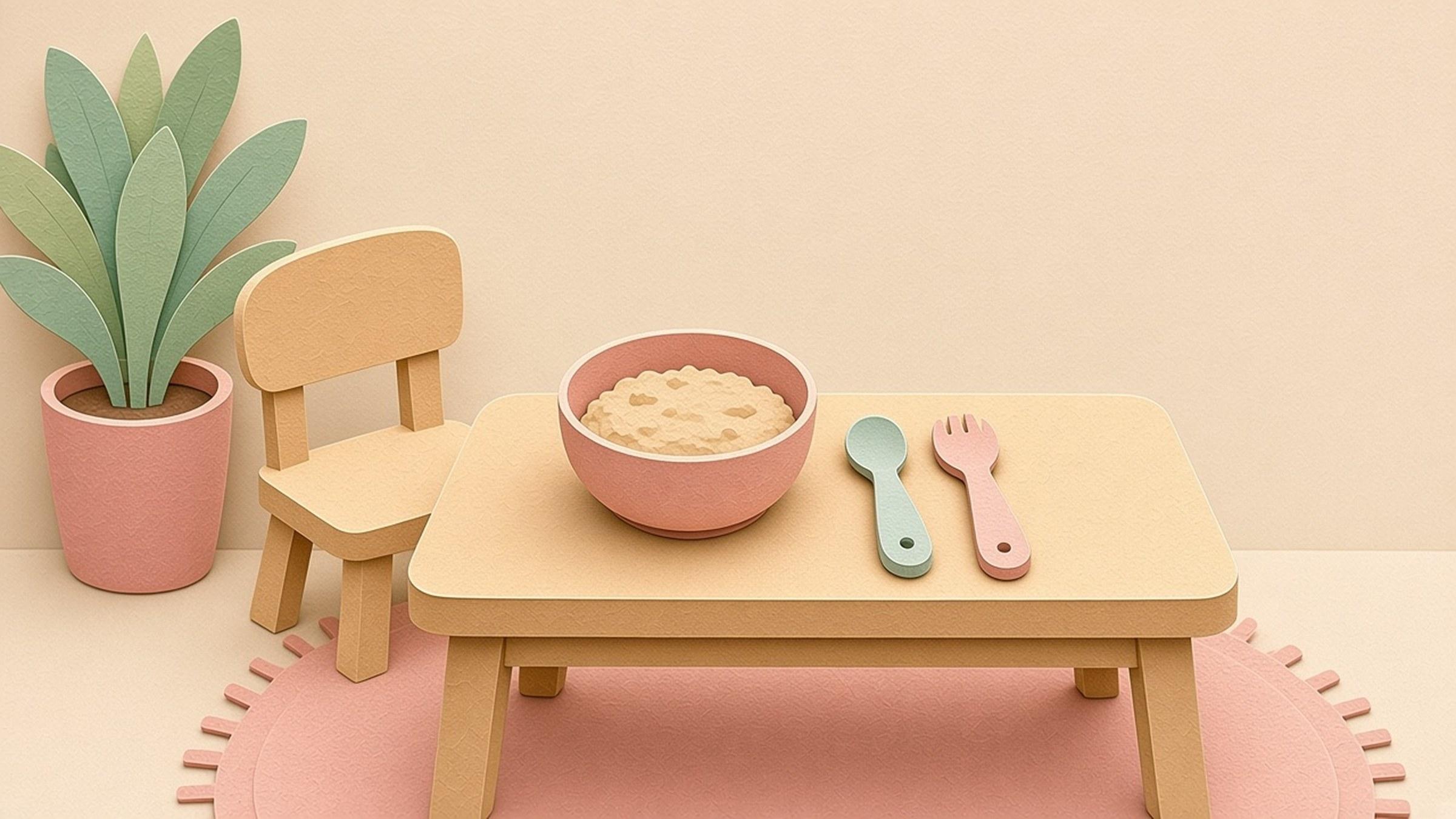
Hand over a toddler spoon with a short handle and a small, rounded bowl. Adult spoons are long and easy to over-tilt.
Start with food that clings: oatmeal, yogurt, mashed sweet potato, cottage cheese, thick applesauce. Thin broth and loose peas slide off before the spoon is halfway up. Load the spoon yourself at first, then guide your child's hand toward their mouth. After a few successful bites, let them try the last stretch alone.
Sit beside them and show the move slowly, without turning it into a game of copying every twitch. A little mess on the bib is the point. A towel on the floor saves you from hovering.
Stage 3: They load, you stay close
Once the trip to the mouth is fairly reliable, let your child dig the spoon into the bowl. Expect dumps. Reload without a speech. If they get stuck, help with one scoop and hand the spoon back.
Unbreakable bowls and cups matter here. The AAP notes that dishes may go flying when a child is bored, and that you can put the utensils back in place and, if the throwing keeps going, take the child out of the high chair and wait until the next meal.
Stage 4: Add a blunt fork
A fork comes after the spoon feels familiar, not on the same day. Choose a short, blunt toddler fork, not a sharp point. Soft foods that will sit on the tines work first: cooked pasta, cut pancake, ripe peach, a cube of steamed potato.
Show a gentle press, then a lift. If the fork is used as a drumstick, set it down and go back to the spoon. You can bring the fork out again at the next meal.
Stay seated, and stay nearby
Skill practice is not a reason to relax the usual mealtime safety rules. The AAP's choking-prevention guidance says children should eat at the table or sit down to eat, and should not run, walk, play, or lie down with food in their mouths. An adult should stay with them. Cut food for young children into pieces no larger than one-half inch, and hold back higher-risk shapes such as whole grapes, hot dogs, popcorn, nuts, and raw carrot sticks until a child is older and chews well (Choking Prevention for Babies & Children, accessed November 10, 2026).
A booster or high chair at the family table also makes the wrist angle easier than eating from a lap or a couch.
Common sticking points
They only want fingers. Leave the spoon on the tray and let fingers do the eating. Offer one pre-loaded spoonful at some point in the meal. No bargaining.
The spoon is empty by the time it arrives. Go back to thicker food, or help with the scoop for a few more weeks.
They grip the spoon in a fist. That is the usual early grip. A more mature hold comes later, on its own, with practice. Don't force a "correct" pinch.
They throw the bowl. One calm replacement is enough. If it happens again, the meal is over. Hunger at the next sitting is a better teacher than a lecture.
When to ask the doctor
Check in with your child's doctor if they cannot get any food to their mouth with a spoon by the end of the second year, if they gag or cough often on soft table foods, or if mealtimes are so stressful that your child barely eats. Those are reasons to get a personal look, not something a guide can settle.
A small first worth keeping
The first meal where a spoonful actually arrives is a quiet first, the kind you notice and then almost forget. If you want a place to hold firsts like this one, a personalized milestones book can do that.
Related reading
- Milestones ideas and books
- Starting solid foods
- Personalized milestones book
- See a sample milestones book
FAQ
What age do toddlers learn to use a spoon?
KidsHealth puts the move from fingers to utensils around 15 to 18 months. The AAP describes filling a spoon more consistently around 15 months, and using a spoon and fork when they want to by about 18 months. Plenty of children take longer, and messy eating can last into the third year.
Should I start with a fork or a spoon?
Start with a spoon. Scooping thick food is more forgiving than piercing. Bring in a blunt fork once the spoon often reaches the mouth with food still on it.
Do I need special toddler utensils?
A short handle and a small, rounded spoon help. Unbreakable dishes help more. You do not need a large set. One spoon and one blunt fork, plus a bowl that stays put, is enough to practice.
What if my child uses the spoon as a toy?
Set it down and offer fingers or a pre-loaded bite. Bring the spoon back later in the meal, or at the next one.