Story ideas
Are flat feet in toddlers normal?
Flat feet in toddlers are usually normal: why little feet look flat, when arches develop, why inserts don't build one, and stiff-foot signs to check.
The short answer
Yes. Babies and toddlers usually look flat-footed because their joints are flexible and a fat pad on the inside of the foot hides the arch. Most children develop an arch by about age 6, and only about 1 or 2 in 10 keep flat feet as adults. Flexible flat feet that don't hurt need no treatment, and shoe inserts won't create an arch. See the doctor for foot pain, a stiff foot, sores on the inner edge, or limited ankle movement.
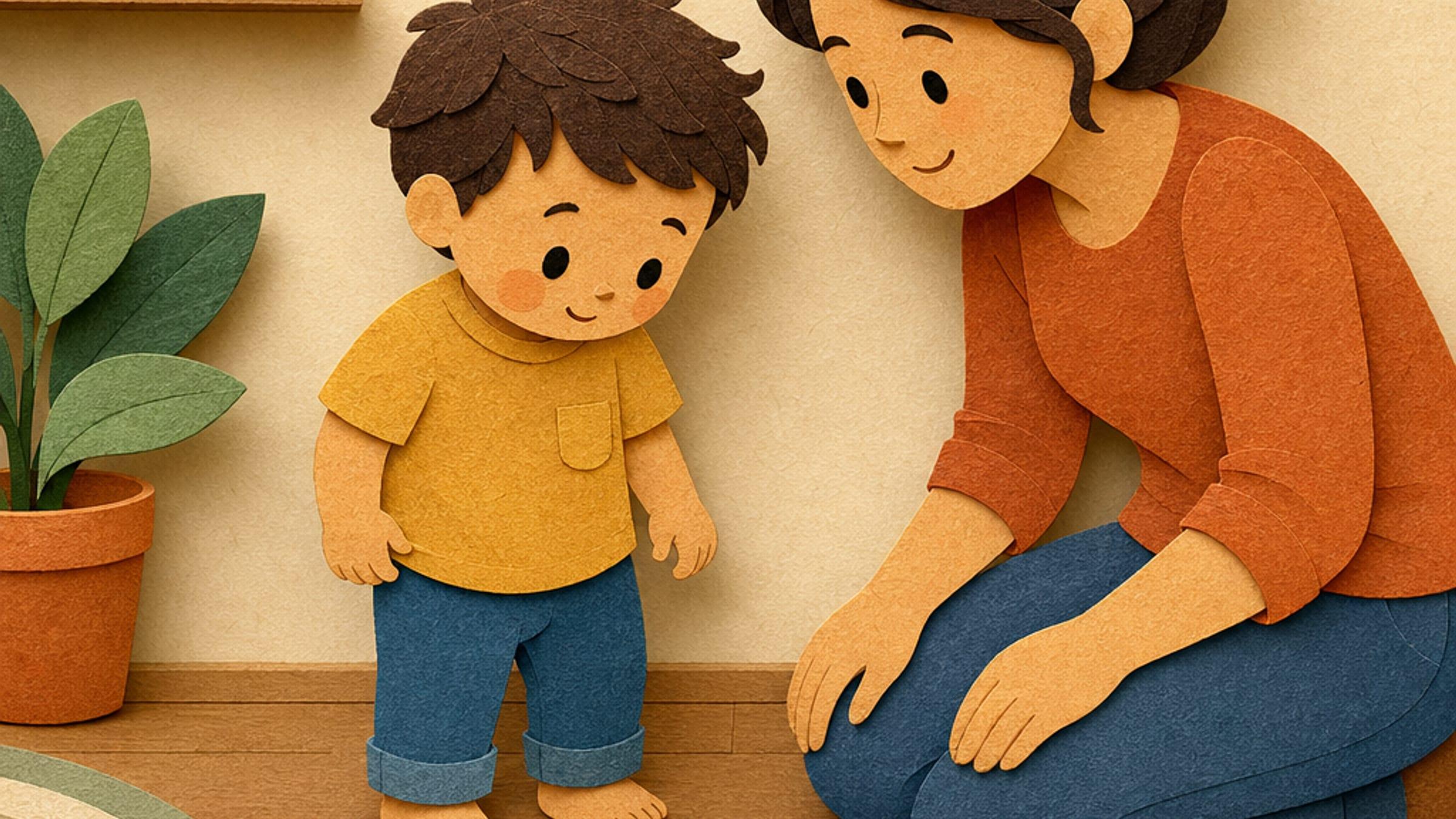
Flat feet in toddlers are normal. Almost every baby and young child looks flat-footed, because their foot joints are loose and bendy and a soft pad of fat on the inner sole fills the space where an arch will later be. Most kids grow an arch by around age 6, and a flexible flat foot that doesn't hurt needs no treatment at all.
Why little feet look flat
The American Academy of Pediatrics explains it on HealthyChildren.org: children's bones and joints are flexible, so the foot flattens when they stand. Young babies also carry a fat pad along the inner border of the foot that hides the arch (Flat Feet & Fallen Arches, accessed November 13, 2026).
Many toddlers also stand with their feet turned slightly outward. That shifts their weight onto the inside edge and makes the sole look even flatter. Add a wide, wobbly early-walking stance and it's no surprise the footprint in the sand looks like a pancake.
The tiptoe test
Here's a simple check you can do at home. Ask your child to stand up on their tiptoes, or lift them so their weight rests on the balls of the feet. If an arch appears when they rise and disappears when they stand flat, that's a flexible flat foot, the common, harmless kind.
You can also look at the arch while your child sits with feet dangling. A curve that shows up off the ground and vanishes under body weight tells the same story.
When arches arrive
According to the AAP, flat feet normally disappear by about age 6 as the feet become less flexible and the arches develop. Only about 1 or 2 children in every 10 keep flat feet into adulthood, and most of those adults have no trouble from it.
So a two-year-old with flat feet isn't behind. The arch is still forming under that fat pad, and it builds slowly through the preschool years as the ligaments tighten and the small foot muscles strengthen with use.
Shoes, inserts and barefoot time
Parents are often offered arch supports, wedges or "corrective" shoes. The AAP is direct about this: shoe inserts won't help a child develop an arch, and they may cause more problems than the flat feet themselves.
What does help a growing foot:
- Barefoot play on safe surfaces like carpet, grass and sand. Gripping and balancing works the small muscles of the sole.
- Flexible, well-fitting shoes for outdoors: a soft sole that bends at the ball of the foot, room for toes to wiggle, and a secure fastening so the shoe doesn't slip.
- Varied movement. Climbing, squatting, tiptoe walking games and walking on uneven ground all give the foot a workout.
- Regular size checks. Toddler feet can grow quickly; a thumb's width of space past the longest toe is a common rule of thumb.
The types that do need a look
The AAP notes a couple of less common kinds of flat foot that are handled differently:
A tight heel cord. Some children have a tight Achilles tendon that limits how far the foot can flex upward. This can cause a flat foot and is usually treated with stretching exercises that lengthen the heel cord.
A rigid flat foot. Rarely, a few of the small foot bones are joined together, a condition called tarsal coalition. The foot is stiff, shows no arch even on tiptoe, and moves poorly up and down or side to side at the ankle. It can be painful and, untreated, may lead to arthritis. The AAP says this rigid type is seldom seen in infants or very young children and more often shows up in the teen years.
Signs to bring to the pediatrician
The AAP lists these symptoms as worth a doctor's check:
- Foot pain
- Sores or pressure marks on the inner side of the foot
- A stiff foot
- Limited side-to-side foot motion
- Limited up-and-down ankle motion
It's also reasonable to ask at a well visit if your child often trips more than their friends, tires quickly on walks, or if the flatness is much worse on one side. For further care, the AAP points families to a pediatric orthopedic surgeon or a podiatrist experienced with children's feet.
A quick at-home record
If you're unsure, take two photos a few months apart: one standing flat from behind, one on tiptoe from the side. Bring them to the next checkup. It's an easy way to show how the arch behaves without needing your child to perform on cue in the exam room.
Turning the walking years into a keepsake
The wobbly first steps, the barefoot summer and the first pair of real shoes all pass quickly. A personalized book of your child's milestones can hold those moments in one place. See the milestones book, a finished example, and personalized milestone gifts.
Related reading
FAQ
Should my toddler wear arch supports?
Not for a flexible, pain-free flat foot. Inserts don't create an arch and can cause problems of their own.
Is walking barefoot good for flat feet?
Barefoot play on safe surfaces lets the small foot muscles work, which is part of how the arch develops.
My child's feet are flat and they walk with feet turned out. Is that a problem?
Out-turned feet are common in toddlers and make the sole look flatter. Mention it at a well visit if it's severe, one-sided or getting worse.