Story ideas
Is toe walking in toddlers normal?
Toe walking in toddlers is common while kids learn to walk. Here's when it usually stops, what can cause it to last, and the signs that mean calling the doctor.
The short answer
Walking on the balls of the feet is common while toddlers learn to walk, and most children stop on their own by age 2. Tight calf muscles or a tight Achilles tendon can keep it going, and sometimes it's linked to a nerve, muscle or developmental condition. Call the doctor if your child still toe walks after 2, starts toe walking after walking normally, or you have concerns about their development.
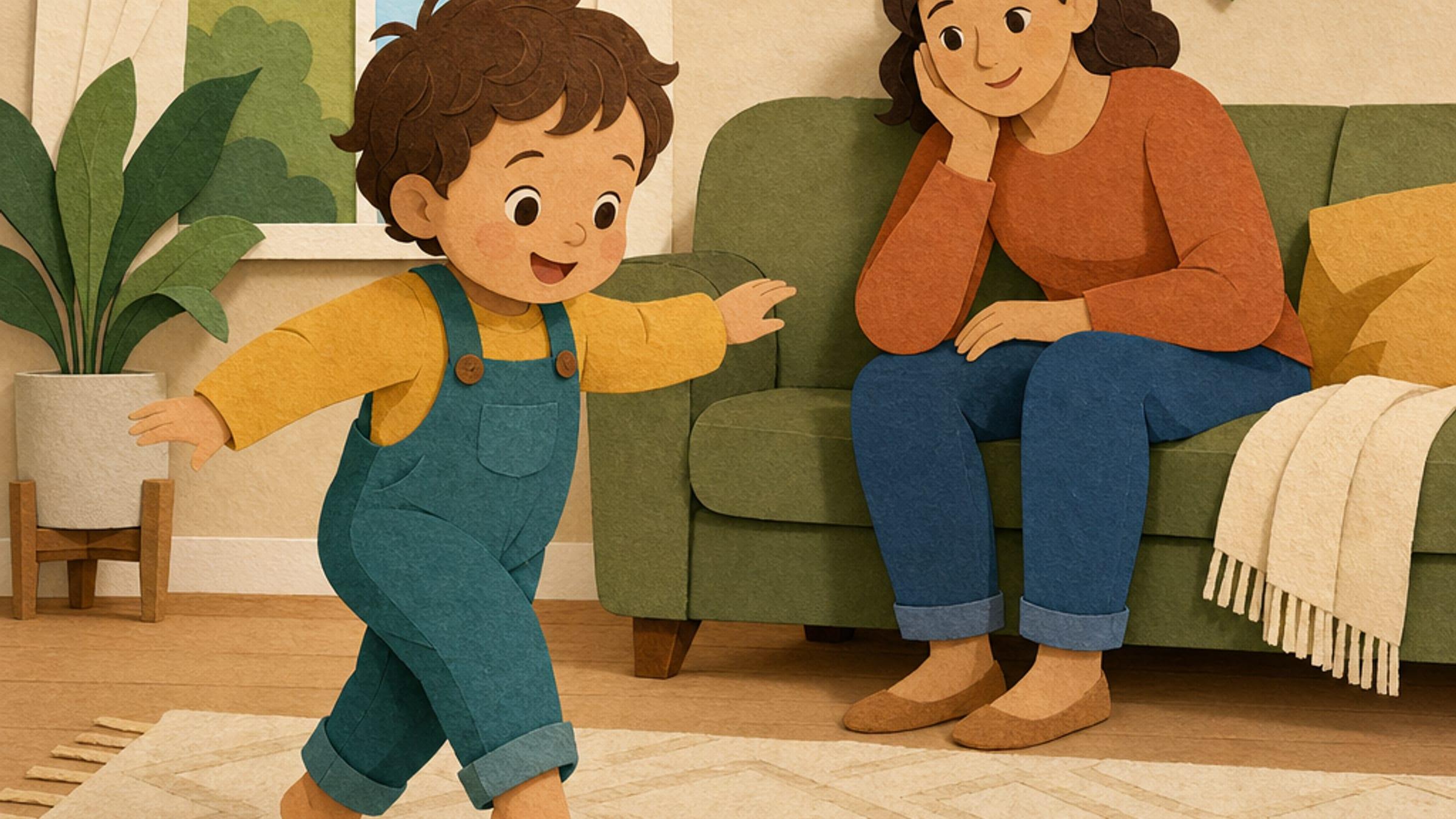
Toe walking in toddlers is usually normal. Lots of new walkers bounce along on the balls of their feet while they figure out balance, and Nemours KidsHealth says most children stop toe walking on their own by age 2 (Toe Walking, accessed November 13, 2026). If it carries on past 2, or starts after your child had been walking flat-footed, it's worth a doctor's look.
What toe walking looks like
Your child walks with heels lifted, landing and pushing off from the front of the foot. Some kids do it all the time; others do it mostly when barefoot, excited or running, and walk heel-first in shoes. Watch a few ordinary minutes of play rather than asking your child to "walk properly," which tends to change the result.
A quick check: can your child stand flat with heels on the floor and knees straight? Can they squat down with feet flat? A child who can do both easily, and toe walks only some of the time, is showing a habit more than a tight muscle.
Why kids walk on tiptoe
KidsHealth lists several reasons:
- Learning to walk. Early tiptoe steps are part of the process for many toddlers.
- Tight calf muscles. Short, tight muscles in the back of the lower leg make heel-down walking hard.
- A tight Achilles tendon. The thick cord connecting calf to heel limits how far the foot flexes up.
- A neurologic condition, such as cerebral palsy, or autism.
- Muscular dystrophy, which damages muscles.
- No known reason. For many children who keep toe walking, doctors never find a cause. This is often called idiopathic toe walking.
Why it matters if it lasts
According to KidsHealth, toe walking can make a child more likely to fall, and an older child may feel self-conscious about walking differently from friends. Over time, walking only on the toes can also keep the calf and heel cord short, which makes heel-down walking harder still. That's the reason doctors prefer to check it rather than wait for years.
The ages to remember
| Age | What's typical | What to do |
|---|---|---|
| First months of walking | Tiptoe steps mixed with flat steps | Watch; nothing needed |
| Around 2 | Most kids have stopped | Mention it at the 2-year checkup if it continues |
| Over 2, still toe walking | Not the usual pattern | Call the doctor |
| Walking normally, then starts toe walking | Not the usual pattern | Call the doctor |
What the doctor will do
KidsHealth explains that doctors start by asking questions and examining your child: how they move, how far the ankle bends, and how the muscles and reflexes respond. If needed they may order:
- an EMG to look at how the muscles and nerves work
- a gait analysis to study movement during walking
- neurologic testing to look for problems with the brain and spinal cord, or for developmental delays
Your child may be referred to an orthopedic doctor, a specialist in bones and joints.
Treatment options
Many young children outgrow toe walking, so the doctor may simply plan a recheck in a few months. If it continues, or there's a physical cause such as tight muscles or tendons, KidsHealth lists treatments that may include:
- physical therapy
- leg braces or splints
- casting, which gently stretches the calf over several weeks
- surgery, for children who don't improve with other steps
At home, your part is helping your child follow the plan: doing the stretches or strengthening exercises the therapist shows you, getting to appointments, and helping your child wear braces or splints as directed.
Making the stretches stick
Stretches work only if they happen, and toddlers don't love holding still. A few ideas:
- Tie them to a routine. Do calf stretches during the bedtime story or right after the bath.
- Use play positions. Squatting to pick up toys, walking up a gentle slope, or "duck walking" on heels across the hall all work the same muscles.
- Keep a sticker chart with one square per day of stretches.
- Narrate it. "Heels down like a penguin" is easier to follow than "flex your foot."
Questions to bring to the appointment
- Does my child toe walk all the time or only sometimes?
- Can they stand flat with straight knees?
- Did they have any delays in sitting, crawling or talking?
- Is one side different from the other?
- Has anyone else in the family toe walked as a child?
Writing the answers down ahead of time keeps the visit focused and means nothing important gets forgotten in a busy exam room, and a short phone video of your child walking at home helps the doctor see the everyday pattern.
Celebrating each step
Walking is one of the big firsts, wobbly tiptoes and all. A personalized book about your child's milestones can capture those early steps alongside the other firsts. See the milestones book, a finished example, and milestone gifts.
Related reading
FAQ
Should I make my toddler wear shoes to stop toe walking?
Shoes alone don't fix a tight calf or tendon. Ask the doctor or therapist what will actually help your child.
Is toe walking a sign of autism?
It can be seen in some autistic children, but many toe walkers have no developmental condition. Share any other concerns with the doctor.
Can my child grow out of it after age 2?
Some do, but after 2 it's best to have a doctor check rather than wait.