Story ideas
What should you say to kids about Thanksgiving?
What to say to kids about Thanksgiving: short scripts for why we celebrate, gratitude without forcing it, and the 1621 history question a child brings home.
The short answer
Tell kids that Thanksgiving is a day for sharing a meal and saying thank you, and that people gave thanks in many ways long before it was a national holiday. For school-age children, add that the Wampanoag people were at the 1621 harvest gathering in Plymouth and that their nations are still here today. Keep gratitude an invitation, not a test.
What to say to kids about Thanksgiving depends on the question they ask: a preschooler wants to know why there is a turkey, while a second grader may come home asking whether the Pilgrims and the Wampanoag were friends. Below are short, honest scripts for each, drawn from the Library of Congress and the Smithsonian's National Museum of the American Indian, so you are not inventing history at the dinner table.
Key takeaways
- Answer the question the child asked, in one or two sentences, then stop and listen.
- Gratitude is an invitation. Model it; do not quiz it.
- For the history question, use real sources and say "people still argue about this" when that is true.
"Why do we have Thanksgiving?"
For ages 3 to 5:
"It's a day when families eat a big meal together and say thank you for good things. People have been doing that for a very long time."
For ages 6 to 9:
"Lots of people gave thanks for a harvest long before the United States existed. Native nations gave thanks for the land and food for centuries. George Washington called for a day of thanks in 1789, and later Abraham Lincoln made it a national holiday, so now most families in the country take the same Thursday off."
The Library of Congress primary source set backs each piece of that: Native communities had regularly given thanks for nature's gifts for centuries before Europeans arrived, Washington proclaimed Thursday, November 26, 1789, a day of thanks, and the set includes Sarah Josepha Hale's letter to Lincoln and Lincoln's proclamation.
"Do I have to say what I'm thankful for?"
Many children freeze when a table full of adults turns to them. Forced thanks teaches them that gratitude is a performance.
Try instead:
"You can say one thing, or you can pass, and we'll come back to you."
"I'm thankful Grandpa drove four hours. What was the best part of your week?"
Name your own specific thing first. "I'm thankful for my family" is hard to follow; "I'm thankful your sister helped me carry the chairs" gives a child a pattern. If they say "my iPad," write it down without a lecture. Noticing anything is the habit you are building.
"Were the Pilgrims and the Indians friends?"
This is the question that comes home from school. A short honest answer for ages 6 to 9:
"In 1621, the Pilgrims in Plymouth had a harvest feast, and about 90 Wampanoag people, with their leader Massasoit, were there too. They shared food for three days. The Wampanoag had helped the newcomers get through their first year. Later, things went very badly for many Native nations, and that is part of the history too. The Wampanoag are still here today."
Each part of that answer is sourced. The Library of Congress describes the three-day feast with Massasoit and about 90 Wampanoag, and notes there are few firsthand accounts and no eyewitness pictures, so most paintings were made much later. The National Museum of the American Indian's teaching poster says many school materials show Native people as nameless supporting players, while the Wampanoag played a lead role, had been essential to the colonists' survival, and were a people for whom giving thanks was part of daily life.
For an older child who asks "badly how?", it is fine to say: "That part of the history is longer and harder, and I want to get it right. Let's read about it together." Then look it up together, starting with the museum's own materials, rather than guessing.
"Why is it called Indians?"
"That was a name Europeans used. Most Native people prefer the name of their own nation, like Wampanoag. When we know the nation's name, we use it."
Keep it short; a seven-year-old wants the rule more than the essay.
"Why do we eat turkey?"
"Turkey was one of the foods at that 1621 feast, along with deer, ducks, corn and seafood. Families picked turkey over the years, and now it's the usual dish. Some families eat something else, and that's Thanksgiving too."
The Library of Congress lists wild turkeys, venison, lobster, clams, corn and dried fruits among the 1621 foods. The museum's poster adds that the familiar menu of turkey, cranberry and potatoes would not exist without the knowledge of the Native peoples of the Americas.
What if your family does not celebrate?
Children at school will hear about it anyway. You can say:
"Lots of families celebrate Thanksgiving. Our family doesn't, and that's okay. We still say thank you to people, just on other days."
When should you get help?
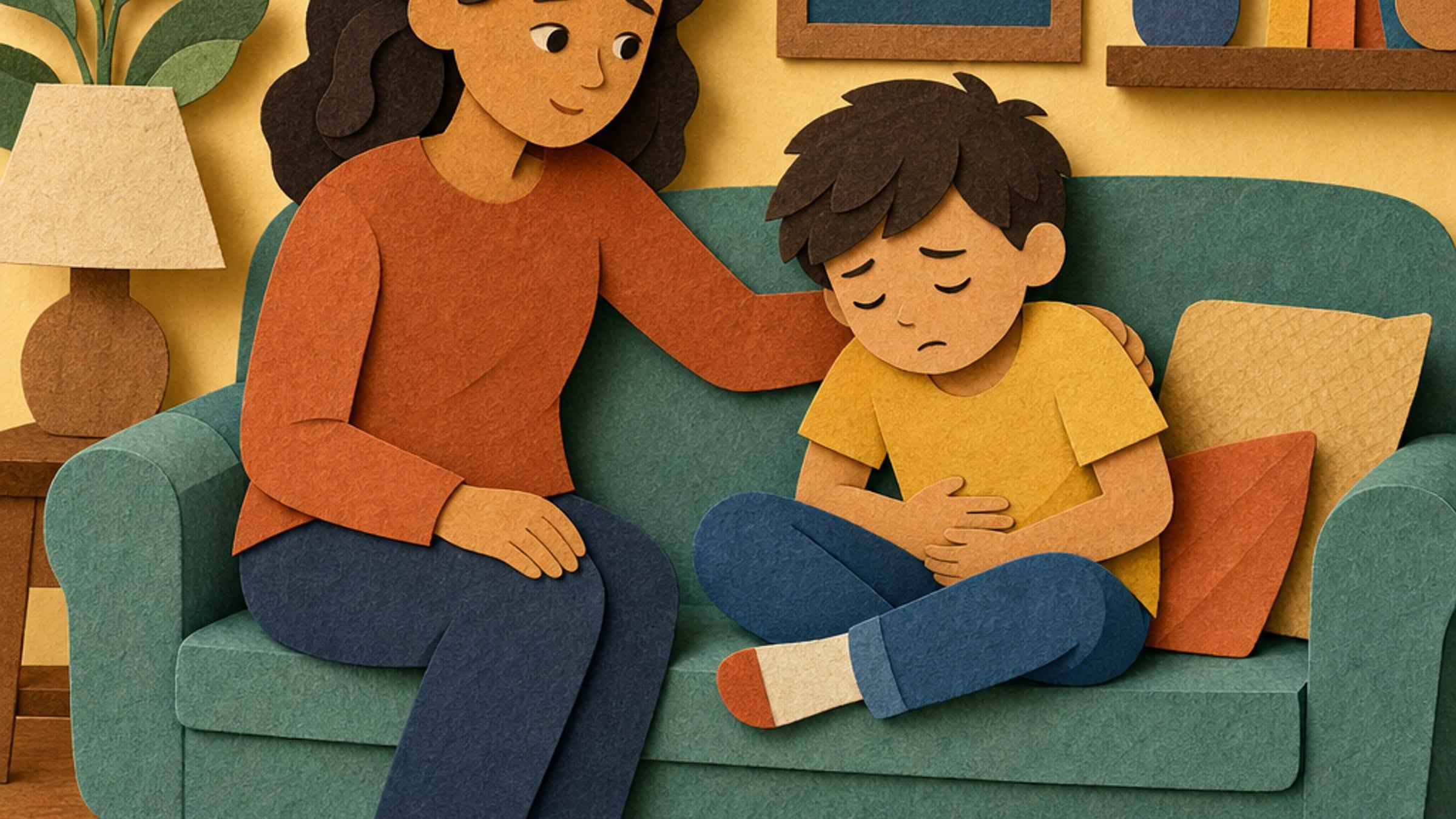
These are everyday conversations, not a test of your parenting. If a child seems very upset by something they heard at school, ask what they heard in their own words before correcting it. If worry about a family loss or conflict around the holiday keeps them from sleeping or eating for weeks, call your pediatrician.
Frequently asked questions
At what age can kids learn the real history? Most second and third graders can handle the short version above. Add detail as they ask.
Is it okay to say "I don't know"? Yes. "Let's look it up" teaches more than a guess.
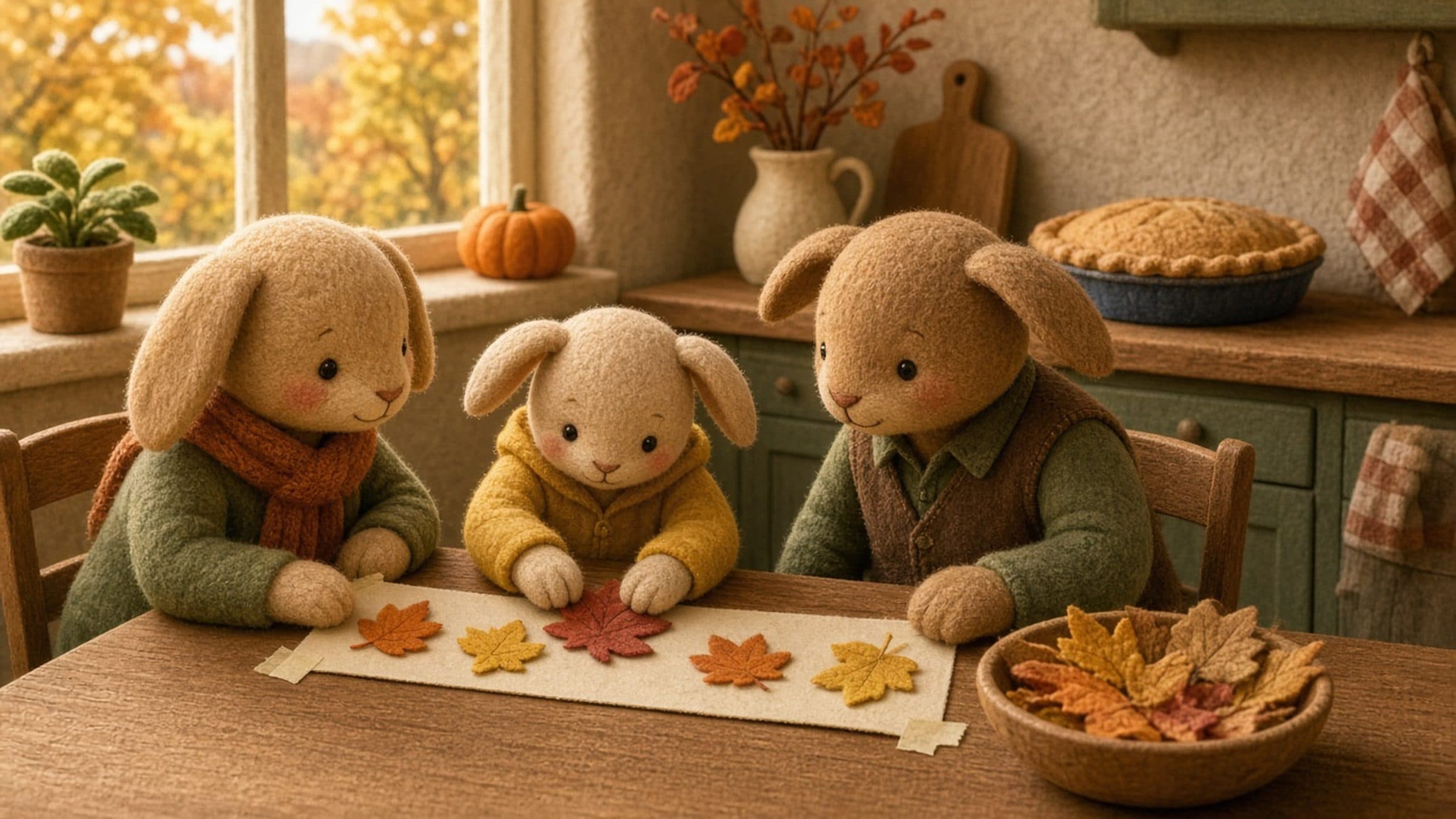
Should we still make paper headdresses? The museum poster's point is to treat Native people as real nations, not costumes. A hand-turkey or a leaf strip is a better craft.
Related reading:
- See the holiday pictures
- Thanksgiving activities for toddlers
- How to teach kids about giving at Christmas
- A personalized Christmas book for kids
Some parents want the answers they gave kept somewhere. In our story maker you can pick "Another holiday" and write your own framing, faith-centered or not. It is written after checkout, you approve a proof first, and pricing lists what it costs.
Sources
- Thanksgiving: Primary Source Set, Library of Congress, accessed November 3, 2026
- American Indian Perspectives on Thanksgiving, National Museum of the American Indian, Smithsonian Institution, accessed November 3, 2026