Story ideas
How do you help a school-age child who feels ashamed about wetting the bed?
A no-blame script for a school-age child ashamed of wetting the bed: the quiet reset, what to avoid, a sleepover plan, and when to call the doctor.
The short answer
Tell the child it is not their fault, it is common, and most kids outgrow it. Set up a quiet reset ahead of time: dry pajamas, a waterproof layer, a hamper. Skip blame, punishment, and sibling teasing, and reward effort the child controls. Call the doctor if wetting returns after six dry months or comes with pain, daytime wetting, or snoring. A story can rehearse the reset and a private sleepover plan. It cannot stop the wetting.
Key takeaways
- Bedwetting is common at school age and usually fades as a child grows. It is almost never laziness or defiance.
- Tell the child the truth: it is not their fault, lots of kids have it, and most outgrow it.
- Set up a quiet reset before the next wet night so the morning stays small: dry pajamas, a waterproof layer, a hamper, no lecture.
- Shaming, punishment, taking rewards back, and sibling teasing do not help. If you use a chart, reward effort the child controls.
- Call the doctor if wetting starts after six dry months, comes with other symptoms, or is keeping them from sleepovers. A story can ease the shame. It cannot stop the wetting.
How do you help a school-age child who feels ashamed about wetting the bed?
Say the true thing out loud, make the morning reset small and private, and keep blame out of the house. Then check whether it is time to talk to the doctor.
The American Academy of Pediatrics puts the first rule simply: do not blame your child, because it is not their fault. Offer support, not punishment, for wet nights. Be honest about what is going on, tell them most children outgrow it, and remind them other children wet the bed too (Bedwetting: 3 Common Reasons & What Families Can Do). NIDDK adds that losing urine is almost never due to laziness, a strong will, emotional problems, or poor toilet training, and that parents should approach it with understanding and patience (Definition & Facts).
This page is for a child who is already toilet trained during the day and still wakes up wet. It is not about potty training a scared toddler. That page is a first-time daytime skill. Nighttime wetting at five, seven, or nine is its own thing, and its shame is different: sleepovers, camp, and siblings finding out.
A story has one job here. It lets a child watch a hero with their face go through the reset and the sleepover plan without the scene turning into a big deal. It does not treat bedwetting, and it should not promise a dry night.
What do you say and do the morning after a wet bed?
Say less than you think you need to. The goal is a routine so ordinary that nobody has to talk about it.
NIDDK lists a setup that makes cleanup easy and less embarrassing. Leave dry pajamas and towels out. Layer waterproof pads and fitted sheets so the child can pull off the wet layer and put it in a hamper. Have them help with cleanup and laundry the next day, but never as a punishment. Make sure they shower or bathe every day (Treatment). The AAP says the same about helping: it can keep a child from feeling embarrassed if the family knows, but skip it if your child sees it as punishment (Bedwetting: 3 Common Reasons).
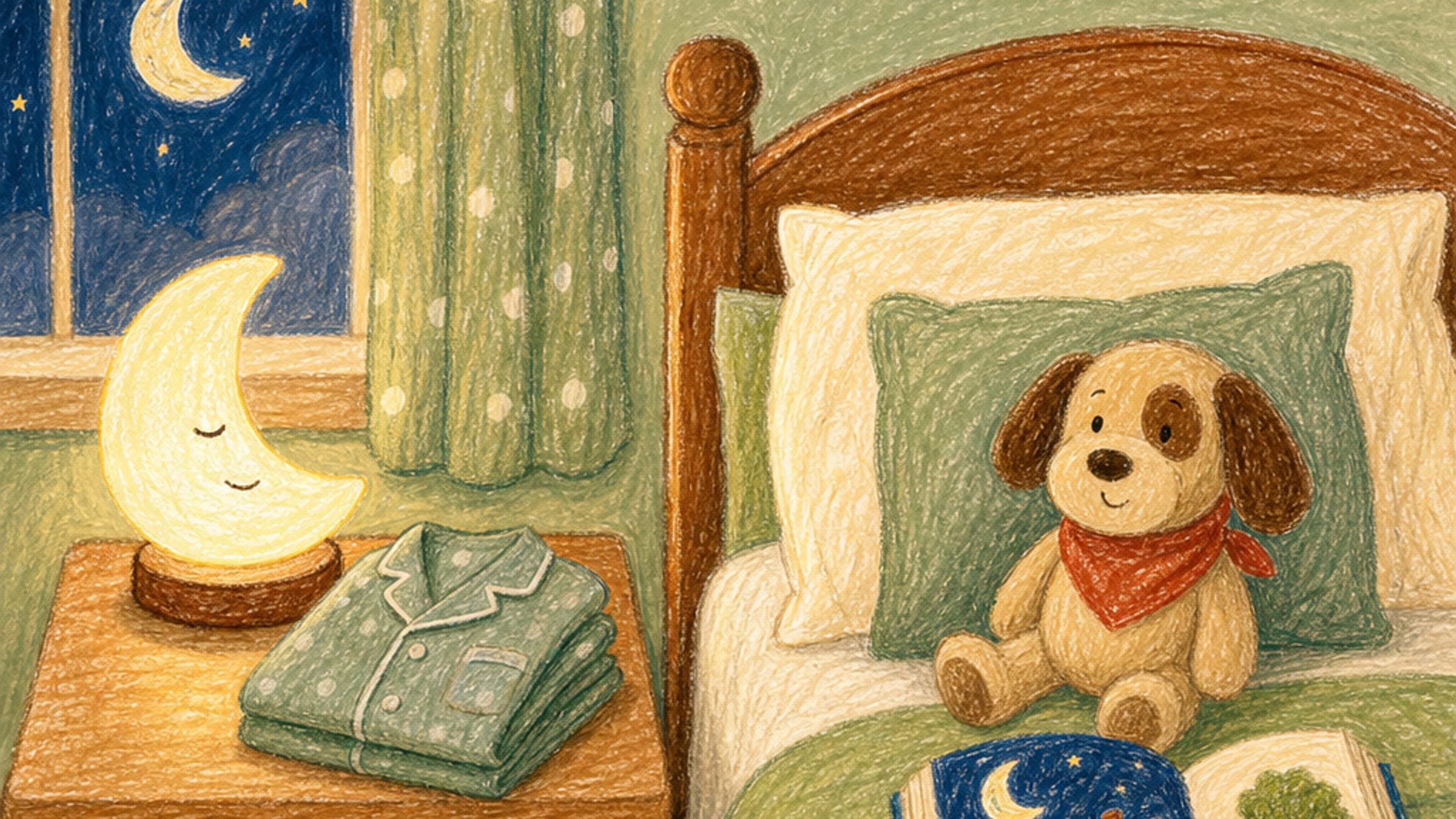
- Set it up on a dry day. Waterproof layer under the fitted sheet, a second layer ready, dry pajamas and a towel where they can reach them, a hamper nearby.
- Give the routine a boring name. "The reset" works. A name makes it a plan, not a disaster.
- Use one flat line in the morning. "Let's do the reset." Not "again?" and not a big pep talk. Both tell a child this is bigger than it is.
- Let them do the parts they want to do. Pulling the sheet off and dropping it in the hamper can feel like control. If it feels like punishment to them, do it yourself.
- Say the true sentence once, when things are calm. "This is not your fault. Lots of kids have it. Most kids grow out of it."
The steps are editorial sorting of the AAP and NIDDK guidance above. Neither source publishes this exact script.
Nemours KidsHealth suggests another sentence that can help: it may comfort a child to hear about family members who dealt with bedwetting when they were young (Bedwetting in Children). If that is true in your family, and the relative is fine with it being shared, it is one of the most reassuring things a child can hear.
Is it normal for a school-age child to still wet the bed?
Yes. It is common, and the numbers drop steadily with age.
NIDDK estimates bedwetting affects about 1 in 6 children at age 5, about 1 in 8 at age 6, 1 in 10 at age 7, and 1 to 2 in 100 at age 15. It often stops without formal treatment as children grow (Definition & Facts). The AAP cites studies showing 15% of 5- and 7-year-olds wet the bed and fewer than 1% by age 15, and says about 5 million children in the United States wet the bed (Bedwetting: 3 Common Reasons). The two sources use different studies, so the figures do not match exactly. They agree on the shape: common at five, rare at fifteen.
Why it happens is not always clear. Nemours says doctors don't know for sure what causes bedwetting or why it stops, and that most of the time it is not a sign of a deeper medical or emotional issue (Bedwetting in Children). NIDDK names the usual contributors, and often more than one is involved:
- Slow physical development. Between ages 5 and 10, a child may have a small bladder, deep sleep cycles, or a nervous system that is still learning to send the "full bladder" and "wake up" signals.
- Family history. When one parent wet the bed as a child, the child's chances are about 1 in 3. When both did, about 7 in 10. NIDDK calls bedwetting in these families usually a normal growth pattern, not an illness.
- Making too much urine at night. Low levels of antidiuretic hormone can mean the kidneys make too much urine overnight, so the bladder overfills.
- Stress. A new baby, sleeping alone, a move, or a new school can play a part, and worry about wetting can make it worse (Symptoms & Causes; Definition & Facts).
NIDDK also says children almost never wet the bed on purpose (Symptoms & Causes). If a stressful change is part of the picture, the change may need its own attention: a new baby in the house, a cross-country move, or a first stretch of sleeping in their own room.
What should parents avoid doing when a child wets the bed?
Avoid anything that makes a wet bed a moral event. NIDDK is direct: taking back rewards, shaming, penalties, and punishments don't work, because the child is not wetting the bed on purpose (Treatment).
| Instead of | Try | Why |
|---|---|---|
| A sigh, a lecture, or "you're too old for this" | "Let's do the reset." | AAP: support, not punishment. It is not the child's fault. |
| Letting a sibling joke about it | A family no-teasing rule, stated once to everyone | AAP names siblings specifically and says to tell them it is not the child's fault. |
| A sticker only for dry nights | Rewards for effort the child controls, like using the bathroom before bed or helping with the sheets | NIDDK: reward following the plan, because a child often cannot control wetting. |
| Waking them up every night to pee | Using the bathroom right before bed, or twice about a half hour apart | NIDDK: researchers don't think routine night-waking helps. |
| Buying a program that promises a "cure" | Asking the child's doctor before any treatment | AAP warns many such products make false claims and can be expensive. |
The table is editorial sorting. The reasons come from the pages cited in this section (Bedwetting: 3 Common Reasons; Treatment).
A note on sticker charts, because the sources lean differently. Nemours says some parents find stickers for dry nights, with a small reward after a certain number, work well (Bedwetting in Children). NIDDK's motivational approach includes dry nights too, but it stresses rewarding effort, since a child can't always control wetting (Treatment). For a child who is already ashamed, a chart that only counts dry nights can become a record of failures. If you use one, put the things they can control on it.
NIDDK's home-care list is small and practical: drink most liquids in the morning and early afternoon, use the bathroom regularly during the day and right before bed, and skip drinks with caffeine or bubbles, citrus juices, and sports drinks. It also suggests moving away from diapers or training pants except when sleeping away from home (Treatment).
How do you plan for a sleepover or camp?
Plan it privately, ahead of time, with the child. Bedwetting is often what turns a yes into "I don't want to go."
Nemours notes that kids who wet the bed can feel anxious about a night at a friend's house or at camp, and says to talk to the doctor if bedwetting is keeping a child from activities like sleepovers or camp (Bedwetting in Children). There may be options. The AAP says medicines are available for children 6 and older, and that while they rarely cure bedwetting, they may help, especially for sleepovers or overnight camp. Ask the doctor about side effects (Bedwetting: 3 Common Reasons). NIDDK says the same medicine can be used for short stretches like camp, and that bedwetting often comes back when a child stops taking it (Treatment). Whether any of that fits your child is the doctor's call, not a story's.
- Ask what they are actually worried about. Usually it is one thing: that the other kids will know.
- Decide the private parts together. Where the spare pajamas go, what they wear to sleep, and which one adult, if any, knows.
- Give them an exit line. "I'm going to the bathroom," or "Can I call home?" Leaving early should always be allowed.
- Ask the doctor well before the date if the worry is big or the trip is long. Don't start any product or medicine without that conversation.
- Keep waiting on the table. Skipping a sleepover this year is not a failure.
For the rest of the night away, including packing and when to wait, see the first sleepover guide.
When should you call the doctor about bedwetting?
Call whenever you or your child are worried. NIDDK says a health care professional can check for medical problems and offer treatment, or reassure you that your child is developing normally (Symptoms & Causes). Across the three sources, these are the specific reasons to call:
- Wetting starts again after staying dry for six months or longer. All three sources flag this.
- Pain, burning, or straining when peeing, or cloudy, pink, or bloody urine (AAP; NIDDK).
- Wetting during the day as well as at night (AAP; Nemours).
- Snoring at night (Nemours). NIDDK notes obstructive sleep apnea can lead to bedwetting, with snoring, mouth breathing, and daytime sleepiness among its signs.
- Drinking or eating much more than usual, or losing weight (Nemours).
- Swelling of the feet or ankles (Nemours).
- A dribbling or very weak urine stream, poor bowel control, or a sudden change in mood or personality (AAP).
- Age 7 or older and still wetting the bed (Nemours).
- It is causing stress at home or hurting their confidence (Nemours).
Sources: Bedwetting: 3 Common Reasons, Symptoms & Causes, Bedwetting in Children.
If the doctor suggests treatment, NIDDK says it usually starts with motivational steps, then moisture alarms or medicine. Alarms need regular use for 3 to 4 months, and early signs of progress include smaller wet spots and fewer alarms. Treatment doesn't always stop bedwetting completely, and setbacks are likely (Treatment). The AAP puts alarm success at 50% to 75% and says to ask the doctor which type fits your child (Bedwetting: 3 Common Reasons).
What can a personalized story do for bedwetting shame, and what can't it do?
A story works best on a calm, dry evening, as a rehearsal. It is not a response to an accident that just happened.
A worried child often can't hear "it's no big deal" from a parent. They can watch a hero with their own face and name wake up wet, do the reset, and eat breakfast like any other morning. They can watch that hero pack spare pajamas in a zip bag and use their exit line at a friend's house. That is the part a book can hold.
The names below are invented for illustration. In a real personalized book, the hero is your own child, built from your own photo.
In the story, Eli is seven and good at a lot of things, and he still wakes up wet some mornings. He hates the idea that anyone at school could find out. His grown-up says "Let's do the reset," and Eli already knows it: sheet in the hamper, dry pajamas from the chair, back to sleep or on to breakfast. Later, Eli packs his own spare pajamas for his cousin's house, in a bag no one else opens. On the last page he is not magically dry. He is at the sleepover, the bag is in his backpack, and the worry is smaller than it was.
After reading, let your child tell the reset steps back to you or to a stuffed animal. Saying the plan out loud is what makes it theirs.
How the studio keeps the rehearsal private and specific
On the Plot Outline step, the studio asks you to tell it what happened and notes that a few sentences is enough. Write your real reset steps and your real sleepover plan there, in your child's words, not a generic "and he stopped wetting the bed." On the Voice step you set the tone and choose whether it rhymes. A calm, matter-of-fact tone fits this topic. Once the book is finished, the review screen's edit mode lets you change page text, so you can remove anything that reads like a cure or that names the problem more bluntly than your child wants.
For more everyday moments that can hold a small rehearsal like this, see personalized story ideas in everyday family moments.
Keep reading: if daytime potty training is the real struggle, start with potty training a scared toddler. If the fear is the night itself, see recurring nightmares.
More related guidance:
- Brushing Teeth Without a Fight: A Story That Ends the Nightly Battle
- Moving From a Crib to a Big-Kid Bed: A Transition Story
- Getting Dressed by Themselves: A Story That Ends the Morning Battle
- Giving Up the Pacifier: When to Wait and How to Say Goodbye
- Personalized Story Ideas Hidden in Everyday Family Moments