Story ideas
What are growing pains in kids and how do you help?
Growing pains in kids: what the night-time leg aches feel like, the ages they show up, simple relief at bedtime, and warning signs that need a doctor's look.
The short answer
Growing pains are aching or sore legs that come on in the late afternoon, evening or night, usually in kids aged 3 to 12. The pain sits in the thighs, calves, shins or behind the knees, not in the joints, and the child is fine and active the next day. Massage, stretching, a heating pad and an over-the-counter pain reliever at the label dose help. Call the doctor for pain during the day, a limp, swelling, redness, joint pain, fever or pain after an injury.
Growing pains are achy, sore legs that show up in the late afternoon, evening or the middle of the night, most often in children between 3 and 12 years old. They're real, they're common and they're harmless: a gentle leg rub, a stretch and a warm heating pad usually settle them, and your child wakes up ready to run again.
What growing pains feel like
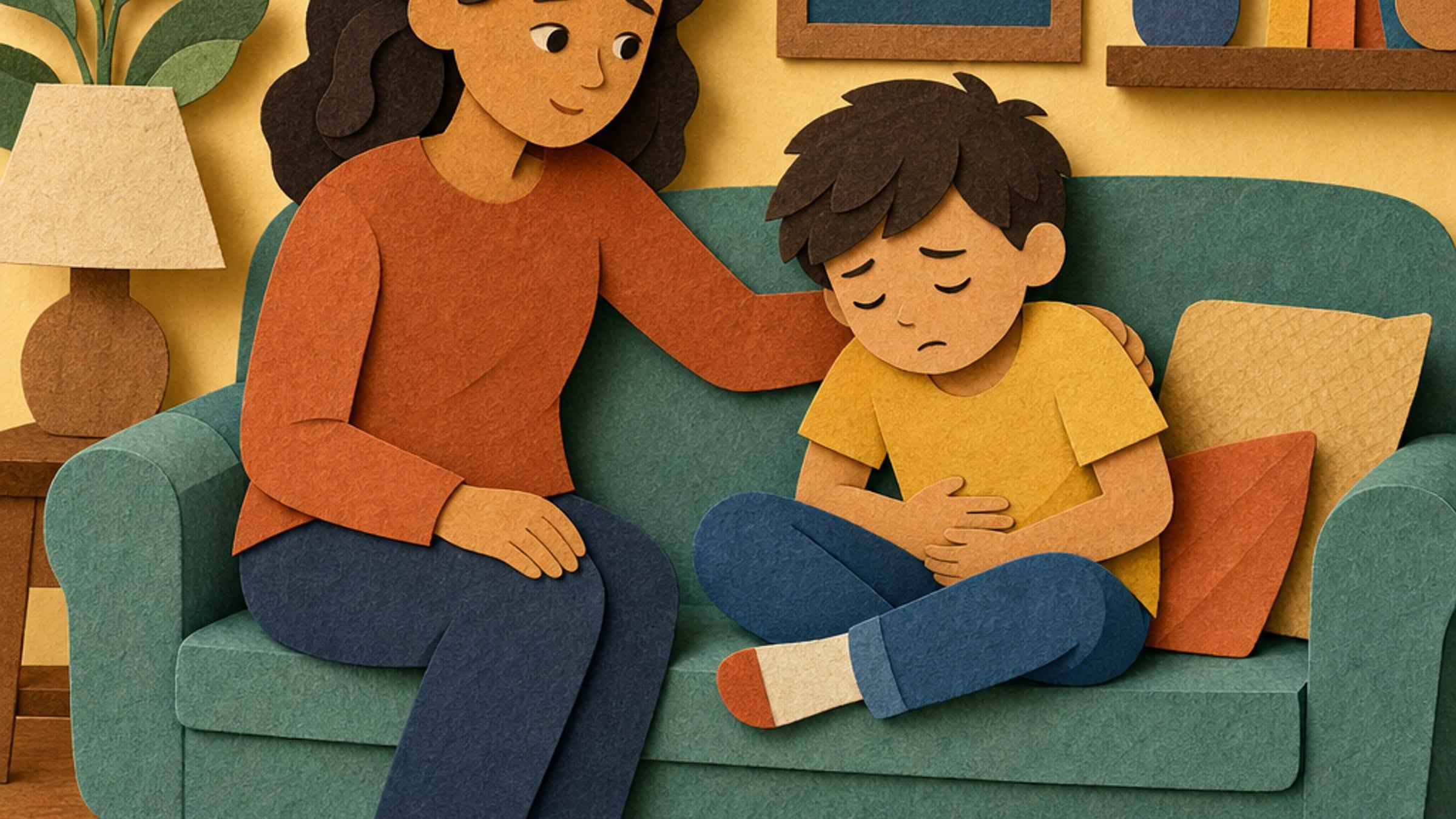
Kids describe them as an ache, a throb or "my legs feel tired." Nemours KidsHealth says the soreness sits in the muscles of the thighs, calves, shins or the backs of the knees, not in the joints themselves (Growing Pains, accessed November 13, 2026). Usually both legs hurt. Sometimes one leg aches one night and the other leg the next time. A few children feel it in their arms as well, but arm pain on its own isn't the typical pattern.
Timing is the big clue. The ache tends to start before bed or wake a child an hour or two after falling asleep. By breakfast it's gone, and during the day your child runs, climbs and plays as usual.
The ages they show up
KidsHealth puts the usual range at 3 to 12 years. Many parents first meet them in the preschool years, when a child suddenly can't settle at bedtime and points at their shins. Episodes can come and go for months or years. There may be weeks or even months between rough nights, and then a cluster of them after a busy stretch.
Why "growing" might be the wrong word
Nobody knows exactly what causes them. KidsHealth notes that the pain isn't worse during growth spurts and doesn't sit near the growth areas of the bones. A more likely explanation is muscle fatigue from a day of jumping, climbing and running, which is why a soccer practice, a trampoline park or a long day at the zoo is often followed by a sore night.
That's useful to know, because it means you don't need to cut back on activity. KidsHealth says children with growing pains can keep playing sports, dancing and doing whatever they enjoy.
Easing the ache at bedtime
A simple routine works for most families:
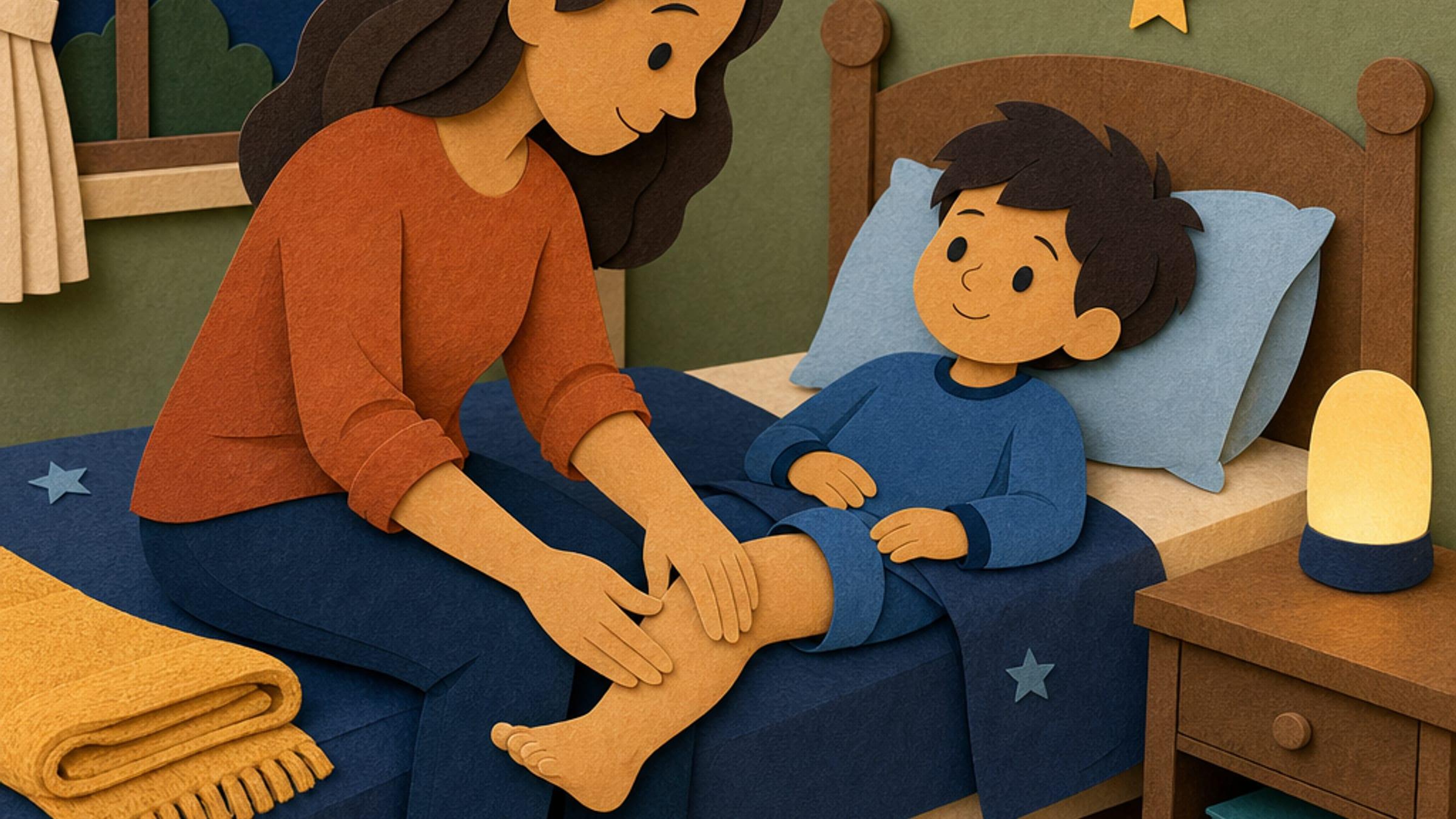
- Rub the sore spot. Slow, firm strokes along the calf or thigh for a few minutes. Many kids relax and drift back to sleep during the massage itself.
- Stretch together. A calf stretch against the wall, a seated hamstring reach toward the toes, or lying on the back and lifting a straight leg. Make it a two-minute game before lights out after active days.
- Add warmth. A heating pad on low or a warm (not hot) towel over the legs. Stay nearby and remove it before your child falls asleep.
- Use pain medicine when needed. Ibuprofen or acetaminophen, following the label for your child's weight and age.
- Keep a note. Jot down the date, which leg, and what the day held. Patterns like "always after swimming" are reassuring, and the doctor will find the notes helpful.
Comfort matters as much as the method. A child woken by sore legs is often scared as well as uncomfortable. A calm voice saying "this is the leg ache again, it goes away by morning" goes a long way.
How a doctor confirms it
There's no blood test or scan for growing pains. KidsHealth explains that doctors make the diagnosis from the story and a normal exam: a healthy child with leg pain at night that eases with massage, heat and over-the-counter medicine, and no pain during the day. If the pattern doesn't fit, the doctor may order blood tests or X-rays to look for something else.
When leg pain isn't growing pains
Call your child's doctor if you see any of these, all from the KidsHealth list:
- Pain that doesn't get better with massage, heat and pain medicine
- Pain during the day
- Swelling, redness or pain in a joint
- Pain that started with an injury or a fall
- Fever, poor appetite, weight loss or other signs of illness
- A limp
One more pattern worth mentioning: pain that always sits in exactly the same spot, or that makes your child stop playing, isn't the usual picture either. Trust your sense that something is different and book the visit. And a toddler who suddenly won't use one arm after a tug or a swing by the hands has a different problem altogether, often nursemaid's elbow.
Growing pains and sleep
Night waking is the hardest part for many families. A few ideas help:
- On big activity days, do the stretch and rub before bed rather than waiting for the pain to wake them.
- Keep the heating pad and a water bottle near the bed so a night episode takes five minutes, not thirty.
- Leave a small night-light on so your child can find you without panic.
- If one parent handles most episodes, take turns. Sleep loss adds up quickly over a run of rough nights.
Talking to your child about it
Young children worry when a body part hurts and nobody can see why. Keep the explanation short and true: "Your muscles worked hard today, and sometimes they ache at night. It doesn't hurt your body, and it goes away." Older kids may like knowing that lots of children their age get the same thing.
Some kids find it easier to talk about a scary night with a story that has them in it. A personalized book about being brave with the doctor and the body can help a child who is nervous about a checkup for their legs. The hospital book shows how it looks, and a story about getting a cast for a broken arm is there for the child whose sore limb turns out to be something more.
Related reading
- Playground safety for toddlers
- Hopping, skipping and jumping by age
- How much sleep does a toddler need
FAQ
Do growing pains mean my child is about to have a growth spurt?
No. The pain isn't linked to growth spurts and doesn't sit near the growing ends of the bones.
Should my child skip sports during a bad week?
Not usually. Kids with growing pains can keep playing; stretching before bed on active days often helps more than resting.
Can a toddler have growing pains?
They're usually described from age 3. A child under 3 with leg pain, limping or refusing to walk should see the doctor.