Story ideas
What should you do when a toddler has croup?
Croup in toddlers sounds like a seal bark and peaks at night. What helps at home, the breathing signs that mean the ER, and how to get through the night.
The short answer
Croup is a swelling of the upper airway, usually from a virus, that causes a barking cough and a hoarse voice, mostly in kids up to age 5. Keep your child calm, sit with them in a steamy bathroom or near cool night air for about 10 minutes, and get urgent help for noisy breathing at rest, struggling to breathe, or blue lips.
When a toddler has croup, the first job is to keep them calm, because crying tightens an already swollen airway; then sit with them in a steamy bathroom or by an open window with cool night air for about 10 minutes. Croup is most often seen in the fall and can affect kids up to age 5, and KidsHealth suggests a cool-mist humidifier or a hot shower run so you can sit together in the steam for 10 minutes (Croup (Barking Cough), accessed November 11, 2026).
What croup sounds like
Parents rarely forget the first time. Croup cough is a harsh bark, like a seal or a small dog. The voice is hoarse. Many kids make a high, squeaky sound when they breathe in, called stridor, especially when upset. It often starts after a day or two of a runny nose, and it is usually worst at night.
The cause is swelling around the voice box and windpipe, most often from a virus. A child's airway is narrow, so a little swelling makes a lot of noise.
The first ten minutes
- Pick your child up and stay calm. Your voice sets the pace. Slow breathing, a quiet song, and a cuddle can ease the bark.
- Make a steam room. Close the bathroom door, run the shower hot, and sit outside the spray with your child on your lap.
- Or try cool air. On a cold night, bundle them up and sit by an open window or step outside for a few minutes. Some families notice the cough is better in the car on the way to the doctor for this reason.
- Offer a drink. Small sips are soothing and keep them hydrated.
- Watch the breathing, not just the sound. Look at the chest and neck.
Signs that mean get help now
Call 911 or go to the emergency room if your child:
- makes the squeaky breathing sound while calm and resting, not just when crying;
- is working hard to breathe, with the skin pulling in between the ribs or at the base of the neck;
- has blue or gray lips or skin;
- drools or can't swallow;
- is too tired to cry, or seems confused or very sleepy.
KidsHealth's guide to the emergency room explains when to call for an ambulance instead of driving yourself, and why a children's hospital ER may have the most pediatric staff (Going to the Emergency Room, accessed November 11, 2026).
What the doctor may do
Most croup is mild and handled at home. A doctor may give a single dose of a steroid medicine to bring the swelling down, and for more serious cases a breathing treatment in the office or ER. Antibiotics don't help a viral illness. For fever or a sore throat, ask about acetaminophen, or ibuprofen only for kids older than 6 months.
The next few nights
Croup usually improves over three to five days, with the worst nights at the beginning. A plan helps:
- Sleep close. Put a mattress on the floor of your child's room or let them sleep in a crib next to you, so you hear the cough.
- Run the cool-mist humidifier, cleaned daily.
- Keep the air clear of smoke.
- Keep the head a little upright for kids old enough for a pillow.
- Plan naps. A child up half the night needs rest the next day.
Is croup contagious?
The viruses behind croup spread like colds, through coughs, sneezes and hands. Wash hands often and keep cups separate. Kids can usually return to child care once the fever is gone and they feel well enough to join in; check your center's rules.
Helping a scared toddler
The bark sounds alarming to children too. Afterward, name what happened in simple words: "Your throat got puffy, so your cough was loud. We sat in the steam, and it got easier." Practicing slow "smell the flower, blow the candle" breaths when they feel fine gives them a tool for the next time.
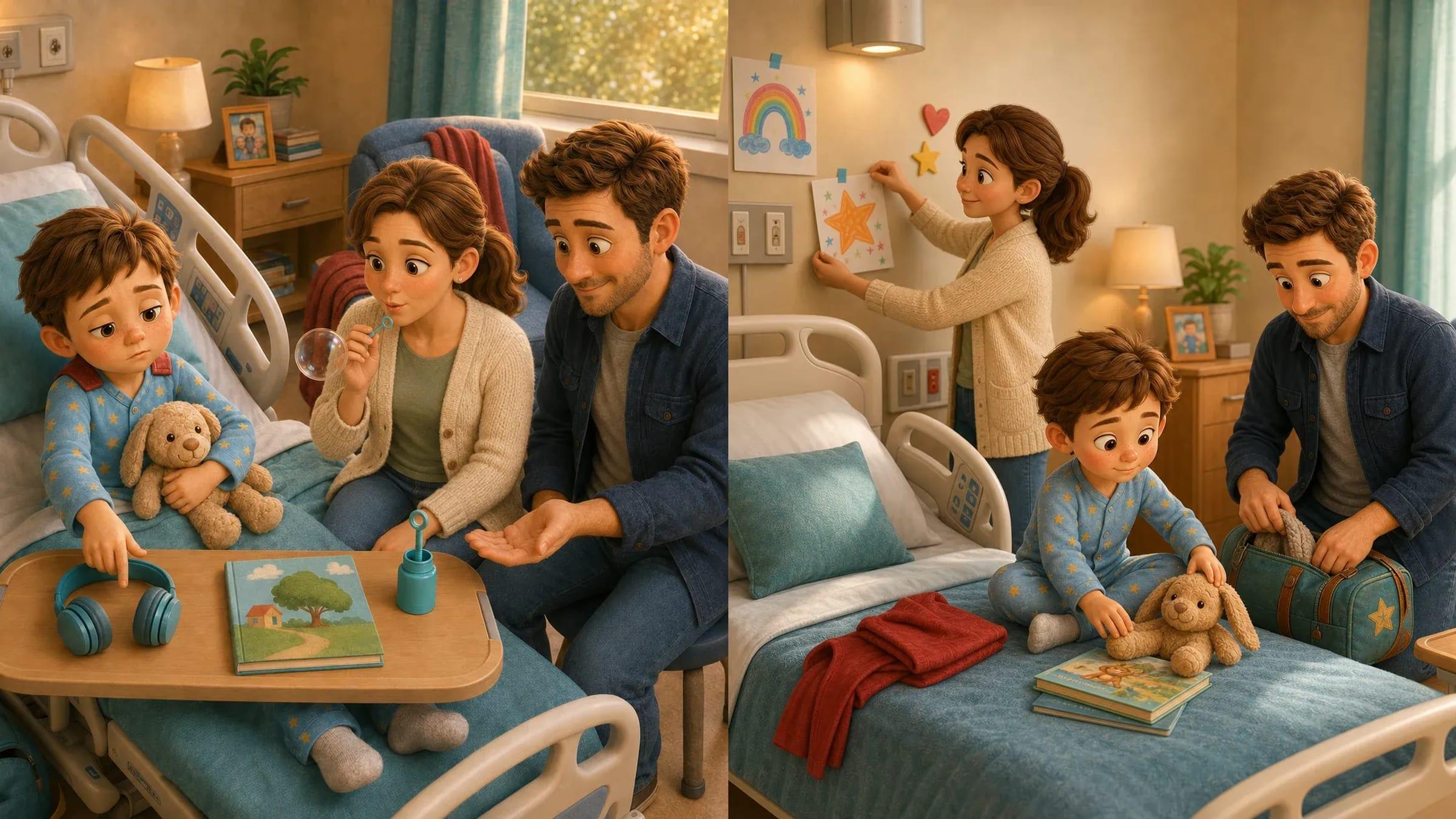
If an illness ends in an ER visit or a hospital night, a personalized last-treatment book can retell it with the people who were there, so the memory ends with home.
Related reading
- Hospital stories and books
- Staying overnight in the hospital
- Using an inhaler for asthma
- How to Teach a Toddler to Blow Their Nose
What a croup night usually looks like
Croup tends to get worse after dark. A toddler goes to bed with a mild cold and wakes around midnight with the barking cough and a hoarse cry. That first night is often the loudest, and the second night can be similar. By the third or fourth night most kids sound much better, even if a light cough hangs on.
Plan for broken sleep. Put a mattress or sleeping bag in your child's room so you can hear the breathing without getting up each time. Keep water by the bed and a jacket by the door in case cool night air helps. If one parent stays up for the first half of the night and the other takes the second half, nobody is wrecked the next day.
Older siblings may be scared by the sound. Tell them plainly: "It's a cough that sounds like a seal. The doctor knows what to do."
FAQ
Can a child get croup more than once?
Yes. Some kids get it several times in early childhood. It tends to fade as the airway grows.
Is croup the same as a cold?
It often starts with cold symptoms, but the barking cough and hoarse voice come from swelling lower down, near the voice box.
Should I give cough syrup?
Ask your child's doctor first. Over-the-counter cough and cold medicines are not recommended for young children.