Story ideas
When do kids start pretend play?
When do kids start pretend play? Copying real actions around 1, feeding a doll a block by 2½, roles and group scenes at 3 to 5, plus props and how to join in.
The short answer
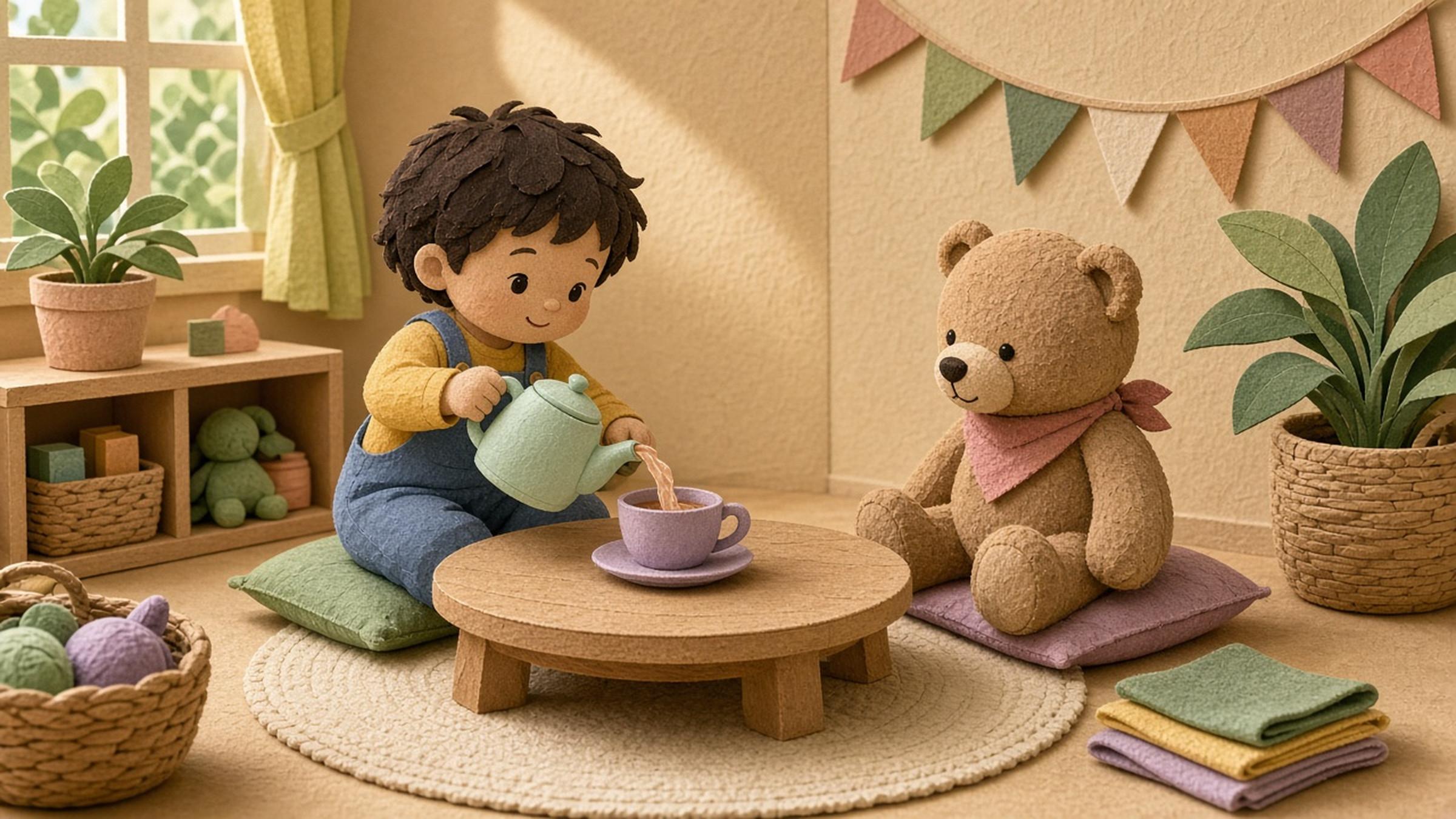
Pretend play starts small. In the second year, toddlers copy what you do, like sweeping or pushing a toy car. By 2½, KidsHealth lists using things to pretend, such as feeding a block to a doll. By 4, many children play pretend and ask a friend to join, and group make-believe with roles and props grows through age 5.
Kids start simple pretend play in their second year, by copying real actions: KidsHealth's 18-month sheet lists imitating activities they see you doing, such as cleaning the floor, and playing with toys like pushing a toy car. By 2½, it lists using things to pretend, like feeding a block to a doll as if it were food (Your Child’s Development: 2.5 Years, accessed November 12, 2026). From there, make-believe grows into roles, scenes and games with friends through the preschool years. Every child moves at their own pace.
The stages, roughly by age
| Age | What milestone guides describe |
|---|---|
| 12 months | Uses objects the right way, like a hairbrush or cup (KidsHealth) |
| 15 months | Tries to use things the right way, like a phone or book; hugs stuffed dolls; copies other children while playing (KidsHealth) |
| 18 months | Imitates chores they see, like cleaning the floor; shows affection to a doll or stuffed animal; pushes a toy car (KidsHealth) |
| 2 years | Plays with more than one toy at a time, like putting toy food on a toy plate (KidsHealth) |
| 2½ years | Uses things to pretend, like feeding a block to a doll (KidsHealth) |
| 4 years | Plays pretend and asks to play with a friend (KidsHealth) |
| 3 to 5 years | Acts out adult jobs with costumes and props; more interest in group pretend play; begins to plan play by about 4 (Seattle Children's) |
Copying real life. The first pretend is usually aimed at themselves or at you: a toy phone to the ear, a pretend sip from an empty cup, a turn with the broom.
Pretend on others. Next, the doll gets fed and the teddy goes to bed. The American Academy of Pediatrics' guide to 2-year-olds notes that a child putting a teddy to bed may use exactly the same words and tone of voice you use at bedtime.
Swapping one thing for another. The AAP says toddlers start to think in symbols, so a banana can be a phone and a block can be a blueberry for a stuffed animal's snack (3 Ways Your Child Builds Important Life Skills Through Play, accessed November 12, 2026).
Roles and scenes. Preschoolers can pretend to be a doctor, a firefighter or a teacher, and can make toys walk through experiences they might be nervous about, like a dentist visit or a first day of school, the same article says. Seattle Children's describes 3- to 5-year-olds acting out adult jobs with costumes and props and starting to plan their play by about 4 (Toys and Play: 3- to 5-Year-Olds, accessed November 12, 2026).
Group make-believe. KidsHealth's 4-year sheet lists playing pretend and asking to play with a friend (Developmental Milestones at 4 Years, accessed November 12, 2026). Games now have rules, roles and a story that keeps going.
Why make-believe matters
- Language. The AAP's pretend play article says many children start speaking first words around the same time they begin pretend play, and that using one object to stand for another is symbolic thinking, the same kind words depend on (Pretend Play, accessed November 12, 2026).
- Teamwork. The same article describes pretend play as practice in cooperating, taking turns and communicating.
- Rehearsal. It suggests playing pretend doctor before a real appointment, or classroom before a first day, to ease worry.
- Flexible thinking. Stepping into a role means seeing things from another point of view. The AAP notes that pretending to be a video game character doesn't give the same experience, because it lacks the sensory and social parts of real play.
- Problem solving. "The bridge broke. How will the cars get across?"
Simple props that spark pretend play
You don't need an expensive play kitchen. Rotating a few simple items works:
- Kitchen: pots, wooden spoons, empty food boxes, measuring cups.
- Doctor kit: a toy stethoscope, bandages, a clipboard.
- Dress-up: old hats, scarves, bags, shoes, a cape made from a pillowcase.
- Store: a cardboard box counter, play money, a basket.
- Small world: animal figures, blocks, toy cars, a dollhouse.
- Open-ended: big cardboard boxes, blankets for forts, scarves.
The AAP's pretend play tips also suggest everyday objects used in new ways: a hairbrush as a microphone, toilet paper rolls as binoculars, a bowl as a drum. Costumes help children step into a role, and in group play they make it clear who is the chef and who is the customer.
How parents can join in
- Follow their lead. Ask, "Who should I be?" rather than taking over. The AAP suggests letting your child build the world and set the rules, with you there if they want ideas.
- Add a twist. "Oh no, the bus has a flat tire! What do we do?"
- Name feelings. "Teddy looks worried about the doctor."
- Give it time. Long, unhurried play is where the best stories happen.
- Step back. Independent play matters too.
When to talk to your doctor
You know your child best, so share any concern, even a small one. KidsHealth's milestone sheets say to tell your doctor if your child isn't meeting one or more milestones, or if they had skills and have lost them. Your pediatrician can check on development and suggest next steps.
Pretend play and stories
Books and pretend play feed each other. A story about going to the dentist can turn into a dentist game; a game about a pet shop can turn into a story at bedtime. A personalized milestone book about your child and the new things they're learning can become a script they love to act out. See the milestones book and milestone gift ideas.
Related milestones
- When babies start crawling
- Hopping, skipping and jumping by age
- Teaching colors to toddlers
- Learning to use scissors
A week of easy pretend play ideas
- Monday: car wash for toy cars with a bowl of soapy water and a cloth.
- Tuesday: pet vet with stuffed animals and bandages.
- Wednesday: picnic on a blanket indoors.
- Thursday: post office with old envelopes and stickers for stamps.
- Friday: camping in a blanket fort with a flashlight.
- Weekend: bakery with play dough, cookie cutters and a "cash register."
FAQ
My child acts out the same scene every day. Is that okay?
Yes. Repeating a scene is how kids practice it. Add one small twist to stretch the story.
Should I correct my child when pretend gets silly?
No. Dragons in the kitchen are part of the fun. Step in only if someone is being left out or hurt.
Do kids need lots of toys for pretend play?
No. A box, a blanket and a few kitchen items go a long way.