Story ideas
What are good indoor activities for toddlers?
Indoor activities for toddlers, room by room: kitchen, hallway, bathroom and living room games using what you already own, with setup time and cleanup notes.
The short answer
Good indoor activities for toddlers use the rooms you already have: pots and wooden spoons in the kitchen, a masking-tape balance line in the hallway, cups and funnels in the bathtub, and a couch-cushion obstacle path in the living room. Rotate rooms every 20 to 30 minutes. Keep small objects, coin batteries and magnets out of reach, as the AAP and CPSC advise.
The easiest indoor activities for toddlers come from the rooms you already have: the kitchen has pots to bang, the hallway is a runway, the bathtub is a water lab and the living room is an obstacle path. Moving to a new room every 20 to 30 minutes resets attention better than a new toy does.
Key takeaways
- Plan by room. A change of room is a change of activity.
- Use what is already in the cupboards; nothing here needs a shopping trip.
- Do a 60-second sweep for small objects, magnets and coin batteries before play starts.
Kitchen: noise and pouring
The kitchen floor is easy to wipe, and it is where you already are.
- Pot drum kit. Three pots upside down, two wooden spoons. Play loud, then whisper-quiet, then loud again.
- Lid matching. Mix up plastic containers and their lids. The child finds which lid fits which box.
- Dry pouring station. A bowl of dry pasta tubes, a measuring cup and a second bowl on a towel. Large pasta only; skip rice and beans with children who still mouth things.
- Fridge photo hunt. Stick family photos on the fridge at child height and ask, "Where is Grandma?"
Setup: 2 minutes. Cleanup: sweep the pasta.
Hallway: big movement in a small space
A hallway is long, narrow and has no furniture to crash into.
| Game | Supplies | What it builds |
|---|---|---|
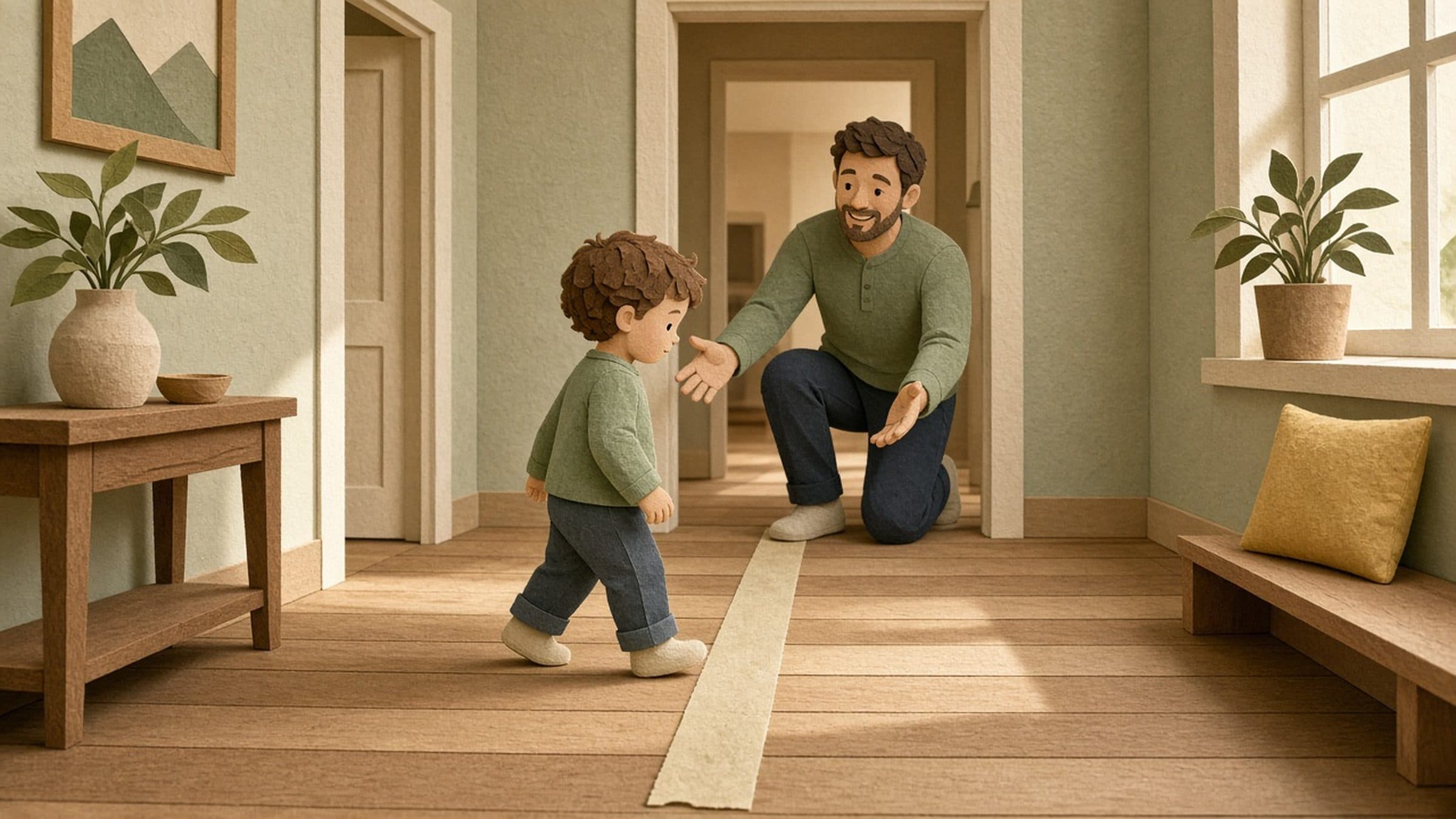
| Tape balance line | Masking tape | Walking heel to toe, then sideways |
| Ball roll bowling | Soft ball, empty plastic bottles | Aim and counting |
| Animal walks | Nothing | Bear crawl, frog jump, crab walk to the end |
| Laundry basket push | Basket, a stuffed toy passenger | Pushing, steering, turning |
| Red light, green light | Two paper circles, one red, one green | Stopping on a signal |
Setup: 1 to 5 minutes. Cleanup: peel the tape.
Bathroom: water play with a built-in drain
Water play in an empty tub (or a filled tub with an adult kneeling beside it the whole time) holds a toddler longer than almost anything.
- Cup and funnel lab. Measuring cups, a funnel, a colander. Pour from big to small.
- Washing the toys. A sponge and a few plastic animals that "got muddy."
- Bath paint. A little shaving foam with a drop of food coloring, painted on the tub wall, rinsed off after.
Never leave a young child alone in or near water, even for a moment. Empty the tub as soon as play ends.
Living room: an obstacle path
Pull the cushions off the couch and build a short route:
- Crawl under a blanket draped over two chairs.
- Step across three cushions laid flat on the floor.
- Climb over the ottoman.
- Drop a sock in a basket at the finish.
Then let the child rearrange it. Changing the course is half the fun. Keep it low, on carpet, away from table corners and windows.
On a quieter afternoon, the living room becomes a reading den: a pile of pillows, a stack of picture books, and the same favorite read three times in a row.
Bedroom: winding down
Before nap or bedtime, move to slow games.
- Sock puppets. Two old socks and a few lines of dialogue in silly voices.
- Sorting the laundry. Hand the child clean socks to match by color.
- Flashlight hunt. Close the curtains and shine a light on stuffed animals around the room while the child names them.
A sample indoor day
| Time | Room | Activity |
|---|---|---|
| 8:30 | Kitchen | Lid matching while you clear breakfast |
| 9:30 | Hallway | Tape balance line, animal walks |
| 10:30 | Living room | Obstacle path |
| 11:30 | Kitchen | Lunch, then pot drums |
| 1:00 | Bedroom | Nap |
| 3:00 | Bathroom | Cup and funnel lab |
| 4:00 | Living room | Reading den |
The 60-second safety sweep
Before play, look at floor level for anything small enough to swallow. The AAP lists choking risks for young children that include coins, small balls, marbles, balloons and toys with small parts. The CPSC warns that a swallowed coin battery, the kind in remotes, key fobs and musical greeting cards, can burn through a child's throat in as little as two hours, and that swallowed high-powered magnets can cause serious internal injuries. If you think your child swallowed a battery or a magnet, go to the emergency room right away. For any choking or breathing trouble, call 911.
Frequently asked questions
How long does one indoor activity last with a toddler? Usually 5 to 20 minutes. That is why the room changes matter.
Do I need to buy toys for indoor play? No. Pots, tape, cushions, socks and cups cover most of a week.
What if my toddler only wants screens? Start with a short, active game in the hallway before offering a show. Movement first often makes the screen request fade.
Related reading:
- Thanksgiving activities for toddlers
- Snow day activities for kids
- A personalized Christmas book for kids
Ordinary indoor days can become a keepsake. With our holiday book, you choose the holiday and describe your home and the games your toddler plays in it. You see a proof before anything prints, and pricing lists current costs.
Sources
- Choking Prevention for Children, American Academy of Pediatrics (HealthyChildren.org), accessed November 3, 2026
- Coin Battery Safety Information Center, U.S. Consumer Product Safety Commission, accessed November 3, 2026