Story ideas
What should I do when my toddler won't say thank you?
Toddler won't say thank you on cue? Why prompting backfires, what to model, a practice game before visits, and what to tell a grandparent who expects it.
The short answer
When a toddler won't say thank you, skip the prompt and say it yourself, out loud, on their behalf. Young children learn polite words by hearing adults use them warmly and often, not by being put on the spot in front of a guest. Thank your child during the day, practice with a pretend gift game before a visit, and tell relatives ahead of time that you are modeling it.
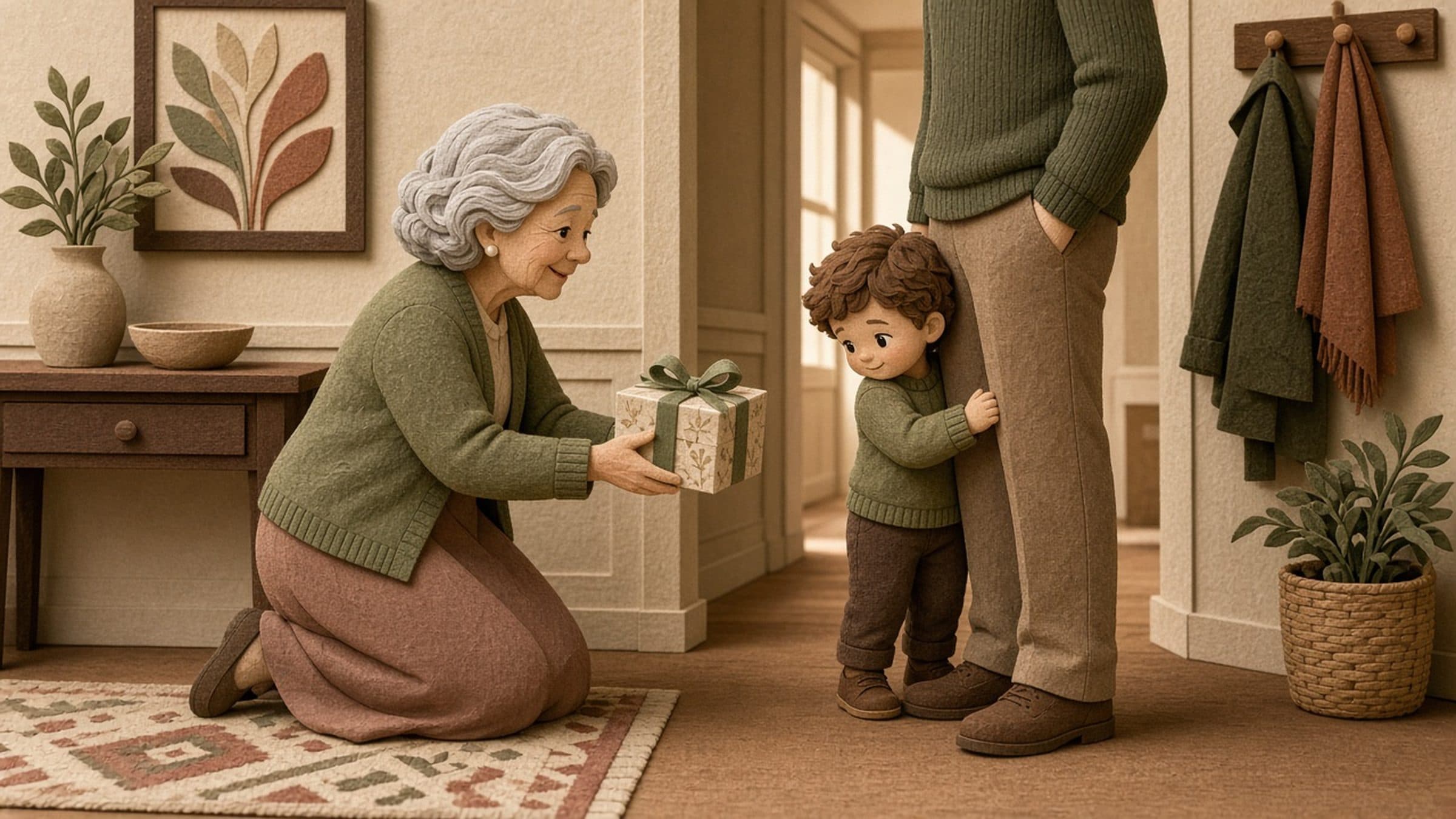
If your toddler won't say thank you, say it for them in a warm voice, then move on: "Thank you, Grandma, we love it." Polite words come from hearing them used every day by the adults a child trusts, so modeling works better than a prompt in front of a crowd.
Key takeaways
- Say the thanks yourself, out loud, and keep the moment short.
- Thank your child often during ordinary days, so the words feel normal.
- Practice with a pretend gift before a visit, when nothing is at stake.
- Tell relatives in advance that you are modeling it, so nobody waits on the child.
Why a young child goes quiet on cue
Three things usually happen at once when an adult says "What do you say?" in front of a guest.
- Too many eyes. A ring of grown-ups watching is a lot of attention for a small person. Many children freeze, hide or turn away, which looks rude and is mostly shyness.
- The gift wins. A new toy takes all of their focus. The polite words are about the giver, and the child's mind is on the wrapping.
- The prompt feels like a test. Repeated "Say it, say it" turns a kind word into a performance with a fail state. Some children dig in and refuse.
The American Academy of Pediatrics puts it plainly on HealthyChildren.org: children learn by watching the people around them, especially parents, and when you use manners, you teach your child to do the same. The same page warns that attention aimed at misbehavior tends to increase it, which is one reason a public "What do you say?" can backfire. Zero to Three suggests a simple turn-taking game: hand small objects back and forth, saying "Can I have it?" and "Thank you!" as you go.
What to do in the moment
Use this four-step script at the door, the table or the gift pile.
- Kneel and narrate. "Grandpa brought you a truck."
- Say the thanks yourself, to the giver. "Thank you, Grandpa. That was kind." Look at the giver, not the child.
- Offer a non-verbal option. "Want to give a wave or a high five?" A wave counts.
- Drop it. No second prompt. Let the child play.
Later, in private, you can add one line: "Grandpa smiled when we said thank you." That links the words to a feeling, which sticks better than a lecture.
Model it all day, not just at gift time
A child who hears thanks twenty times a day will start saying it without help. Some easy places to fit it in:
| Moment | What you say |
|---|---|
| Child hands you a cup | "Thank you for bringing that." |
| Partner passes the salt | "Thanks, that helps." |
| Cashier gives the bag | "Thank you, have a good day." |
| Child puts shoes by the door | "Thank you, that saves us time." |
Thank your child by name and say what they did. Specific thanks shows what the word is for.
A pretend gift game before the visit
This builds on Zero to Three's hand-it-back-and-forth idea. Practice a day or two before a gathering, when nobody is watching.
- Wrap three small things from around the house in a dish towel: a spoon, a sock, a toy car.
- Take turns "giving" each one. The giver says "This is for you." The receiver says "Thank you!" or waves.
- Make it silly. Thank the sock in a deep voice; thank the spoon in a whisper.
- Switch roles so the child gets to be the giver and hear you thank them.
Five minutes is plenty. Stop while it is still fun.
What to tell a grandparent who expects it
Many grandparents were raised with "say thank you or no dessert." A short, friendly heads-up before the visit avoids a standoff at the door.
A text you can send: "We're working on thank-yous by saying them ourselves around the kids. If they go quiet when you hand them something, I'll thank you for them. It's not you; they're still learning the words."
At the visit, if a relative presses ("What do you say?"), step in lightly: "We say thank you, Nana!" and smile. Then change the subject.
After the holiday, a drawing or a scribble on a card sent in the mail lets the child say thanks in their own way, with no audience.
When to talk to your pediatrician
Quiet with new people is common. Talk to your child's pediatrician if your child rarely uses words with anyone, has lost words they used to say, or does not look at or respond to familiar adults. Those are questions about speech or development, not manners, and early help is easy to get.
Frequently asked questions
Should I make my toddler say thank you before they can have the gift? It tends to turn the moment into a standoff. Say the thanks yourself and let the child have the gift.
Is a wave enough? Yes. A wave, a nod or a hug is a real thank-you for a small child, and it is a step toward the words.
My child says it at home but never at a party. Why? Crowds raise the stakes. Home is where the skill is learned; the party version usually shows up later.
Related reading:
- What to say to kids about Thanksgiving
- Thanksgiving traditions with kids
- Indoor activities for toddlers, room by room
- A personalized Christmas book for kids
A thank-you can be the plot of a picture book. With our holiday book, you choose the holiday, describe who comes to visit, and write in the gift your child gave or received. You see a proof before anything prints, and pricing lists current costs.
Sources
- How to Shape & Manage Your Young Child's Behavior, American Academy of Pediatrics (HealthyChildren.org), accessed November 3, 2026
- Promoting Cooperation and Self-Control: Gather Round Activities, Zero to Three, accessed November 3, 2026