Story ideas
How do you get a picky eater to try new foods?
Serve a small new food next to a favorite. Invite one bite. Do not force, bribe, or punish. A story can rehearse that bite. It cannot make them like the food.
The short answer
Serve one small new food next to foods your child already likes. Invite one bite. Do not force, bribe, punish, or cook a second dinner. Stay neutral about the result and keep offering the food over later meals. A story can rehearse that low-pressure bite. It cannot diagnose picky eating, make them like the food, or replace the pediatrician.
Key takeaways
- A refused bite is usually caution plus control, not proof they already hate the taste. Many kids say no before they taste.
- You choose what is offered. They choose whether to eat it. AAP: pressuring or punishing can make them dislike foods they might otherwise like.
- Invite one small bite. Do not force, nag, bargain, or bribe. Nemours: you cannot force a child to eat.
- Keep offering. AAP talks about 10 or more tastings. CDC talks about 8 to 10 exposures. Nemours talks about 10 or more tries. None of them say one dinner is the test.
- A story can rehearse a calm plate and a child who is allowed to stop. It cannot make them like broccoli, diagnose a feeding problem, or replace the pediatrician.
How do you get a picky eater to try new foods?
Offer one small new food next to a food they already eat. Invite one bite. Do not force the rest of the plate.
That is a smaller job than "get them to like vegetables this week." The American Academy of Pediatrics says picky eating is often the norm for toddlers, that a parent's job is to provide food and the child's job is to decide whether to eat it, and that pressuring kids to eat — or punishing them if they don't — can make them actively dislike foods they may otherwise like (10 Tips for Parents of Picky Eaters). Nemours KidsHealth is the no-force line from a second publisher: there are two things you can't force a child to do — eat and sleep. It is fine to encourage kids to "try a bite," but do not fall into the negotiating trap. Prepare and serve healthy meals and let them decide what to eat (Toddlers at the Table: Avoiding Power Struggles; My Toddler Hates Vegetables. What Can I Do?).
This page is that job: a child who refuses a new food, or a food they already decided they "hate," at an ordinary family meal — and a parent who needs a script that does not turn dinner into a fight. It is not living with a food allergy. That page owns a written safety plan, ingredient checks, and prescribed medicine. A refused bite is not an allergen. It is not weaning off the bottle or giving up the pacifier. Those are comfort-object goodbyes. It is not brushing teeth without a fight. Two minutes at the sink is a hygiene routine, not a plate. It is not too much noise or sensory overload. That page owns busy, noisy places and a break plan. Food texture can feel intense; this page still owns the refused bite at the table, not the cafeteria roar.
A story can walk a hero with your child's face through a small new food next to a familiar favorite, one invited bite, and a grown-up who stays calm if they stop. It cannot promise they will like the food, diagnose a feeding problem, or replace the pediatrician.
Is this a typical food jag, a power struggle, an allergy, or a clinic question?
Sort the job before you sort the child. A toddler on a mac-and-cheese jag, a child with a diagnosed food allergy, and a child whose growth or nutrition worries you are three different pages.
AAP's picky-eater page is the typical-toddler line. After the rapid growth of infancy, a toddler's growth rate and appetite tend to slow down. A favorite food one day may hit the floor the next. For weeks they may eat one or two preferred foods — and nothing else. Include at least one food your child likes with each meal, serve one meal for the whole family, and resist making another meal if they refuse what you served. That second dinner only encourages picky eating (10 Tips for Parents of Picky Eaters).
Nemours names the food jag from a second publisher. Nearly all toddlers could be described as picky eaters. If kids don't like a food, they won't eat it. When a child is stuck on one food, serving it every day so they eat something misses a chance to introduce new foods. Most of these jags will not last long if parents do not give in to them. Kids will not starve, but they will learn to be more flexible rather than go hungry. Serve a variety of healthy foods — including known favorites and some new foods (Toddlers at the Table: Avoiding Power Struggles).
CDC is the "this can look dramatic and still be ordinary" publisher. As children get older they may start refusing foods they previously liked. Favoring just a couple of foods, or not wanting foods to touch each other on the plate, are normal behaviors. These behaviors often go away by the time the child is about 5 (Picky Eaters and What to Do; Tips to Help Your Picky Eater).
| What you are living | Treat it as | Do not treat it as |
|---|---|---|
| They say "I hate it" before it reaches their mouth | Typical refusal of a new taste or texture — this page | Proof the food is already tasted and forever banned |
| They will eat only one or two foods for a stretch | A food jag. AAP and Nemours: keep offering variety, including a liked food, and do not cook a second dinner | A reason to become a short-order cook |
| They do not want foods to touch, or they dropped a former favorite | CDC: those can be normal, and they often ease by about age 5 | A personality verdict |
| A specific food can make them sick, and there is a written allergy plan | The safety job — use living with a food allergy | A picky-eater story that treats the allergen as "one brave bite" |
| The leftover fight is a bottle, a pacifier, or two minutes of toothpaste | Weaning off the bottle, giving up the pacifier, or brushing teeth without a fight | A dinner story with the wrong object |
| Growth, nutrition, pain, choking, or distress at every meal worries you | AAP: talk with the pediatrician | A plot you can rewrite with a last page |
The table is editorial sorting of those AAP, Nemours, and CDC pages. None of them publish this kitchen flowchart.
If the hard part is a feared toilet rather than a plate, leave this page: toddler scared of the potty. A refused bite is not a feared flush.
What do you do tonight without forcing a bite?
Put one small new food on the table next to a food they already eat. Invite a bite. Stop talking if they refuse. Serve the next meal on schedule.
AAP is the division-of-responsibility page. Share a meal as a family when you can, without TV or phones, and model healthy eating. Serve one meal. Include at least one liked food. If they refuse a meal, avoid fussing over it. It is good for children to learn to listen to their bodies and use hunger as a guide. Do not bribe them with treats for eating other foods — that can make the "prize" food more exciting and the food you want them to try an unpleasant chore, and it can lead to nightly battles. Offer new foods in small amounts. Pair an unfamiliar or bitter food with a familiar one they already like, such as broccoli with grated cheese. Once a food is accepted, use similar color, flavor, or texture as a bridge to the next one. Let them help pick a fruit or vegetable, or do a supervised kitchen job such as stirring. If you are concerned about their diet, talk with the pediatrician (10 Tips for Parents of Picky Eaters).
Nemours is the no-bargain, small-portion page. Serve a small portion and encourage a bite without nagging or forcing. Parents often overestimate how much food a child should eat; especially with foods that are not yet favorites, a couple of tablespoons is plenty to start with. Small portions are less overwhelming. Do not cheer every bite or disapprove when they refuse. Do not bargain ("three more bites and you get a cookie"). Threatening a punishment, like bribing with dessert, creates a power struggle and does not work in the long run. Kids should decide whether to eat, what they will eat, and how much. They can skip a meal. Set times for meals and snacks and stick to them. Avoid snacks or cups of milk or juice right before a meal — that can lessen appetite and make them less willing to try a new food. Have family meals so they see you eating the food you are asking them to eat (Toddlers at the Table: Avoiding Power Struggles; My Toddler Hates Vegetables. What Can I Do?).
CDC is the model-and-choice page. Try eating the food first to show them you like it, then let them try it. Serve new foods with foods you know they like. Give them a choice of different foods to try and let them decide which one to try today. Allow kids to touch and smell their food. Involve them in making snacks and meals, even washing and sorting. Offer foods in the right size, consistency, and shape for their age so they are not a choking risk (Tips to Help Your Picky Eater; Picky Eaters and What to Do). Nemours adds the same choking caution for raw vegetables and hard fruits: cook them well, and thinly slice or cut them small enough (My Toddler Hates Vegetables. What Can I Do?).
- Put one new food next to a liked food. AAP and CDC both want the new item beside something familiar. Do not serve only the feared food.
- Keep the new portion tiny. Nemours: a couple of tablespoons is plenty to start. AAP: small amounts also cut waste.
- Invite one bite. Then stop. Nemours: it is fine to encourage a bite. It is not fine to nag, force, bargain, or bribe.
- Stay neutral. AAP: avoid fussing. Nemours: do not cheer every swallow or look disappointed when they refuse.
- Do not cook a second dinner. AAP: that second meal encourages picky eating. Nemours: do not give in to the jag by serving only the one food they will currently accept.
- Let them help if they want a job. AAP: pick the vegetable, stir, count. CDC: wash and sort. A kitchen job is control. It is not a promise they will eat it.
- Keep the next meal on the clock. Nemours: a child who skips a meal needs to know when food comes again. Do not fill them with milk or juice in the gap if you want them hungry enough to try.
The numbered list is editorial sorting. AAP names one family meal, a liked food on the plate, no pressure, no bribes, and small amounts. Nemours names a couple of tablespoons, one invited bite, no bargain, and set meal times. CDC names modeling, choice, and serving the new food with a liked food. None of them publish this seven-line kitchen protocol.
If the leftover fight at the same hour is toothpaste, that is a different routine: brushing teeth without a fight. This page stays with the plate.
How many times should you offer a food they already refused?
More than tonight. Not on a stopwatch you invent.
The live AAP picky-eater page does not say 15 or 20 tries. It says it can take as many as 10 or more times tasting a food before a toddler's taste buds accept it, and to wait at least a week or two before reintroducing the same food so you do not waste a pile of it (10 Tips for Parents of Picky Eaters). Nemours, on vegetables, says studies have shown it may take 10 or more tries before a child accepts a new food (My Toddler Hates Vegetables. What Can I Do?). CDC uses a different word: it may take 8 to 10 exposures before a young child is willing to try a new food. One CDC page says to wait a week before giving the new food again; the other says to wait a couple of days (Picky Eaters and What to Do; Tips to Help Your Picky Eater).
Those are overlapping ranges, not a promise that the eleventh bite will work. "Exposure" on the CDC pages is not the same word as AAP's "tasting." Do not flatten them into one magic number, and do not treat a single dinner as the test.
| What you heard | What the sources actually say | What not to do with it |
|---|---|---|
| "It takes 15 to 20 tries." | Not on the AAP, Nemours, or CDC pages cited here. AAP: 10 or more tastings. Nemours: 10 or more tries. CDC: 8 to 10 exposures. | Invent a quota and then get angry when tonight is try three. |
| "They tasted it once, so they hate it." | AAP, Nemours, and CDC all say to keep offering. Kids are slow to accept new tastes and textures. | Take the first "yuck" as a lifetime ban. |
| "Offer it every night until they crack." | AAP: wait at least a week or two before reintroducing the same food. CDC: wait a week, or a couple of days, depending on the page. | Heap the same leftover on the plate for seven nights in a row. |
| "If I hide it in the mac and cheese, that counts." | CDC does mention mixing a new food with a liked food for babies, such as breast milk. That is not a license to trick a verbal child. | Surprise them with a hidden ingredient and then call it a successful try. |
The table is editorial sorting of those pages. None of them publish this four-row kitchen chart.
Scheduled meals help the next try. AAP: scheduled meals and limiting snacks can help ensure your child is hungry when a new food is introduced (10 Tips for Parents of Picky Eaters). Nemours: kids who eat all day may not learn what it is like to be hungry or full (Toddlers at the Table: Avoiding Power Struggles).
When do you call the pediatrician about picky eating?
Call when the story is no longer a typical jag.
AAP: if you are concerned about your child's diet, talk with your pediatrician, who can help troubleshoot and make sure your child is getting the nutrients they need to grow and develop. Picky eating usually is a normal developmental stage for toddlers (10 Tips for Parents of Picky Eaters).
That is the door. This page does not diagnose a feeding disorder, name a missing nutrient, or tell you to start a supplement from a search result.
If the leftover job is a diagnosed allergen, go to living with a food allergy. If the leftover job is overwhelm in noisy rooms, stay with too much noise or sensory overload.
What can a personalized story do for a refused bite?
A story works on a calm evening, as a rehearsal of the real plate. It is a poor teacher in a standoff with a closed mouth, and it is not feeding therapy.
A child who has already decided they "hate" a food often cannot hear "just try it" from a parent. They can watch a hero with their face and name sit down to a small new food next to a favorite, take one bite if they want to, and keep their dignity if they spit it out or stop. The last page should not be "and then she loved broccoli forever."
The names below are invented for illustration. In a real personalized book, the hero is your own child, built from your own photo.
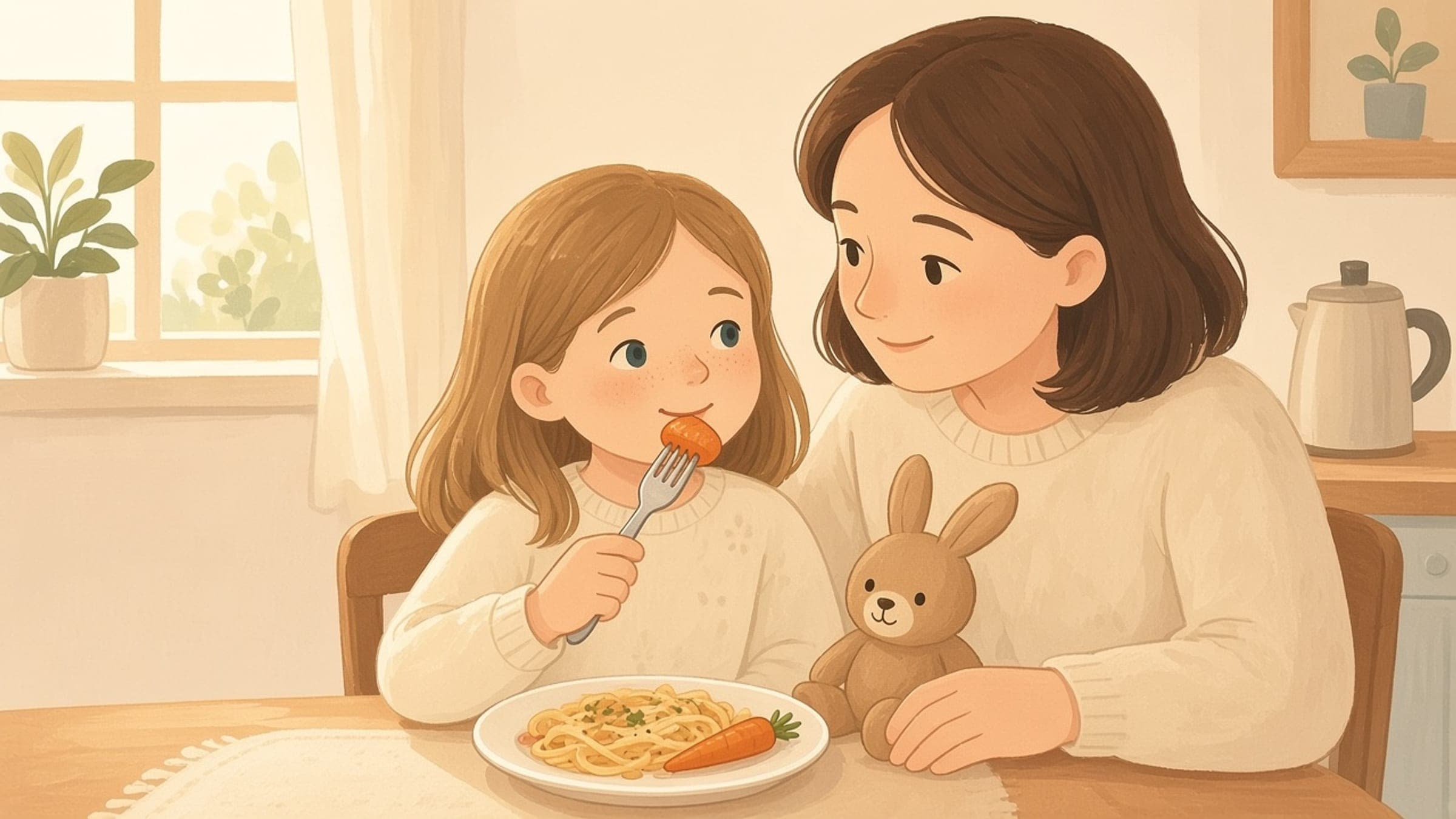
In the story, Wren is six. Dinner is pasta she already eats, plus one small piece of roasted carrot. Nobody made a second dinner. Her grown-up takes a bite of carrot first. Wren looks, smells, and touches it. She takes one bite. She does not have to finish. The book does not say the carrot was delicious. The last page is Wren still at the table, pasta on her fork, the carrot still allowed to be only a maybe. It is not "and then she was never a picky eater again."
After reading, serve the real tiny portion next to a liked food — if you are offering that food tonight — and keep the script as short as the book. If the book used a food your child is allergic to, fix the book. Wrong food is not a small detail.
How the studio keeps the rehearsal on this child's plate
On the Plot Outline step, Storybook Studio asks what should happen in the story and notes that a few sentences is enough. Write the real food, that the portion is small, that they may stop, and that nobody bribes them, in your child's words. Do not write "and then she loved it." On the Voice step you set the tone. A calm, matter-of-fact tone fits. Once the book is finished, the review screen's edit mode lets you change page text if a clean-plate ending, a dessert bribe, or "never picky again" slipped in.
For other everyday moments that can hold a small rehearsal like this, see personalized story ideas in everyday family moments. Other routines that need pressure lowered, not a prize for complying scared, live on brushing teeth without a fight and a toddler scared of the potty.
Keep reading: if the leftover job is a diagnosed allergen rather than a refused bite, start with living with a food allergy. If the leftover job is two minutes at the sink, see brushing teeth without a fight.
More related guidance:
- Child Still Wetting the Bed? A Story That Eases the Shame
- Moving From a Crib to a Big-Kid Bed: A Transition Story
- First Sleepover: Preview Scripts, Packing, and When to Wait
- Getting Dressed by Themselves: A Story That Ends the Morning Battle
- Personalized Story Ideas Hidden in Everyday Family Moments
Sources
-
10 Tips for Parents of Picky Eaters — American Academy of Pediatrics
-
Toddlers at the Table: Avoiding Power Struggles — Nemours KidsHealth
-
My Toddler Hates Vegetables. What Can I Do? — Nemours KidsHealth
-
Picky Eaters and What to Do — Centers for Disease Control and Prevention
-
Tips to Help Your Picky Eater — Centers for Disease Control and Prevention